





A Fundamental Shift in Space
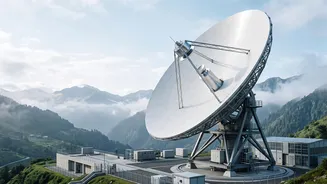
For decades, the model for Earth observation has been straightforward: a satellite captures vast amounts of imagery and data, then beams it all back to ground stations. This process is time-consuming and expensive, creating a bottleneck as massive datasets
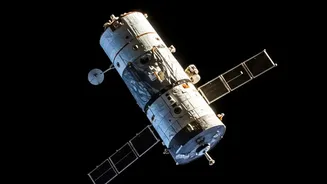
travel millions of kilometres. Now, India is embracing a new paradigm called edge computing. The latest mission involves launching a satellite with powerful onboard processors, essentially a flying data centre. This allows Artificial Intelligence (AI) algorithms to analyse images and sensor readings directly in orbit. Instead of sending terabytes of raw data, the satellite can identify relevant information—like the precise location of a flash flood, the health of a specific crop, or changes along a border—and transmit only the processed, actionable insights back to Earth. This marks a strategic shift from simply collecting data to generating intelligence in real time, right at the source.
Meet the Orbital Computer
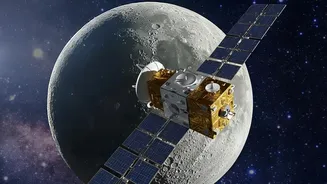
Driving this innovation is the MOI-1A satellite, developed by Bengaluru-based startup TakeMe2Space. Described as India's first orbital-computing satellite, the sub-50 kg spacecraft is slated for launch on October 1 aboard a SpaceX Transporter-18 mission. It is equipped with advanced Nvidia Orin NX processors designed specifically for edge AI applications. This is not the company's first foray into this technology; a previous demonstration mission successfully validated the concept of uploading applications and running AI tasks in orbit. The MOI-1A allows customers to upload their own containerized AI models to the satellite, enabling them to process observations over specific geographic areas as the satellite passes overhead. This innovative service has already attracted 23 customers, spanning sectors from agriculture and mining to insurance and supply chain management.
The Speed and Efficiency Advantage
The primary benefit of on-orbit computing is speed. By eliminating the need to downlink massive files, the time between data capture and decision-making can be reduced from hours or even days to mere minutes. This is a game-changer for time-critical applications. In disaster management, for example, an AI-powered satellite can autonomously detect signs of a potential landslide after heavy rainfall and send an immediate alert, providing crucial extra time for evacuation. It also significantly reduces the strain on communication bandwidth. As one expert noted, customers who currently pay high costs to download enormous amounts of raw data find that the premium for in-orbit computing is easily offset by the savings. This efficiency makes sophisticated satellite data more accessible and affordable for a wider range of users, including educational institutions and smaller commercial enterprises.
Tangible Benefits for a Growing Nation
This technological advancement has far-reaching implications for India's development and security. In agriculture, on-orbit AI can monitor crop health, detect pest infestations, and assess soil moisture with unprecedented speed, providing farmers with timely advice. For urban planning, it can track infrastructure development and changes in land use. Insurance companies can use it to quickly assess damage after natural disasters. Furthermore, the technology holds immense potential for national security. ISRO has already been exploring how onboard AI can enhance surveillance capabilities, allowing for autonomous threat detection and faster transmission of critical intelligence to commanders on the ground. By shortening the loop between observing an event and acting on it, India can respond more effectively to a variety of strategic and environmental challenges.
The Next Frontier for India in Space
While MOI-1A represents a significant milestone driven by the private sector, it aligns perfectly with the broader vision of India's national space program. ISRO has been actively studying the feasibility of establishing its own data centres in orbit, recognizing that AI and edge computing are transformative. This move is not just about upgrading current capabilities; it is about building a new architecture for future space exploration and utilization. By developing expertise in on-orbit processing, India is positioning itself as a key player in the next chapter of the space race, where satellites are not just passive observers but intelligent, reconfigurable assets. Future plans include larger, networked satellites that can serve multiple customers simultaneously and even offer orbital cold storage for sensitive data, creating a new layer of digital infrastructure high above the Earth.