






Why Your Pet Gets Bored
Our modern, indoor life is a far cry from the environments our pets' ancestors evolved in. Dogs and cats are natural hunters, explorers, and problem-solvers. [25, 17] When they live in a predictable indoor space with little novelty, their natural instincts
go unfulfilled. [25] This lack of mental and physical engagement is the root cause of boredom. It's not just about having energy to burn; it's about a deep-seated need to use their brains. [15] Chronic under-stimulation can lead to frustration, stress, and a range of behavioural issues that are often mistaken for simple naughtiness. [17, 24]
Signs Your Pet Needs More Stimulation
It’s easy to miss the subtle signs of a bored pet. Destructive behaviour, like chewing furniture or scratching inappropriate surfaces, is a classic sign they're creating their own, undesirable fun. [13, 22] You might also notice an increase in vocalisation, like excessive barking or meowing, as a way to demand your attention. [13, 20] Some pets become restless, pacing around the house, while others may do the opposite and appear lethargic or sleep more than usual. [13, 6] Other signs can include over-grooming, fighting with other pets, or sudden changes in appetite. [18, 6, 23]
Engage Their Brain with Puzzles
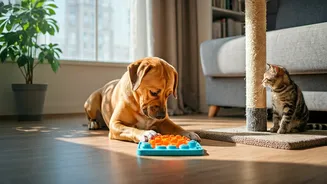
Mental exercise is just as tiring and satisfying as physical exercise. Food puzzles are a fantastic way to make your pet work for their meals, mimicking their natural foraging instincts. [3, 15] You can buy puzzle feeders or create your own. A simple DIY option for dogs is to place kibble in a muffin tin and cover each cup with a tennis ball. [11] For cats, hiding treats in an egg carton works well. [9] Scent games are another powerful tool. Hide a few strong-smelling treats around a room and encourage your pet to “find it,” which taps into their incredible sense of smell and provides a great mental workout. [3, 9, 11]
Get Physical (Even Indoors)
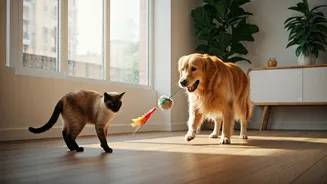
A small space doesn't mean you can't have an active play session. A simple game of tug-of-war is a great way for dogs to burn energy and bond with you. [12, 19] A hallway can become a fetch alley, preferably with a soft toy to avoid noise complaints. [8, 15] For cats, a feather wand or laser pointer can encourage natural pouncing and chasing behaviours. [5] You can also create a simple indoor agility course using household items like cushions to jump over, chairs to weave through, and blankets to create tunnels. [9, 16] Even a few short, structured play sessions a day can make a big difference. [19]
Enrich Their Environment
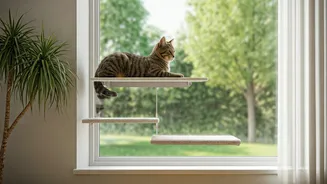
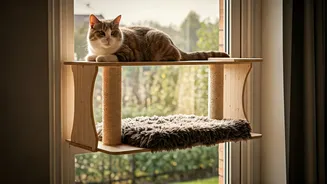
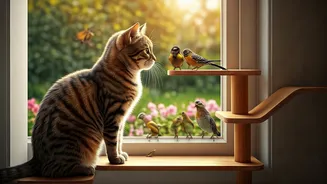
Simple changes to your pet’s surroundings can combat monotony. One of the easiest tricks is to rotate their toys every few days to keep them feeling new and exciting. [5, 19] For cats, providing vertical space is crucial. A cat tree or even a sturdy shelf near a window can provide a fantastic vantage point for bird-watching. [5] Setting up a bird feeder outside a window offers what is essentially live television for your cat. [4] For both dogs and cats, a simple cardboard box or a paper bag can become an intriguing new fort to explore. [5, 11] These small additions provide novelty and encourage exploration, preventing the home from feeling stale.