




What Is a Solar Superstorm?
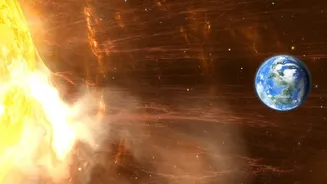
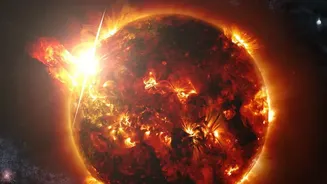
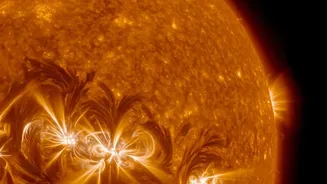
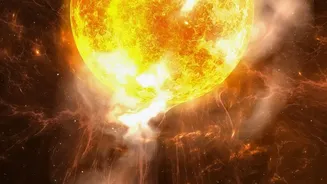
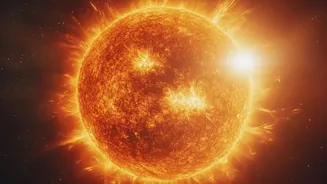
A Coronal Mass Ejection, or CME, is one of the most powerful events in our solar system. Think of it not as a flash of light, but as a colossal cannonball of magnetised plasma and charged particles fired from the Sun’s atmosphere. While solar flares are intense
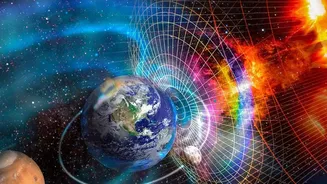
bursts of radiation that reach us in eight minutes, a CME is a slower, more formidable beast, taking one to three days to cross the void. When an Earth-directed CME slams into our planet’s magnetic shield (the magnetosphere), it triggers a geomagnetic storm. This beautiful phenomenon is what creates the stunning auroras, but it also carries a significant threat to our technological way of life.
The Grid’s Hidden Vulnerability
Our lives run on electricity, and our power grids are sprawling, interconnected marvels of engineering. But they have a critical weakness. A powerful geomagnetic storm causes Earth's magnetic field to fluctuate wildly. This, in turn, induces powerful, uncontrolled electrical currents in long conductors on the ground—like the thousands of kilometres of high-voltage transmission lines that make up a national grid. These geomagnetically induced currents (GICs) are a form of direct current (DC), while our grids are built for alternating current (AC). When GICs surge into high-voltage transformers, they can cause them to overheat, melt, and fail, leading to cascading blackouts that could last for weeks or even months. An event like the 1859 Carrington Event, which set telegraph offices on fire, would be catastrophic today.
The Science of Cosmic Forecasting
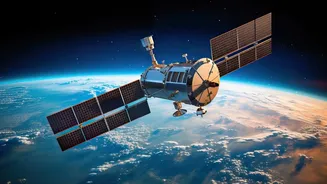
This is where the new models come in. Simply seeing a CME erupt from the Sun isn’t enough; we need to know its trajectory and intensity with precision. Using data from a fleet of solar observatories, scientists can now map the path of these plasma clouds through space. Recent breakthroughs, like those using imagery from NASA’s PUNCH mission, have dramatically improved forecasting. In one test, scientists predicted a CME's arrival at Earth to within 30 minutes, a tenfold improvement on older methods. These models analyse the speed, geometry, and evolution of the plasma wave, giving grid operators a crucial window to prepare for impact.
India’s Eye on the Sun
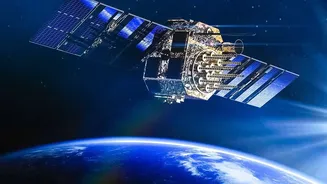
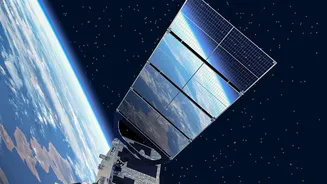
India is a key player in this global effort. The Indian Space Research Organisation's (ISRO) Aditya-L1 mission, positioned at a special vantage point between the Earth and Sun, provides an uninterrupted view of our star. This allows it to act as a vital early-warning system, feeding crucial data into global space weather models. Following the major solar storms of May 2024, data from Aditya-L1, combined with that from six other international spacecraft, allowed Indian scientists to understand why the storm was so much stronger than expected. They discovered the CME's internal magnetic fields were reconnecting, supercharging its impact. This level of insight is critical for hardening India’s own rapidly expanding digital economy and power infrastructure against solar threats. Even student-led projects using Aditya-L1 data are developing AI systems for early warnings.
From Warning to Action
An accurate forecast is only useful if it leads to action. A one-to-three-day warning allows power grid operators to take concrete steps to mitigate damage. They can assess which parts of the grid are most vulnerable, reroute power to reduce the load on critical transformers, and in some cases, take the most sensitive equipment offline entirely before the storm hits. These models also help pre-position repair crews and equipment, drastically reducing potential downtime. While new AI models are also being developed to provide 30-minute, high-precision warnings of a storm's immediate impact, the long-range trajectory models are what enable strategic, large-scale preparation. It turns a potential disaster into a manageable event.