





The Primary Gateway: ISRO Centralised Recruitment Board
The main entry point for engineers looking to join ISRO is through the ISRO Centralised Recruitment Board (ICRB). The ICRB conducts recruitment for the coveted Scientist/Engineer 'SC' positions, which are classified as Group 'A' posts. These recruitment drives
are announced periodically for various engineering disciplines like Electronics, Mechanical, and Computer Science. Aspiring candidates should regularly monitor the official ISRO careers website for the latest announcements, as application windows are time-sensitive. A recent announcement, for instance, opened 176 vacancies with an application deadline of September 16, 2026.
Are You Eligible? Key Requirements
To be eligible for the Scientist/Engineer 'SC' post, candidates typically need a B.E./B.Tech or equivalent degree in the relevant engineering discipline. A crucial requirement is a minimum aggregate of 65% marks or a CGPA of 6.84 on a 10-point scale. The upper age limit is generally set at 28 years, although relaxations are available for candidates from reserved categories as per government norms. It's important to note that ISRO sometimes uses GATE scores for shortlisting, so a valid GATE score can be an alternative pathway for certain recruitments.
The Two-Stage Selection Process
The selection process for the Scientist/Engineer 'SC' post is a two-stage affair: a written test followed by a personal interview. The written test is a computer-based examination conducted across numerous cities in India. It typically consists of two parts. Part A focuses on discipline-specific technical questions, usually comprising 80 multiple-choice questions with negative marking. Part B assesses general aptitude and reasoning skills and may consist of around 15 questions without negative marking. Candidates who perform well in the written test are shortlisted for the interview round, generally in a 1:5 ratio.
The Final Hurdle: The Interview
The personal interview carries 100 marks and is the final stage of the selection process. This round is designed to assess not just your technical knowledge but also your communication skills, general awareness, comprehension, and academic achievements. The final selection is based on a combined score, with both the written test and the interview being given equal (50%) weightage. To qualify, unreserved candidates must typically secure a minimum of 50% in the interview and a 60% aggregate score.
A Career of Growth and Impact
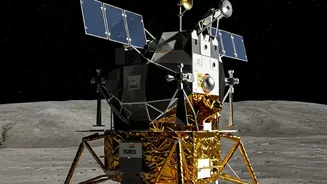
A career at ISRO is not just a job; it's an opportunity to contribute to projects of national importance. Successful candidates appointed as Scientist/Engineer 'SC' start at Level 10 of the Pay Matrix, with a basic pay of around ₹56,100 per month plus other allowances. ISRO offers a structured career progression through its Merit Promotion Scheme. This allows dedicated and high-performing scientists to rise through the ranks over the years, potentially reaching the level of a Distinguished Scientist, one of the highest scientific designations in the country. The work involves designing and developing advanced technologies, working on groundbreaking missions like Chandrayaan and Mangalyaan, and collaborating with some of the brightest minds in the field.