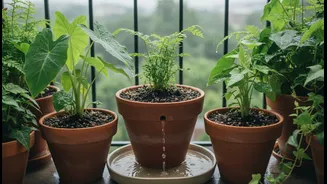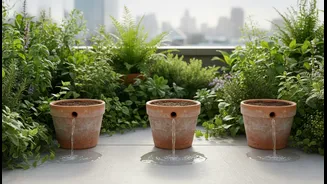





Start With Sufficient Drainage Holes
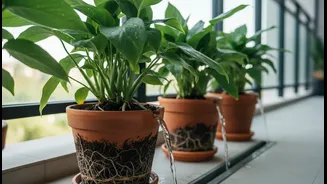
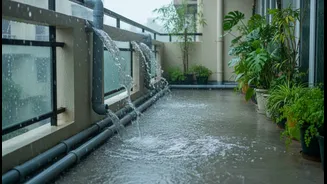
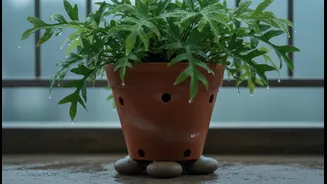
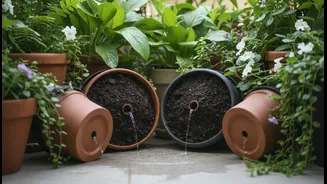
This is the most fundamental step. Most store-bought pots come with at least one drainage hole, but it's often not enough, especially during a heavy monsoon. If your pot’s soil stays soggy, the first thing to check is its drainage capacity. Don't hesitate
to add more holes. For plastic pots, you can use a drill or even a hot screwdriver to create additional openings. For ceramic or terracotta pots, a drill with a diamond-tipped bit works best. Ensure the holes are clear and not blocked by soil or roots.
Elevate Your Planters for Better Airflow
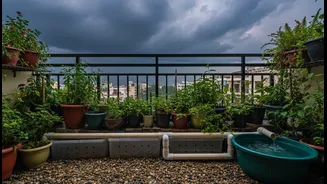
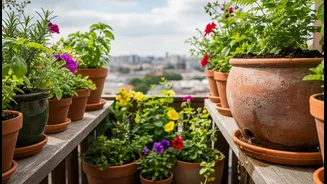
Lifting your planters off the ground, even by just a few centimetres, is a game-changer for drainage. When a pot sits directly on a flat surface, the drainage hole can easily become blocked, trapping water inside. Using pot feet, risers, bricks, or even simple plastic bottle caps can create the necessary gap. This elevation not only allows excess water to escape freely but also improves air circulation around the base of the pot, which helps the soil dry more evenly and reduces the risk of fungal diseases. It also prevents unsightly water stains from forming on your balcony floor.
Improve Your Potting Mix
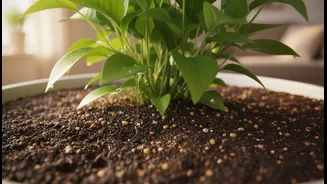
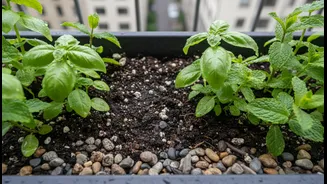
Standard garden soil is often too dense for containers and can become compacted, leading to poor drainage. A good potting mix designed for containers is lighter and allows water to pass through more easily. To further enhance drainage, you can amend your existing soil by adding materials that create air pockets. Perlite, which looks like small white bits of styrofoam, is excellent for improving aeration and preventing compaction. Coarse sand, coco coir, or small bark chips also work well to lighten heavy soil and ensure your plant's roots get the oxygen they need to thrive.
Choose the Right Type of Pot
The material of your planter plays a significant role in how much moisture the soil retains. Porous materials like unglazed terracotta are highly breathable. They allow moisture to evaporate through the walls of the pot, which helps the soil dry out faster and is ideal for plants prone to root rot, such as succulents. In contrast, plastic or glazed ceramic pots are non-porous and hold onto moisture for much longer. While this can be beneficial for thirsty plants, they require more careful watering and excellent drainage to prevent waterlogging during wet weather.
Consider Using Fabric Grow Bags
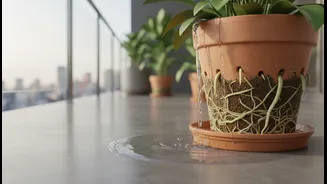
For an almost foolproof solution to waterlogging, consider switching to fabric grow bags. These containers are made from a breathable, non-woven fabric that allows for superior drainage and aeration. Excess water can escape through the entire surface of the bag, making it nearly impossible for the soil to become saturated. The fabric also encourages healthier root systems through a process called "air pruning." When roots reach the sides of the bag, they are exposed to air, which signals them to stop growing in that direction and instead produce more fibrous feeder roots. This results in a stronger, more efficient root ball.
The Drainage Layer Debate
For years, gardeners have been advised to add a layer of gravel or broken pot shards to the bottom of planters to improve drainage. However, modern horticultural science suggests this can sometimes do more harm than good. The theory is that water does not move easily from a fine-textured material (soil) to a coarse-textured one (gravel). This can cause water to collect in the soil just above the gravel layer, effectively raising the water table and keeping the roots wet. Instead of a thick coarse layer, focusing on a high-quality, well-aerated potting mix throughout the entire pot is now considered a better practice for most situations. A simple piece of mesh over the drainage hole is often sufficient to prevent soil from washing out.