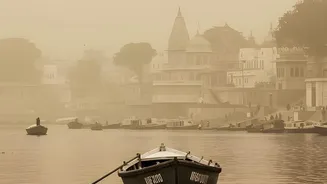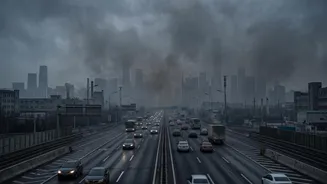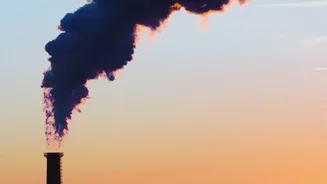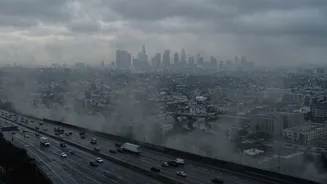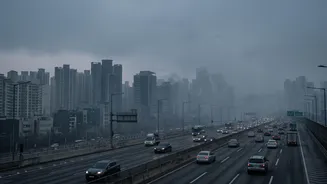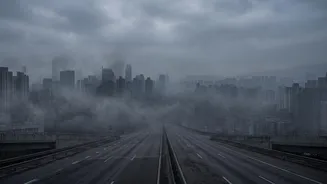





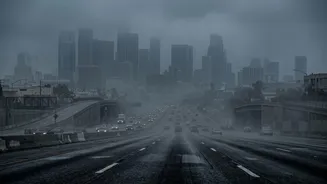
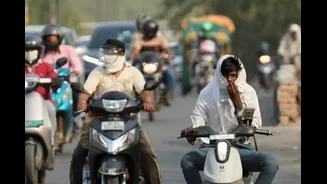
As winter approaches, a familiar haze has descended upon Delhi-NCR. On October 21, the air quality officially entered the 'poor' category, prompting authorities to implement Stage 1 of the Graded Response Action Plan, or GRAP.
What Exactly Is GRAP?
Think of the Graded Response
Action Plan (GRAP) as an emergency rulebook for fighting Delhi-NCR's notorious winter air pollution. Instead of waiting for the air to become 'severe', GRAP allows authorities to take predefined steps based on how bad the air quality is.. It's a proactive, four-stage system designed to prevent the situation from spiralling out of control.. Stage 1 is triggered when the Air Quality Index (AQI) is 'Poor' (201-300), Stage 2 for 'Very Poor' (301-400), Stage 3 for 'Severe' (401-450), and Stage 4 for 'Severe+' (above 450). The Commission for Air Quality Management (CAQM) is the body responsible for invoking these measures across the region..
Why Was Stage 1 Activated Now?
The trigger was a sharp decline in air quality. On October 20, Delhi's AQI was in the 'moderate' range at 179.. By the afternoon of October 21, it had jumped to 244, firmly in the 'poor' category, marking the first 'poor' air day of the season.. This deterioration, coupled with forecasts from the IMD and IITM predicting that the air quality would likely remain poor, prompted the CAQM to act swiftly and implement Stage 1 measures with immediate effect.. As of October 22, the air quality continues to hover in the 'poor' to 'very poor' range in several parts of the city..
Key Restrictions Under Stage 1
Stage 1 focuses on curbing major sources of particulate matter before they build up. For residents of Delhi-NCR, this means several changes. First, there's a strict ban on open burning of any kind, including garbage, biomass, and leaves.. At construction and demolition sites over 500 square metres, strict dust control measures are now mandatory, including registration on a government web portal.. The use of coal and firewood in tandoors at hotels and eateries is also prohibited.. For vehicle owners, enforcement of Pollution Under Control (PUC) certificates will be intensified, and visibly polluting vehicles face penalties. The existing ban on overage diesel (10+ years) and petrol (15+ years) vehicles will be strictly enforced..
Impact on Transport and Industry
The plan also targets transport and industrial emissions. To reduce traffic congestion, more personnel will be deployed at busy intersections.. Non-destined truck traffic will be diverted away from Delhi using the Eastern and Western Peripheral Expressways.. Interstate buses from neighbouring states will not be allowed to operate in the NCR unless they are electric, CNG, or BS-VI diesel compliant.. Furthermore, there will be a crackdown on polluting industrial units and thermal power plants within a 300 km radius of Delhi to ensure they are following emission norms.. Use of diesel generator sets is also restricted, limited only to essential or emergency services..
Protecting Your Health
While authorities implement these rules, individuals can also take steps to mitigate the health risks of poor air quality.. Health experts advise limiting strenuous outdoor activities like running or cycling, especially during early morning and evening hours when pollution can be higher.. When you do go out, wearing a well-fitted N95 or N99 mask can provide significant protection against fine particulate matter.. At home, using an air purifier with a HEPA filter can help maintain cleaner indoor air.. Keeping an eye on the daily AQI levels through official apps and websites can help you plan your day and reduce exposure..