




The 'Why' of Bodyweight Training
Before jumping into the exercises, it's helpful to understand why bodyweight training is so effective, especially for beginners. These movements are functional, meaning they mimic everyday actions like pushing, pulling, and squatting. This improves your
ability to perform daily tasks with more ease and can reduce the risk of injury. The key to building muscle with any exercise, including bodyweight ones, is a principle called progressive overload. This means you need to consistently challenge your muscles by gradually making the exercises harder. You can do this by increasing your repetitions, slowing down the movement, or reducing rest time between sets.
Always Start With a Warm-Up
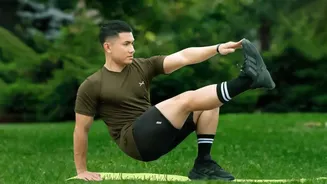
Never skip your warm-up. Preparing your body for exercise is crucial for preventing injury. A good warm-up increases blood flow to your muscles and gets your joints ready for movement. Spend 5 to 10 minutes doing light cardio like jogging in place, jumping jacks, or high knees. Follow that with dynamic stretches such as arm circles, leg swings, and torso twists to ensure your body is ready for the workout ahead.
Lower Body: Squats
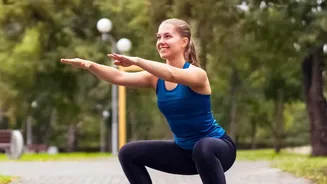
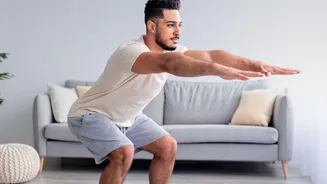
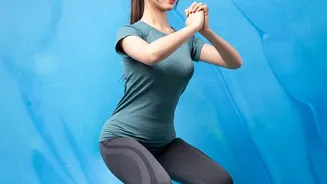
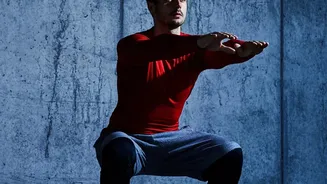
The bodyweight squat is a foundational full-body exercise that primarily strengthens your legs and glutes (quads, hamstrings, and glutes). To perform a squat, stand with your feet slightly wider than shoulder-width apart, with your toes pointing slightly out. Keeping your back straight, push your hips back and lower your body as if you're sitting in a chair. Go as low as you can comfortably, aiming to get your thighs parallel to the floor, then press back up to the starting position.
Lower Body: Lunges
Lunges are excellent for working one leg at a time, which helps build balanced strength and stability. The reverse lunge is often recommended for beginners as it can be easier on the knees. To do one, stand tall and step back with one foot. Lower your hips until both knees are bent at roughly a 90-degree angle, keeping your front knee aligned over your ankle. Push off your back foot to return to the start.
Upper Body: Push-Ups
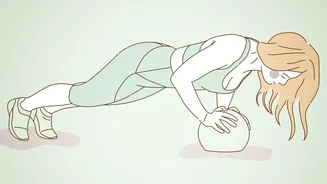
The push-up is a powerhouse for the upper body, targeting the chest, shoulders, and triceps while also engaging your core. If you're a beginner, a standard push-up can be challenging. Start with a modified version, such as performing them on your knees or against a wall. For a knee push-up, begin in a plank position but with your knees on the floor. Lower your chest toward the ground, keeping your body in a straight line from your head to your knees, and then push back up.
Core: The Plank
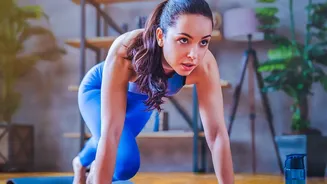
The plank is one of the best exercises for building core stability, which is essential for protecting your spine. To perform a plank, get into a position similar to the top of a push-up, with your hands directly under your shoulders. You can also rest on your forearms. Engage your core and glutes to keep your body in a straight line from your head to your heels. Avoid letting your hips sag or rise too high. Hold this position for a set amount of time, starting with 15 to 30 seconds and building up from there.
Back and Glutes: Glute Bridges
This exercise is fantastic for targeting your glutes and lower back. Lie on your back with your knees bent, feet flat on the floor about hip-width apart, and your arms by your sides. Engage your core and lift your hips off the floor until your body forms a straight line from your shoulders to your knees. Squeeze your glutes at the top of the movement before slowly lowering your hips back down.
Putting It All Together: Your Routine
Consistency is more important than intensity when you're starting out. Aim for two to three workout sessions per week on non-consecutive days to give your muscles time to recover and grow. A simple full-body circuit could look like this: perform 10-12 squats, 8-10 push-ups (modified if needed), 10 lunges per leg, and a 30-second plank. Rest for 60-90 seconds and then repeat the circuit for a total of two or three rounds.