





The Psychology of Our Possessions
We all do it. We accumulate things over time—souvenirs from trips, small gifts, or trendy items that catch our eye. Soon, our shelves and surfaces are crowded. Psychologists note that we often hold onto things because they become part of our identity
or provide a sense of security. An object can remind us of an achievement or a milestone. However, a home filled with impersonal 'filler' objects can start to feel generic and cluttered. While these items aren't junk, they don't tell a story. They simply exist. This accumulation can create a subtle sense of stress, turning our homes, which should be calming sanctuaries, into spaces that feel chaotic and disconnected from who we are. The goal isn't to live in an empty box, but to ensure the things we own serve a purpose beyond just taking up space.
From Clutter to Curation
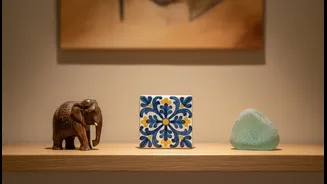
The alternative to a shelf of random objects is a single, meaningful one. But what gives an object meaning? It’s not about monetary value. A meaningful piece is one that holds a memory, tells a story, or represents a personal value. It could be a vase from your grandmother, a piece of art that moves you, a worn book you’ve read a dozen times, or a smooth stone from a memorable walk. These items are extensions of ourselves; they are physical links to our past, our relationships, and our aspirations. When you choose to display an object that has a personal narrative, you transform a simple surface into a storytelling moment. It becomes a conversation starter and a daily reminder of what is important to you, turning your home from a showroom into a storybook.
The Impact of a Statement Piece
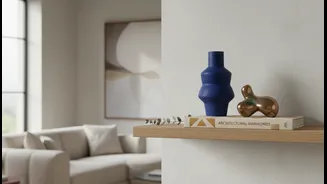
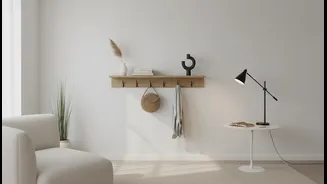
From a design perspective, one significant item is often more powerful than a dozen smaller ones. This concept leans on the principle of a focal point. A single, well-chosen object draws the eye and commands attention, while a cluttered shelf forces the eye to jump around with nowhere to rest. This creates visual noise. By embracing the idea of 'less is more', you allow for negative space, which gives the chosen object room to breathe and be appreciated. Think of it like a gallery. A museum doesn't cram every painting onto one wall; it gives each piece the space it deserves. This approach makes a room feel more intentional, calm, and curated. Limiting the number of items on a surface not only reduces clutter but also makes the remaining pieces feel more special and deliberate.
How to Identify Your Treasures
The process of curating your space is personal and should be done slowly. Start by taking everything off one shelf. As you handle each object, ask yourself a few questions: Does this bring me joy? Does it hold a specific, positive memory? Does it represent someone or something I love? Your memories are not literally inside the object, but the object can act as a powerful trigger for them. Be selective. If everything is deemed important, then nothing truly stands out. You may find it helpful to set a physical boundary, like deciding to keep only what fits in a single, special box. This is not about getting rid of everything you have an emotional attachment to, but rather, choosing the very best pieces to honor.
Living with Meaningful Decor
Once you've identified your most cherished items, don't hide them away. The goal is to incorporate them into your daily life. Use the heirloom china, display the piece of art from your travels, and wear the vintage pin. By bringing these objects out of storage, you give them a new life and allow them to serve as constant, gentle reminders of your personal history. This approach isn't about a one-time purge; it’s about shifting your mindset. Moving forward, be more intentional with what you bring into your home. Instead of buying things to fill a space, wait until you find something that truly speaks to you. Building a collection of meaningful decor is a slow, lifelong process that ultimately creates a home that is a true reflection of you.