




The Universe’s Ultimate Speed Limit
To understand this cosmic time travel, we first need to talk about speed. In our universe, nothing travels faster than light. It zips through the vacuum of space at a staggering 2,99,792 kilometres per second. This speed is so immense that light can circle
the Earth more than seven times in a single second. Yet, space is so unfathomably vast that even at this breakneck pace, light takes a significant amount of time to travel from celestial objects to our eyes. Scientists use a unit called a 'light-year' to measure these colossal distances—it’s the distance light travels in one year, which is about 9.5 trillion kilometres. When we say a star is 100 light-years away, we mean the light we see from it tonight began its journey 100 years ago.
A Journey Across Our Solar System
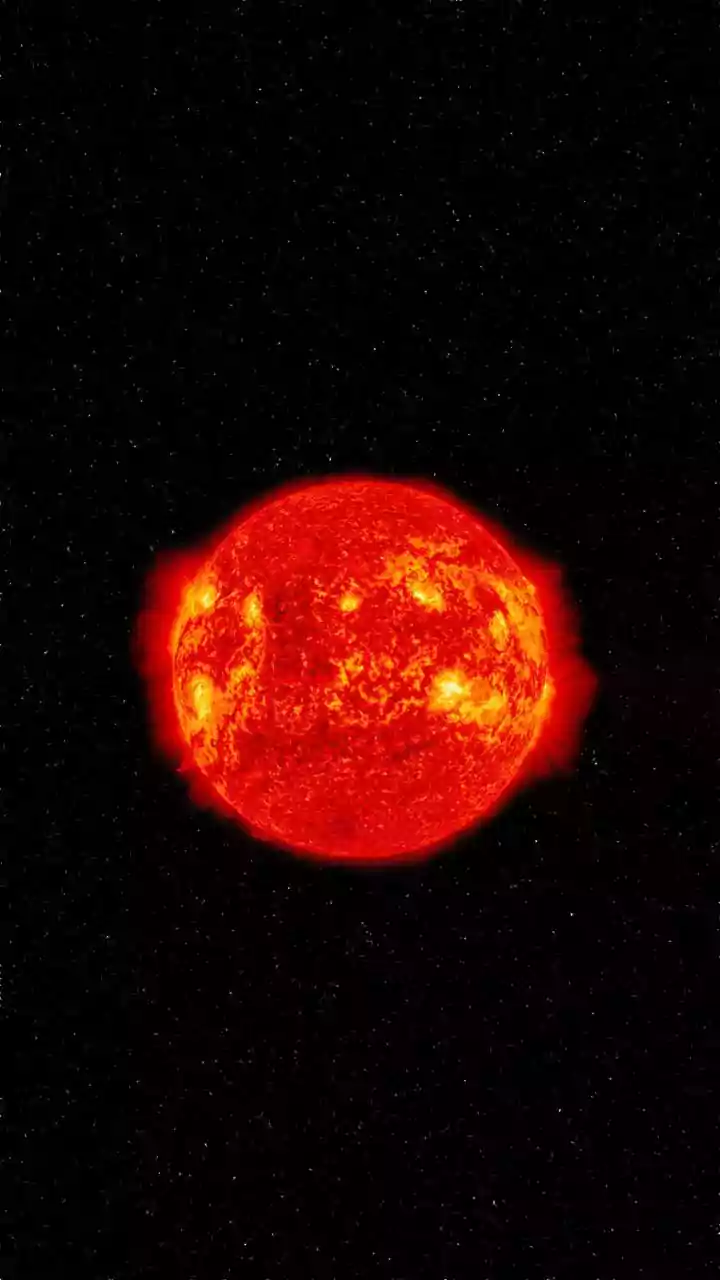
This effect isn't just for distant stars; it happens right here in our own cosmic neighbourhood. The sunlight that warms your face isn't instantaneous. It takes approximately 8 minutes and 20 seconds to travel from the Sun to Earth. So, when you look at the Sun (with proper protection, of course!), you are seeing it as it was over eight minutes ago. If the Sun were to suddenly disappear, we wouldn't know about it for another eight minutes. The same is true for the Moon. The gentle moonlight you see is about 1.3 seconds old. This is the fundamental principle of our time travel: the farther away an object is, the further back in time we are looking.
Seeing Stars from Another Century
This is where the headline comes to life. Most of the bright, twinkling stars you see in a clear night sky are incredibly far away. Take Polaris, the North Star, a crucial navigational guide for centuries. It sits approximately 433 light-years from Earth. This means the light hitting your retina tonight left Polaris around the year 1591, when the Mughal Empire was flourishing under Akbar. The light from Rigel, the brightest star in the Orion constellation, started its journey around 860 years ago. You are seeing it as it was during the time of the Chola dynasty’s reign in Southern India. Every star in a constellation is at a different distance, so when you look at a pattern like the Big Dipper or Orion’s Belt, you’re seeing a collection of stars whose light comes from different points in history, creating a beautiful, time-distorted image.
Beyond Our Galaxy, Into Deep Time
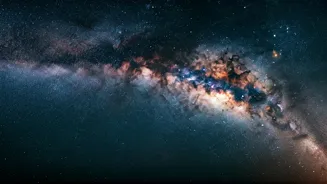
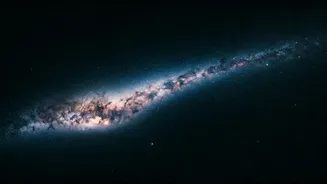
Now, let’s push our time machine even further. The stars we see with the naked eye are all part of our own galaxy, the Milky Way. But on a very dark, clear night, away from city lights, you might be able to spot a faint, fuzzy patch of light. This is the Andromeda Galaxy, our closest major galactic neighbour. That faint glow is a city of over a trillion stars, and the light from it has taken an astonishing 2.5 million years to reach us. When that light began its journey, modern humans did not yet exist on Earth. Our earliest ancestors, species like *Homo habilis*, were just beginning to roam the African savanna. You are looking at an object so far away that its light has been travelling through space for an entire chapter of human evolution.