







Why Technical Skills Are Not Enough
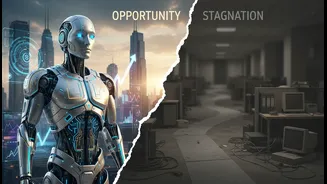
For years, the path to a future-proof career seemed paved with technical certifications. While digital literacy remains essential, the ground is shifting. AI is rapidly advancing, automating many of the repetitive, rules-based tasks that once required
specialised technical knowledge. This doesn't mean technical skills are obsolete, but their value is changing. Instead of simply executing tasks, professionals are now expected to work alongside intelligent systems. This new reality places a premium on a different set of capabilities—the very ones that are deeply human. The future isn't about competing with AI; it's about complementing it. As AI generates answers and automates workflows, the person who stands out is the one who can question, interpret, and innovate.
Critical Thinking and Sound Judgment
AI can process staggering amounts of data and generate answers in seconds, but it can't understand nuance, context, or ethical implications. This makes analytical and critical thinking more crucial than ever. The World Economic Forum consistently ranks analytical thinking as a top core skill demanded by employers. Professionals who thrive in the AI era will be those who can critically evaluate AI-generated output, identify potential biases, and make complex decisions under uncertainty. This skill transforms you from a user of technology into a strategist who guides it. It’s about asking the right questions, challenging assumptions, and exercising the kind of judgment that can't be programmed into an algorithm.
The Irreplaceable Power of Creativity
While generative AI can produce text, images, and code, it does so by recognizing and recombining existing patterns. True creativity—the kind that leads to genuine innovation and novel solutions—remains a distinctly human domain. Employers are increasingly seeking creative thinkers who can devise new strategies, products, and ways of working. As routine tasks get automated, the ability to tackle unstructured problems and think outside the box becomes a powerful differentiator. This isn't just about artistic roles; it's about creative problem-solving in every field, from marketing and finance to engineering and healthcare. This is the skill that pushes industries forward.
Emotional Intelligence and Collaboration
In a world increasingly mediated by technology, the ability to connect with, influence, and collaborate with other people is invaluable. Skills once dismissed as "soft"—such as communication, empathy, leadership, and teamwork—are now being recognized as essential human skills for the modern workplace. AI cannot replicate the trust built in a client relationship, the motivation inspired by a great leader, or the synergy of a collaborative team. As work becomes more project-based and cross-functional, professionals who can communicate complex ideas clearly and navigate interpersonal dynamics effectively are indispensable.
Adaptability and Lifelong Learning
Perhaps the single most important attribute for a successful career in the age of AI is a commitment to lifelong learning. The World Economic Forum projects that nearly 40% of core workplace skills will change by 2030. This rapid pace of change means that specific technical tools may become obsolete, but the ability to learn and adapt is a permanent asset. Embracing a mindset of continuous learning allows professionals to evolve alongside technology, reskilling and upskilling as new challenges and opportunities emerge. This agility and resilience will be the foundation of career longevity for years to come.