




The Ultimate Functional Exercise
Often called the king of exercises, the squat is a foundational movement that translates directly into everyday life. Think about how many times a day you sit and stand up from a chair, pick something up, or get out of your car. Each of those actions
is a form of a squat. By mastering this single move, you strengthen most of the major muscles in your lower body and core, including your quadriceps, hamstrings, glutes, and abdominals. This full-body engagement not only builds strength but also improves your balance, mobility, posture, and joint health, which can help reduce the risk of injury in other activities. Because it works so many large muscles at once, squatting is also an efficient way to get your heart rate up and burn calories.
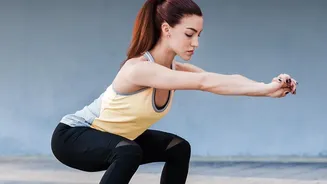
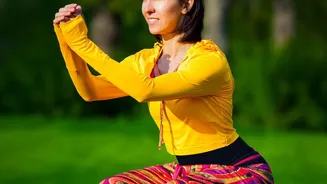
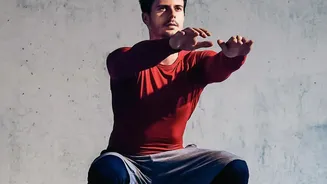
How to Do a Perfect Bodyweight Squat
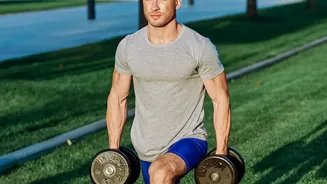
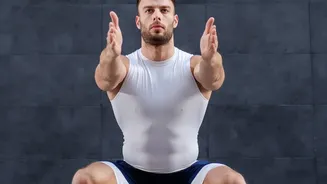
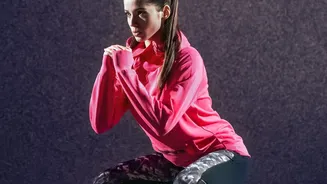
Proper form is crucial to get all the benefits and avoid strain. Follow these steps for a perfect squat: 1. Find your stance: Stand with your feet about shoulder-width apart, or slightly wider if that feels more natural. Point your toes slightly outward. Distribute your weight evenly across your feet. 2. Prepare your posture: Keep your chest lifted and your shoulders back, maintaining a proud posture. Engage your core by taking a breath and bracing your abdominal muscles, which helps keep your spine neutral and protected throughout the movement. 3. Begin the descent: Initiate the movement by pushing your hips back first, as if you're about to sit down in a chair that's a little too far behind you. Then, bend your knees to lower your body. 4. Find your depth: Lower yourself until your thighs are at least parallel to the ground, or as deep as you can comfortably go while maintaining good form. Don't worry if you can't go parallel at first; your mobility will improve over time. 5. Drive back up: Push through your heels and midfoot to return to the starting position. Exhale as you rise and squeeze your glutes at the top to complete the repetition.
Common Mistakes to Avoid
A few small errors can make your squat less effective and potentially lead to injury. One of the most common mistakes is letting your knees cave inward as you squat. To fix this, consciously push your knees out so they track in line with your feet. Another frequent issue is lifting your heels off the ground, which often points to limited ankle mobility and shifts stress to your knees. Focus on keeping your entire foot planted firmly on the ground. Also, watch out for rounding your back or letting your chest drop forward. Keeping your core engaged and your chest proud helps maintain a neutral spine, protecting your lower back from strain. Finally, avoid descending too quickly or bouncing out of the bottom of the squat; a controlled movement is both safer and more effective.
Take Your Squats to the Playground
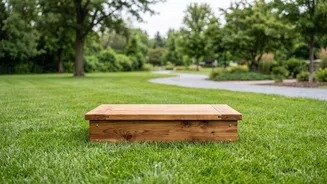
The simple equipment found at any park can help you modify and progress your squats. A park bench is an excellent tool for beginners and experts alike. If you’re new to squats or struggle with depth, practice 'box squats' by squatting down until you lightly tap the bench seat before standing back up. This helps you build confidence and learn the feeling of pushing your hips back. For a more advanced challenge, you can use the bench for Bulgarian split squats. To do this, stand a few feet in front of the bench and place the top of one foot on the seat behind you. Lower your body down until your front thigh is nearly parallel to the ground, then drive back up. This single-leg variation is fantastic for improving balance and addressing strength imbalances. You can also use a low step or curb for 'jump squats', exploding up onto the platform and stepping back down to add a cardiovascular and power element to your workout.