



The Planetary Defense Imperative
While a catastrophic impact from a large asteroid is rare, the threat is real and significant enough to warrant a global effort in planetary defense. Events like the 2013 Chelyabinsk meteor, which caused widespread damage and injuries in Russia, serve
as a stark reminder that even smaller objects can be hazardous. An asteroid of 140 meters in diameter—the size of a small football stadium—could devastate an entire city or cause significant regional destruction if it were to strike. In response, space agencies like NASA established planetary defense programs to find, track, and characterize these objects. The first and most crucial step in this process is detection. As experts often say, the three most important rules of planetary defense are to find them early, find them early, and find them early.
Enter the Automated Sky Survey
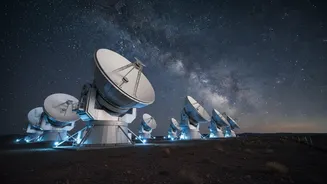
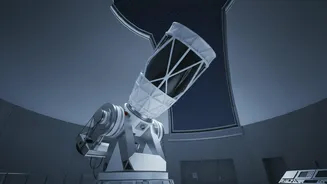
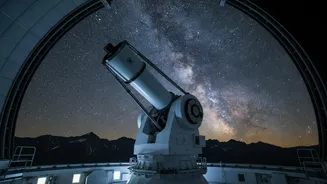
Humanity's eyes on the sky are powerful, automated survey telescopes. These are robotic observatories that tirelessly scan the cosmos night after night, imaging vast swathes of the sky. Projects like the Catalina Sky Survey, Pan-STARRS, and ATLAS are at the forefront of this effort. Unlike traditional astronomy where a telescope might focus on a single object for hours, these surveys are designed for speed and breadth. They take repeated images of the same patch of sky and use sophisticated software to detect any faint points of light that have moved against the background of stationary stars. This rapid, repetitive process is something no human astronomer could possibly manage, making automation the cornerstone of modern NEO detection.
The Power of Speed and Data
The critical role of these automated systems lies in their ability to process immense amounts of data almost instantaneously. When a survey telescope detects a potential moving object, its position is sent to the Minor Planet Center (MPC), the international clearinghouse for all small body observations. The MPC then makes this data available to observers worldwide, who can perform follow-up observations to confirm the discovery and refine the object's orbit. This global coordination is vital. By piecing together observations from different locations, astronomers can accurately calculate an asteroid's trajectory and determine if it poses any future threat to Earth. The earlier an object is found, the more time we have to track it, study its characteristics, and, if necessary, develop a plan to deflect it.
The Next Generation of Asteroid Hunters
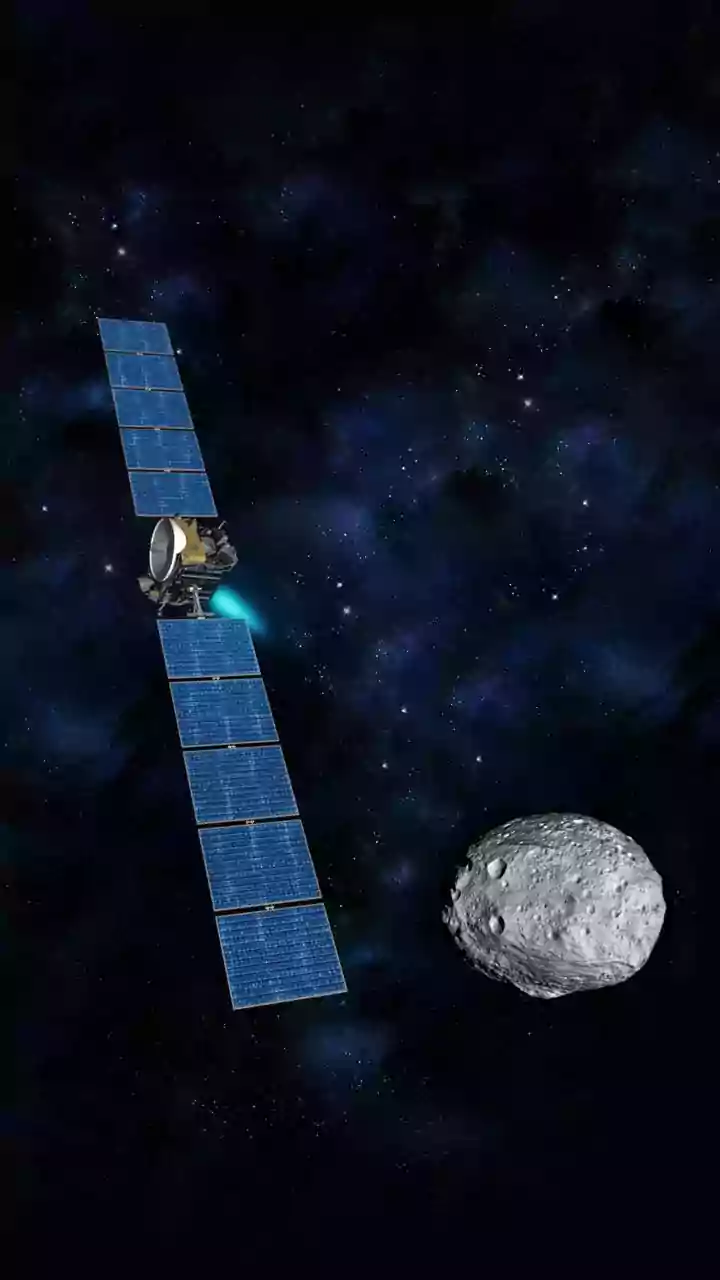
While current ground-based surveys have been incredibly successful, discovering over 98% of the more than 30,000 known NEOs, they face limitations due to weather, daylight, and the Earth's atmosphere. To find the remaining, more elusive objects, new and even more powerful systems are coming online. The Vera C. Rubin Observatory, which began operations in 2026, is set to revolutionize the field. With its massive camera and wide field of view, it is expected to discover tens of thousands of new NEOs and nearly double the catalog of objects larger than 140 meters. Furthermore, space-based telescopes like NASA's upcoming NEO Surveyor will provide an even better vantage point. Operating in infrared and positioned away from Earth's glare, it will be especially effective at finding dark asteroids and those that approach from the direction of the Sun, which are notoriously difficult for ground-based telescopes to spot.