


The Urban Astronomer's Dilemma
The biggest hurdle for any city-based stargazer is light pollution. This pervasive glow from streetlights, buildings, and cars creates a bright atmospheric dome, or 'sky glow', that washes out all but the most brilliant celestial objects. While this artificial
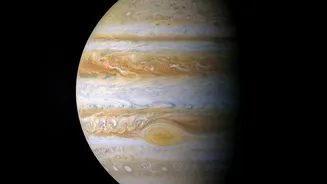
twilight makes it nearly impossible to see faint star clusters or the Milky Way, it doesn't mean the sky is empty. The Moon and the solar system's brightest planets—Venus, Mars, Jupiter, and Saturn—are often bright enough to punch through the urban glare. The challenge isn't that they're invisible, but that they can be hard to find and identify in a sky with few other reference points.
A Planetarium in Your Palm
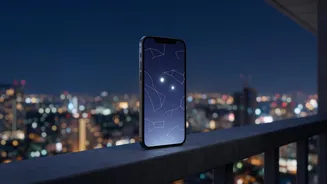
At their core, astronomy apps function as a dynamic, location-aware map of the heavens. Apps like Star Walk 2, SkySafari, and Stellarium Mobile use your phone’s GPS and internal clock to show you exactly what’s in the sky above you at any given moment. Instead of deciphering complex paper star charts, you can simply open an app to see which planets are currently visible, what time they will rise or set, and in which direction to look. This eliminates the initial guesswork and serves as a fundamental first step in navigating the light-polluted sky.
Augmented Reality: Your Digital Guide
The most transformative feature for city viewing is Augmented Reality (AR). Apps like SkyView and Night Sky use your phone’s camera to overlay their star map directly onto your real-world view of the sky. You simply point your phone upwards, and the app identifies the objects you're looking at, drawing constellation lines and labelling planets in real time. This is a game-changer for urban observers. Even if a planet looks like just another faint 'star' to your naked eye, the AR overlay confirms its identity instantly. It guides you to the precise spot in the sky, removing all ambiguity and making you feel like you have astronomical superpowers.
Plan Your Viewing for Prime Time
Astronomy apps aren't just for in-the-moment identification; they are also powerful planning tools. Many apps include a 'time travel' feature that allows you to scrub forward or backward to see how the sky will look on a future date or time. You can determine the exact moment Jupiter will appear between two buildings or when Saturn will be at its highest point in the sky, where the view is typically clearer and less affected by horizon-level haze. Apps like Sky Tonight can also send notifications for celestial events, ensuring you don’t miss when planets are particularly bright or close to the Moon.
Managing Expectations with Simulation
While an app can't make a dim galaxy visible from a city centre, some can help you understand what's realistically possible. Certain applications, such as Stellarium, allow you to input a level of light pollution based on your location. The app then simulates how the sky would appear under those conditions, removing objects that would be washed out. This feature is incredibly useful for managing expectations, helping you focus your efforts on targets that are genuinely visible from your balcony or local park. Other apps connect to light pollution maps, guiding you to nearby areas with darker skies for a better viewing experience.