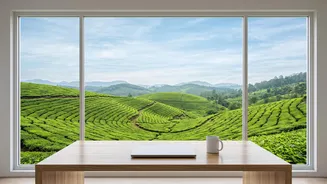







The Dawn of the 'Workcation'
The sharp divide between your work desk and a holiday destination is blurring into a new, flexible reality. Welcome to the era of the 'workcation' or 'flexcation', where a holiday is no longer a short, frantic escape but a longer, more immersive experience.
Instead of a quick weekend getaway, professionals are now booking stays for several weeks or even months. This isn't just about extending a business trip by a few days—a trend known as 'bleisure'—but about relocating one's entire workspace to a more desirable location for an extended period. A recent survey highlighted that a significant number of Indian travellers now prefer to work remotely from places with natural scenery, signalling a major shift in travel behaviour. This move is driven by a desire to escape urban burnout and find a better work-life balance without waiting for annual leave.
What’s Fuelling the Long-Stay Boom?
The primary driver is, of course, remote work flexibility. As companies embrace remote or hybrid models, employees have newfound freedom to choose where they live and work. This has led to an increased demand for rental properties in scenic suburban and rural areas. Beyond freedom, there are practical benefits. Longer stays can be more cost-effective, with many hotels and homestays offering discounted rates for weekly or monthly bookings. Furthermore, the infrastructure to support this lifestyle is rapidly improving. Reliable, high-speed internet is now a standard feature in many hotels and rental properties, making it possible to handle video conferences and other work tasks seamlessly. For many, this trend is a direct response to the fatigue of city life, offering a chance to work in cleaner, slower-paced environments.
The Hospitality Industry Adapts
The travel and hospitality sector has been quick to respond to this emerging customer segment. What was once a niche market for extended-stay hotels is now mainstream. Major hotel chains are launching concepts specifically designed for remote workers, offering amenities like dedicated workspaces, fully equipped kitchens, and strong Wi-Fi. The focus is shifting from simply providing a room to creating a productive and relaxing environment. Some brands have reimagined their properties as hybrid hubs that combine coworking spaces with a sense of social community. In India, destinations like Goa, Bir, Udaipur, and Coorg are becoming popular workcation spots, with a growing number of cafes, homestays, and coworking hubs catering to digital nomads. Even entire villages, like Yakten in Sikkim, are being developed as 'digital nomad villages' to attract this new kind of traveller.
A Deeper Connection to Travel
This trend offers more than just a change of scenery; it's changing the nature of travel itself. Short trips often involve packed itineraries and the stress of seeing everything in a few days. Longer stays, however, allow for a more relaxed pace and deeper cultural immersion. Remote workers have the opportunity to live like locals, explore neighbourhood markets, and build a routine that integrates work with genuine discovery. This benefits not just the traveller, but also the local economy, which receives a more sustained source of income compared to the peaks and troughs of seasonal tourism. By reducing the frequency of travel and staying longer in one place, it also promotes a more sustainable form of tourism. The ability to blend work and exploration creates a richer, more meaningful travel experience that goes far beyond a traditional holiday.
Navigating the Challenges
While the workcation lifestyle is appealing, it’s not without its challenges. The biggest hurdle can be maintaining a healthy work-life balance. When your office is a beachside cafe, the lines can easily blur, leading to potential burnout. Logistical issues like managing time zones, ensuring a consistently reliable internet connection, and finding a suitable workspace can also add stress. For those working abroad, navigating visa requirements for long stays is another critical consideration. Finally, the feeling of isolation can be a significant drawback for solo travellers who are away from their friends and family for extended periods. Despite these hurdles, for a growing number of professionals, the benefits of combining work with travel far outweigh the difficulties, suggesting this trend is here to stay.