






A Landmark Ruling for Passengers
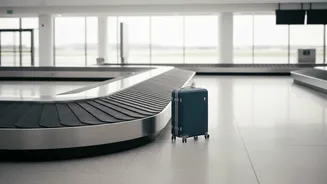
In a significant decision dated July 22, 2026, a district consumer commission in Kerala ordered an airline to pay a passenger a total of ₹53,923 in compensation and costs for a three-day baggage delay. The passenger, who had to buy essential clothing
worth ₹8,923, had his claim for reimbursement and compensation repeatedly ignored by the airline. The commission found this failure to adhere to the Ministry of Civil Aviation's Passenger Charter was a clear “deficiency in service.” The ruling sends a strong message: airlines are obligated to compensate travellers for delayed baggage as per official guidelines, and failure to do so can lead to significant penalties.
Understanding Your Rights for Baggage Issues
This recent case highlights existing rules that many travellers may not be aware of. According to the Directorate General of Civil Aviation (DGCA), an airline's liability for lost, delayed, or damaged baggage on domestic flights is limited to ₹20,000 per passenger. Some interpretations of the rules suggest a calculation based on weight, such as ₹3,000 per kilogram. For international travel, the Montreal Convention applies, offering a much higher liability limit of approximately 1,288 Special Drawing Rights (SDR), which translates to around ₹1.5 lakh per passenger. It is crucial to understand that these are liability limits, not automatic payouts. The actual compensation depends on proving your loss.
The Most Critical First Step: The PIR
Your right to any compensation hinges on one crucial document: the Property Irregularity Report (PIR). You must file this report at your airline’s baggage service counter in the arrival hall before leaving the airport. Airline industry data shows that a significant percentage of denied baggage claims are rejected simply because the passenger failed to file a PIR immediately upon arrival. Without this report, the airline can legally argue that the baggage was received in good condition. Once filed, you will receive a reference number that is essential for tracking your bag and for any subsequent claims.
A Look at the Complaint Landscape
Baggage issues consistently rank as one of the top sources of passenger complaints in India. According to DGCA data from June 2026, baggage-related problems accounted for 27.8% of all complaints lodged against domestic airlines, making it the single largest category of grievances. In 2024, Indian carriers logged a mishandled baggage rate of about 4.2 bags per 1,000 passengers. While this is slightly below the global average, it still impacted hundreds of thousands of travellers. These statistics underscore the widespread nature of the problem and the importance of rulings that hold airlines accountable.
How to Escalate Your Complaint
If the airline fails to resolve your issue after you've filed a PIR and followed up, don't give up. The first step is to lodge a formal written complaint with the airline. If you remain unsatisfied, you can escalate the matter through the government's AirSewa portal, which is designed to provide time-bound grievance redressal for air travellers. As the recent Kerala case demonstrates, the next step is filing a complaint with a District or State Consumer Disputes Redressal Commission. These forums are empowered to order airlines to pay compensation for both the material loss and the mental anguish caused by service deficiencies.