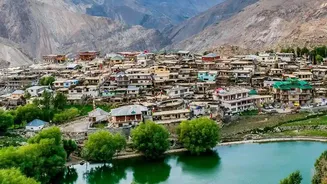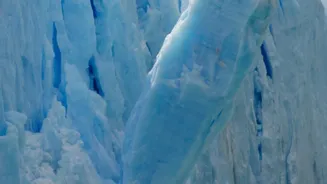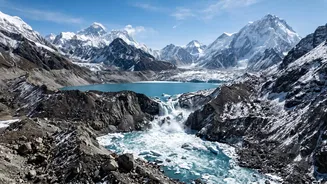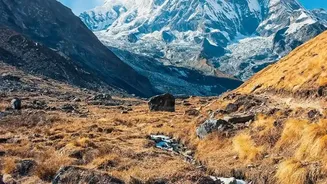




High in the majestic Himalayas, a silent threat is growing. As glaciers melt at an alarming rate, they are forming thousands of unstable lakes, which UN reports now warn could burst at any moment, triggering catastrophic floods downstream.
What Is a Glacial Lake Outburst Flood?
A Glacial Lake
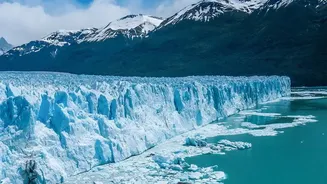
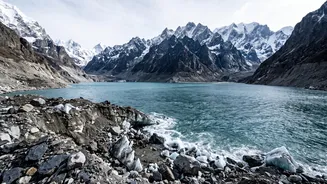
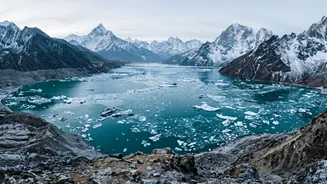
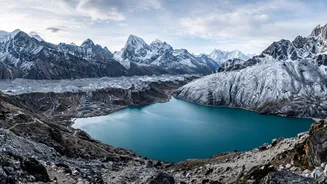
Outburst Flood, or GLOF, is a sudden and violent flood that occurs when a lake formed by a melting glacier breaches its natural dam. These dams are not made of solid concrete but are often loose, unstable barriers of rock, soil, and ice known as moraines. As global temperatures rise, glaciers in the Hindu Kush Himalaya region are retreating, creating thousands of new glacial lakes and causing existing ones to swell. This increases the pressure on their fragile moraine dams. An event like an avalanche, a landslide, or even just the pressure of the rising water can cause the dam to fail, releasing millions of cubic metres of water, mud, and boulders in a matter of hours. The result is a fast-moving, destructive torrent that can obliterate entire villages, roads, and bridges far downstream.
The Soaring Risk Across the Himalayas
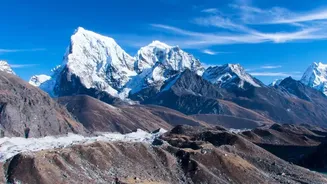
Recent United Nations reports underscore the terrifying acceleration of this threat. The Hindu Kush Himalaya region, often called the 'Third Pole' for its vast ice reserves, has become a global hotspot for GLOF risks. According to a UN-led study, the average number of GLOF events per decade in the Himalayas is now nearly five times higher than it was before 1950. More than 400 potentially dangerous glacial lakes have been identified across the region, which spans eight countries including India, Nepal, Bhutan, and Pakistan. The danger is not abstract; it poses a direct risk to the approximately 2 billion people who live in the mountains and downstream valleys. Recent events have demonstrated the scale of the danger. A GLOF in Sikkim in October 2023 killed at least 60 people and wiped out the Chungthang dam. A similar event in Bhutan in late October 2026 triggered mass evacuations in West Bengal and Assam.
India's Alarming Vulnerability
For India, the danger is particularly acute. One recent UN-affiliated study found that between 1835 and 2025, India recorded the highest number of deaths from GLOFs in the entire Hindu Kush Himalayan region, with over 6,000 fatalities. While countries like China and Pakistan have recorded more GLOF events, the death toll in India has been disproportionately high. States like Uttarakhand, Himachal Pradesh, and Sikkim are on the front line. Following a devastating glacial collapse in Nepal, Uttarakhand officials identified 13 highly sensitive glacial lakes within the state, prompting urgent calls for enhanced monitoring. In Sikkim, authorities have identified 40 high-hazard glacial lakes, with 16 of them classified in the highest-risk category. The memory of past disasters, such as the 2013 Kedarnath flood caused by a GLOF and the 2021 Chamoli flash flood, serves as a grim reminder of the destructive power of these events.
The Urgent Call for Action
The UN reports stress that warnings are no longer enough; urgent action is required. This involves a multi-pronged approach focused on mitigation and preparedness. India's National Disaster Management Authority (NDMA) has issued guidelines for GLOF risk reduction, which include identifying and mapping dangerous lakes, taking structural measures to prevent breaches, and establishing robust early warning systems. Structural measures could involve controlled draining of lakes by pumping or siphoning water to reduce pressure on the moraine dams. However, a significant challenge is funding. While countries in the region have acknowledged the threat, adaptation efforts are lagging, and there is a massive gap in financing for essential projects like early warning systems and infrastructure reinforcement. The transboundary nature of these floods, where a lake bursting in one country can devastate another, also necessitates greater international cooperation.