




The Silver Lining and The Risk
For centuries, pure edible silver foil has been used in culinary arts and even traditional medicine. It adds an opulent look, and pure silver is known to have antimicrobial properties that can increase the shelf life of food. However, the high cost of pure silver has led
to a widespread and dangerous practice: substitution with aluminium foil. This fake 'vark' is significantly cheaper but poses health risks. While occasional consumption of trace amounts might not cause immediate harm, long-term ingestion of aluminium can be toxic, accumulating in body tissues and potentially affecting the brain, kidneys, and liver. For pregnant women, the risks can extend to the foetus. The Food Safety and Standards Authority of India (FSSAI) has regulations in place mandating that edible foil must be pure silver and free from toxic materials, but adulteration remains a persistent issue, especially during high-demand festive periods.
Simple Tests to Spot a Fake at Home
You don’t need a fancy laboratory to check the purity of the silver foil on your sweets. With a few simple physical tests, you can quickly determine if you're dealing with genuine silver or a harmful aluminium imposter. These methods are easy to perform and can give you peace of mind before you serve or consume any festive treats.
Test 1: The Rub Test
This is the most common and reliable home test. Gently scrape a small piece of the foil off the sweet and place it in the palm of your hand or between your fingertips. Rub it. Pure silver foil is extremely delicate and will disintegrate with friction, essentially vanishing or absorbing into your skin without a trace. Aluminium foil, being tougher, will not break apart. Instead, it will roll up and form a small, solid ball. If you are left with a tiny metallic ball in your hand, the foil is adulterated.
Test 2: The Burn Test
Another effective method involves fire. Carefully remove a piece of the foil from the sweet and hold it with a pair of tongs over a flame (like a candle or gas stove). Pure silver, when heated, will melt and turn into a shiny ball or droplet of silver. In contrast, aluminium foil will burn away completely, leaving behind a greyish-black ash. Some experts note that if the foil emits a foul, hair-burning odour, it may have been produced using unhygienic traditional methods involving animal parts, which is another cause for concern.
Test 3: The Appearance Check
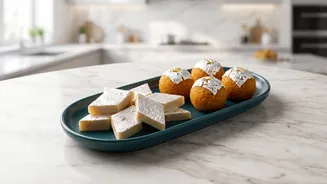
While not a definitive test on its own, a visual inspection can raise initial red flags. Genuine silver vark has a very fine, delicate texture and a soft, uniform shine. It should blend almost seamlessly with the sweet's surface. Fake foil made of aluminium often appears much brighter, shinier, and more 'metallic' than real silver. It might also look thicker and less uniform. If the foil looks overly glossy and doesn't tear easily when you touch it, it’s a strong indicator that it might not be pure silver.