

A Visitor From the Stars
On July 1, 2025, astronomers using the ATLAS survey telescope in Chile spotted an object moving in a way that immediately raised eyebrows. Unlike the planets, asteroids, and comets native to our solar system, which travel in predictable elliptical orbits
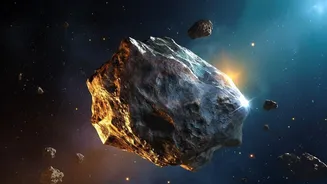
around the Sun, this object was on a hyperbolic trajectory—essentially a straight line. It was moving so fast that our Sun's gravity couldn't capture it. This was the tell-tale sign: the object was not from around here. It was an interstellar visitor. The International Astronomical Union (IAU) officially designated it 3I/ATLAS. The name is a code: '3I' signifies that it is the third interstellar object ever discovered, following the enigmatic 1I/ʻOumuamua in 2017 and the more conventional comet 2I/Borisov in 2019. 'ATLAS' refers to the Asteroid Terrestrial-impact Last Alert System that first detected it. This visitor is a priceless scientific opportunity—a physical piece of another planetary system delivered right to our doorstep.
What Makes 3I/ATLAS Different?
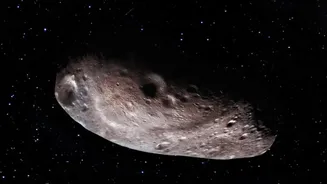
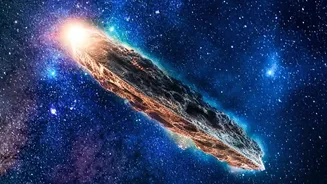
While it is only the third of its kind we have ever seen, 3I/ATLAS already stands out. The first visitor, ‘Oumuamua, was a strange, elongated object that showed no cometary activity, sparking wild theories about its nature. The second, Borisov, behaved much like a typical comet from our own solar system. 3I/ATLAS is proving to be unique in its own right. It is significantly larger than its predecessors, with its nucleus estimated to be up to a few kilometres in diameter. It is also travelling faster, hurtling through space at roughly 153,000 miles per hour at its closest approach to the Sun. Most intriguingly, early studies suggest it could be ancient. Some analyses propose that 3I/ATLAS could be as old as 11 or 12 billion years, potentially making it older than our entire solar system, which formed about 4.5 billion years ago. This suggests it may have originated from a very old star system, carrying chemical clues from the early days of our galaxy.
Unlocking its Chemical Secrets
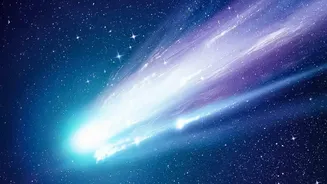
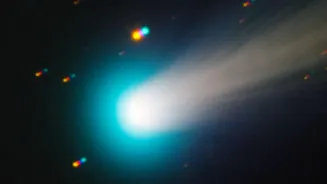
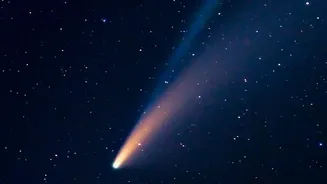
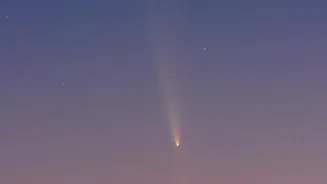
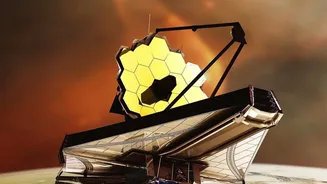
The most exciting aspect of 3I/ATLAS is its cometary activity. As it neared the Sun, its ices began to sublimate—turn from solid to gas—creating a cloud of gas and dust around it called a coma. This coma is a gift to astronomers, as it allows them to analyse the comet's composition using spectrographs. It is like reading the ingredient list of a cake baked in another kitchen light-years away. Observations from the James Webb Space Telescope (JWST) and other observatories have revealed a surprising chemical cocktail. 3I/ATLAS is unusually rich in carbon dioxide (CO₂) but contains a smaller amount of water ice. One study noted its CO₂-to-water ratio is among the highest ever seen in any comet. This unique chemical fingerprint suggests it formed in an environment very different, and likely much colder, than the one that gave birth to our own solar system's comets.
A Fleeting Opportunity
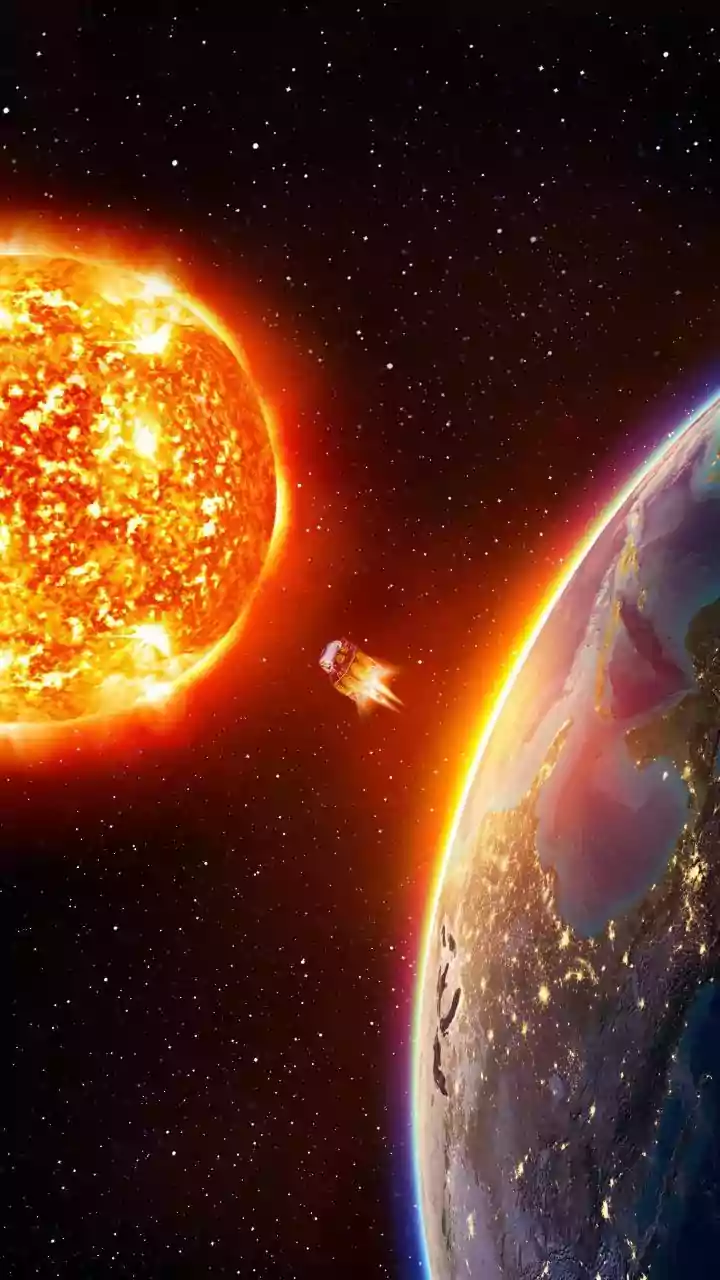
Astronomers around the world are in a race against time. Because 3I/ATLAS was discovered on its way into our solar system, scientists had more time to prepare than they did for 'Oumuamua. Telescopes from the ground and in space, including the Hubble and JWST, have been trained on the object to gather as much data as possible. Even spacecraft on their way to Jupiter, like JUICE and Europa Clipper, were able to make observations when the comet was hidden from Earth's view behind the Sun. The visitor made its closest approach to the Sun in October 2025, passing between the orbits of Earth and Mars without posing any threat to our planet. Since then, it has been on its outbound journey. While it will remain observable by powerful telescopes through 2026, it is now fading as it travels farther away, back into the vast emptiness of interstellar space. It will never return.