




An Ambitious Multi-Part Mission
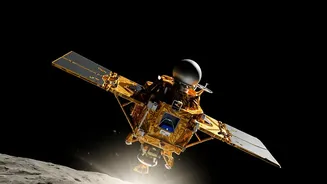
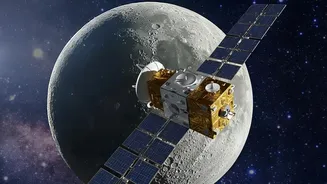
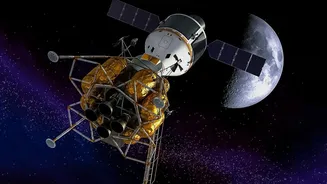
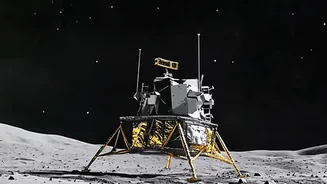
Chandrayaan-4 is far more complex than its predecessors, involving five separate spacecraft modules that must work in perfect harmony. These are the Propulsion Module, Descender Module (lander), Ascender Module, Transfer Module, and a Re-entry Module.
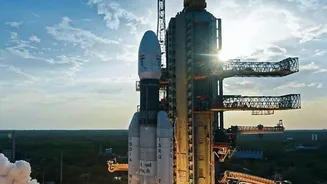
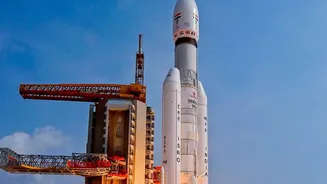
Due to the mission's substantial weight, ISRO plans to use two separate, powerful LVM3 rockets for the launch. The components will then meet and dock in Earth's orbit—a critical maneuver in itself—before embarking on their journey to the Moon. This modular approach is a first for ISRO and is crucial for achieving the mission's ambitious goals.
The Landing and Collection
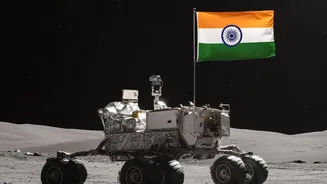
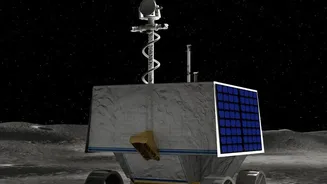
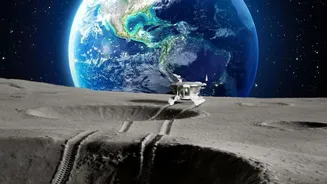
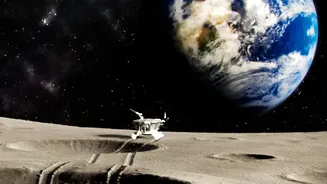
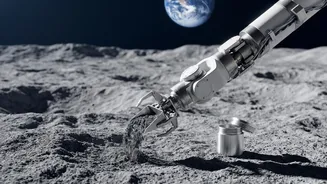
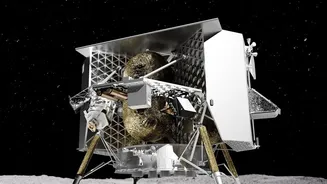
The mission will target the Moon's south polar region, an area of immense scientific interest due to the potential presence of water ice. After a soft landing similar to Chandrayaan-3, the real work begins. A robotic arm on the lander will get to work, scooping up surface soil and rocks. In addition to surface samples, a drilling mechanism will collect sub-surface material. These samples, expected to weigh around 2-3 kg in total, will be carefully transferred into sealed containers on the Ascender Module to protect them from contamination on their long journey home.
Lifting Off From the Moon
Here's where Chandrayaan-4 enters new territory for India: launching from another celestial body. Once the samples are secured, the Ascender Module will separate from the lander, using the lander itself as a launchpad to lift off from the lunar surface. This small rocket will carry its precious cargo into lunar orbit. This ascent is a make-or-break moment, requiring precise engineering to escape the Moon's gravity and begin the next phase of its return journey.
A Rendezvous in Lunar Orbit
While the lander and ascender are on the lunar surface, the Transfer and Re-entry modules will be waiting in orbit around the Moon. The Ascender Module, now in orbit, must perform a delicate and autonomous docking maneuver with the orbiting Transfer Module. Once connected, the sealed sample containers will be transferred from the Ascender to the Re-entry Module for the final leg of the trip. After the transfer is complete, the Ascender is left behind in lunar orbit. This orbital rendezvous and sample exchange is one of the most technologically demanding parts of the entire mission.
The Fiery Return to Earth
With the lunar samples safely stowed, the Transfer Module will fire its engines to push the Re-entry Module out of lunar orbit and guide it back towards Earth. The Re-entry Module is built to withstand the intense heat and pressure of entering Earth's atmosphere at high speed. It will protect the samples during its descent before landing, delivering a piece of the Moon into the hands of scientists. This final step completes a round trip of staggering complexity, paving the way for future crewed missions.
Why Bring Back Moon Rocks?
While rovers can perform on-site analysis, bringing samples back to Earth allows for far more detailed study. Scientists can use massive, state-of-the-art equipment that could never be sent to space. These first-ever samples from the lunar south pole could unlock secrets about the Moon's history, its geological diversity, and the origin of water in our solar system. The mission, expected to launch around 2028, is a crucial step in India’s long-term space exploration goals, including sending an Indian astronaut to the Moon by 2040.