







The Calorie Question: A Surprising Tie
The first assumption for many is that jaggery must have fewer calories than its refined counterpart. However, the numbers show a near-identical story. Per 100 grams, jaggery contains around 383 calories, while white sugar has about 387. This negligible
difference means that swapping sugar for jaggery spoon-for-spoon will not lead to calorie savings or aid in weight loss. Both are energy-dense sweeteners, and from a caloric standpoint, they are on a level playing field.
The Nutritional Edge: Minerals in Moderation
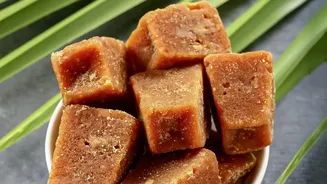
Here is where jaggery pulls slightly ahead. Because it is unrefined, jaggery retains minerals from the sugarcane juice, such as iron, magnesium, and potassium, which are stripped from white sugar during processing. A 100-gram serving of jaggery can offer a notable amount of these nutrients. However, it's crucial to consider portion sizes. A typical serving of 10 grams provides only a small fraction of your daily mineral needs, and consuming 100 grams of jaggery would mean ingesting almost 400 calories from sugar. While it is technically more nutritious, the mineral benefits at a realistic serving size are minimal.
Impact on Blood Sugar: The Glycemic Index Surprise
This is perhaps the most significant myth to bust. Many believe jaggery is safer for those managing blood sugar levels. However, data shows that sugarcane jaggery has a high Glycemic Index (GI), often around 84, which is even higher than that of white sugar (around 65). This means jaggery can cause a more rapid spike in blood glucose levels. For individuals with diabetes, this makes jaggery an unsuitable substitute for sugar, a fact many doctors and dietitians are quick to point out. The idea that jaggery is a 'diabetic-friendly' sweetener is a dangerous misconception.
Winter Wellness and Traditional Wisdom
In Ayurveda and traditional Indian culture, jaggery is considered a 'warming' food, making it a winter staple. It is believed to aid digestion, boost immunity with its antioxidants, and provide a quick source of energy to combat the cold. Many of these beliefs are tied to its mineral content, such as zinc and selenium. While a small piece of jaggery after a meal may help activate digestive enzymes, these benefits must be weighed against its high sugar content. The cultural role of jaggery is undeniable, but it should not be mistaken for a health supplement.
The Bottom Line: A Matter of Processing, Not Health
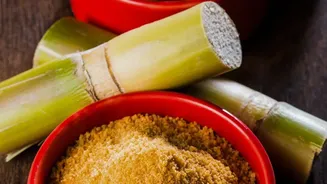
The primary difference between jaggery and white sugar lies in their processing. Jaggery is unrefined sugarcane juice, while white sugar is the result of extensive refining that removes all molasses and nutrients. Jaggery's slight nutritional advantage comes from what is left behind in this simpler process. However, both are predominantly sucrose. Choosing jaggery over sugar is a choice for a slightly more natural product with a trace amount of minerals and a different flavour profile, not a significant health upgrade. The core message from health experts is clear: all added sugars, including jaggery, should be consumed in moderation.