






What's Behind the Latest Surge?
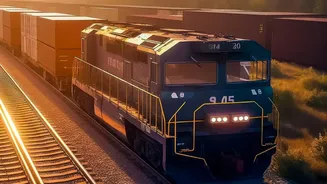
In July 2026, Indian Railways saw its freight loading jump by an impressive 9% compared to the same month last year, moving 141.3 million tonnes of goods. This wasn't due to a sudden price hike but rather a significant increase in demand from core sectors
of the economy. This activity boosted the transporter's earnings, resulting in an 8% rise in freight revenue for the month. The surge was powered by heavy-duty commodities, with iron ore transport climbing by over 22%, and both coal and food grains growing by 11.5%. This tells a story of a busy economy where factories are running, construction is active, and the agricultural sector is in full swing.
The Lifeline for Power and Food Security
Digging into the numbers reveals how crucial rail freight is to keeping the lights on and food on the table. The movement of coal, which accounts for a massive portion of the railway's freight business, saw a significant increase. Specifically, domestic coal supplies to thermal power plants were stepped up by 20% in July to meet rising energy demand, highlighting the railway's role in ensuring national energy security. At the same time, the transport of food grains and fertilizers also saw double-digit growth. This directly supports the agricultural supply chain, from farm to market, making the railway an essential artery for India’s food security.
A Heavy Load for Core Industries
The industrial sector is the other major driver of this freight boom. The sharp 22.2% increase in iron ore loading is a direct indicator of heightened activity in the steel and construction industries. As raw materials move from mines to factories, they rely heavily on the rail network. While this growth signals a healthy industrial appetite, it also puts a spotlight on logistics costs, which are notoriously high in India. These costs, estimated to be around 14% of GDP, are eventually baked into the final price of everything from new buildings and cars to consumer appliances. Efficient and affordable freight is therefore a critical component of competitive manufacturing.
The Bigger Picture: Shifting from Road to Rail
For decades, India's freight has been dominated by road transport, which handles nearly 70% of goods movement despite being more expensive per kilometre than rail. This is partly because road offers better last-mile connectivity and flexibility. However, it's also because rail freight prices have historically been used to cross-subsidise passenger fares, making train transport less competitive than it could be. The government's long-term strategy aims to change this. Through massive infrastructure projects like dedicated freight corridors and a planned ₹13 lakh crore expansion, the goal is to shift a larger share of cargo from congested highways to the more efficient and environmentally friendly railway network.
What This Means for Your Wallet
While the recent news is about a volume increase, not a price increase, the dynamics of logistics directly impact household budgets. Transportation is a fundamental cost in the supply chain, and any pressure on the system can contribute to broader inflation. The current surge in demand underscores the urgent need for the planned capacity expansion to prevent future bottlenecks. If India succeeds in making its rail network more efficient and captures a higher share of freight, it could significantly lower overall logistics costs for businesses. For the average consumer, this would eventually translate into more stable, and potentially lower, prices for the essential goods that travel across the country by train.