




Unearth Your Fabric Treasures
Before you start, it’s time for a treasure hunt in your own home. The perfect materials for your new pillows are likely fabrics you already own. Look for old clothes that have sentimental value but are no longer worn, like a cozy knit sweater, a sturdy
pair of denim jeans, or a soft flannel shirt. Old sarees with beautiful borders, kurtis with intricate embroidery, or even vintage tablecloths and bedsheets with interesting patterns can be transformed into stunning, one-of-a-kind cushion covers. These fabrics not only add texture and personality but also carry stories, making your decor truly unique. Avoid fabrics that are too delicate or stretchy unless you're an experienced sewer, as they can be challenging to work with. The goal is to find materials that are durable enough to become a functional and beautiful part of your home.
Gather Your Simple Supplies
The beauty of this project is its simplicity; you don’t need a professional sewing room. For a nearly-free project, the main component is a pillow insert. You can upcycle an insert from an existing, outdated throw pillow or even stuff your new cover with soft fabric scraps from other projects. If you do need an insert, they are inexpensive at craft stores. Besides the fabric and stuffing, you'll only need a few basic tools. For a sewing method, you’ll want a measuring tape, fabric scissors, pins, and a needle and thread. A sewing machine will make the job quicker but isn't necessary. For a completely no-sew version, fabric glue or fusible hem tape is your best friend. Having everything ready before you begin makes the creative process smooth and enjoyable.
The Easy Envelope-Closure Method
For those comfortable with basic sewing, the envelope pillow cover is a beginner-friendly project that yields professional-looking results without the hassle of zippers. First, cut a square piece of fabric for the front of your pillow, matching the dimensions of your pillow insert. For the back, cut two rectangular pieces that are the same width as the front piece but only about two-thirds of the length. These two back pieces will overlap to create the opening. Hem one long edge of each back piece. Then, lay your front fabric piece right-side up. Place your two back pieces on top, right-sides down, with the hemmed edges overlapping in the middle. Pin all around the outside edges and sew a straight stitch. Trim the corners, turn the cover right-side out, and insert your pillow.
No-Sew Pillow Magic
Don't know how to sew? No problem. There are several clever ways to create a beautiful pillow cover without a single stitch. One popular method involves fabric glue or fusible tape to create an envelope-style cover, following the same cutting and layering steps as the sewing method but using glue along the seams instead of thread. An even simpler technique is the tie-knot method, which works wonderfully with fabrics like fleece or flannel. Cut two identical squares of fabric, several inches larger than your pillow. Lay them on top of each other and cut fringes of equal length around all four sides. Then, simply tie the corresponding top and bottom fringes together in double knots, leaving one side open to insert your pillow before tying it shut. This creates a rustic, fringed look that’s both charming and incredibly easy to achieve.
Style Your Sofa Like a Pro
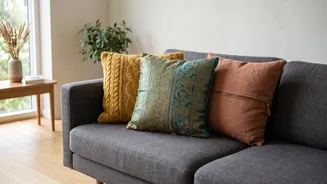
Now for the fun part: arranging your new creations to revamp your space. A successful pillow arrangement plays with colour, pattern, and texture. Start by choosing a cohesive color palette, pulling tones from your existing rug, curtains, or artwork. Mix patterns of different scales—for example, pair a large floral print with a small, subtle stripe. Don't forget to incorporate texture; a chunky knit sweater pillow next to a smooth cotton one adds depth and visual interest. Varying shapes and sizes also creates a more dynamic look. Place larger square pillows at the back and layer smaller ones or a rectangular lumbar pillow in front. The key is to create a look that feels collected and inviting, not perfectly matched.
Add a Personal Touch
To make your pillows even more unique, consider adding simple embellishments. You can sew on buttons from an old shirt, add yarn tassels to the corners, or create small fabric flowers from scraps. For a touch of rustic charm, consider stenciling a simple design onto a plain fabric pillow using fabric paint. If you've used an old pair of jeans, the back pockets can be positioned on the front of the pillow to create a clever holder for a remote control. These small details elevate your handmade pillows from a simple craft project to a collection of personalized decor items that truly reflect your style.