






The ballots are counted and the results of the 2026 US midterm elections are in. Yet, instead of a sigh of relief, global markets have responded with a wave of caution. The political landscape is set, but economic uncertainty remains high.
An Election Result, But Not a Resolution
Following the
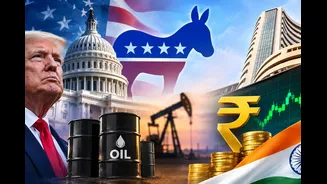
US midterm elections on November 3, 2026, the outcome has produced a divided government, with the Democratic party making significant gains and securing control of both the House and Senate. This result, a rebuke of the sitting Republican president's agenda, traditionally removes the immediate uncertainty of an election cycle. However, this year, it has simply traded one form of ambiguity for another. Financial markets from Asia to Europe reacted with caution, with stock futures and the US dollar initially declining as investors began to digest the implications. The core issue is that while the election is over, the resulting political dynamic sets the stage for potential legislative gridlock and policy clashes over the next two years.
The Double-Edged Sword of Gridlock
In investment circles, political gridlock—where a president from one party faces a Congress controlled by the opposition—is often viewed favourably. The logic is that it prevents sweeping, radical policy changes that could disrupt markets, such as major tax hikes or heavy-handed regulation. But in the current economic environment, this paralysis is a source of anxiety. Key challenges, such as persistent inflation, high government borrowing costs, and the need for a stable fiscal path, require decisive action. With a divided government, the risk of standoffs over crucial issues like the government debt ceiling becomes much higher, which could unnerve investors and weigh on economic growth. The first major test is expected around December 11, when politicians must agree on government spending to avoid a shutdown.
Sector-Specific Tremors and Tech Anxieties
The election's fallout is not uniform across all sectors. The tech industry, a major driver of stock market growth, is particularly nervous. There are widespread concerns that a Democrat-controlled Congress will push for tougher regulation on Artificial Intelligence (AI) and greater scrutiny over the vast energy and water consumption of data centres. This has put pressure on AI-linked stocks in the US and Asia. Conversely, clean energy stocks saw a boost on the expectation of a more favourable policy environment. For India, the implications are significant. The Indian IT sector, deeply integrated with the US tech ecosystem, will be watching for any signs of a slowdown in tech spending or changes to H-1B visa policies. There is also ongoing uncertainty around US trade policy, which could continue to affect Indian exporters.
Global Ripple Effects for India
A divided US government introduces volatility that extends far beyond American shores. For emerging markets like India, the key channels of impact are currency fluctuations, foreign investment flows, and oil prices. An initial weakening of the US dollar followed the election results. While a weaker dollar can be a mixed bag, sustained policy uncertainty in the US can lead foreign institutional investors (FIIs) to pull capital from markets they perceive as riskier, putting downward pressure on the rupee. On a more positive note for India, oil prices have tumbled. Brent crude fell below $100 a barrel amid hopes that a gridlocked US administration might be more inclined towards diplomatic solutions regarding the conflict in Iran, which would ease a major burden on India's import bill.
What Investors Are Watching Now
With the election results confirmed, investor focus is shifting from politics to policy and fundamentals. The primary factor moving markets is no longer who won, but what they can—or cannot—do. Key events on the horizon include the US Federal Reserve's decisions on interest rates, legislative negotiations over the budget and debt ceiling, and geopolitical developments, particularly in the Middle East. The market is now looking for clarity not from polls, but from policy announcements and economic data. Corporate earnings will also be scrutinised for signs of how businesses are navigating this landscape of high inflation and political friction. Ultimately, the post-election environment suggests that while the political race is over, the race for economic stability is just beginning.