




Our Vigilant Eyes in the Sky
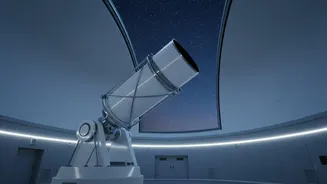
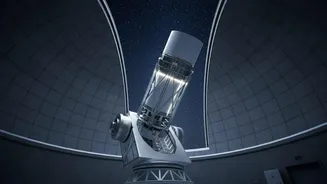
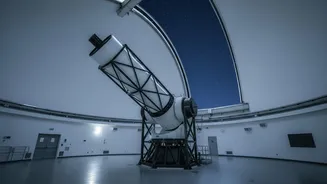
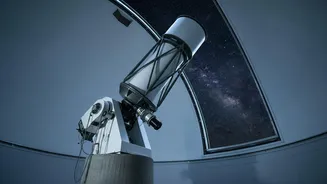
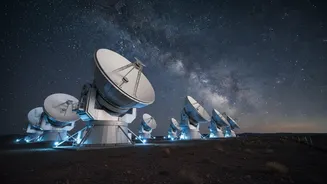
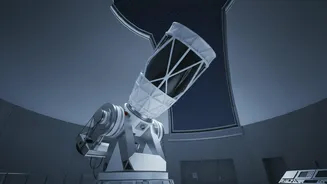
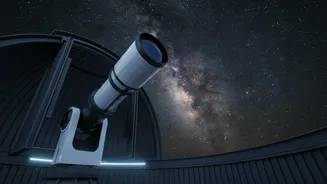
The primary method for spotting near-Earth objects (NEOs) involves optical telescopes that scan the sky. By taking multiple images of the same patch of space minutes apart, astronomers can identify faint points of light that move against the fixed backdrop
of stars and galaxies. This is the fundamental principle of asteroid hunting: find the moving target. While ground-based observatories like the Pan-STARRS and the Catalina Sky Survey have been workhorses, discovering thousands of NEOs, they have limitations. Weather, daylight, and atmospheric distortion all hinder their effectiveness. This is where space-based optical sensors come in, offering a clearer, uninterrupted view.
The Advantage of an Orbiting Outpost
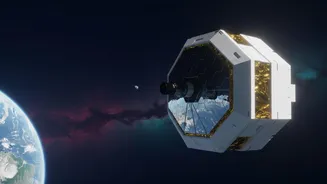
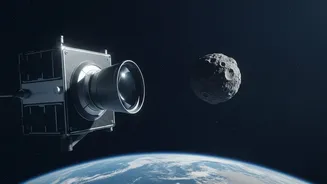
Placing optical sensors in space fundamentally changes the game for planetary defense. A space telescope operates far above the blurring effects of Earth's atmosphere, enabling round-the-clock, pristine observations. More importantly, it can be positioned at unique locations, like the Sun-Earth L1 Lagrange point—a spot of gravitational stability about 1.5 million kilometers from Earth. From this vantage point, a telescope can look toward Earth's orbit from the direction of the Sun, a notorious blind spot for ground-based surveys. Asteroids approaching from this sunward direction are incredibly difficult to detect from the ground because they are lost in the Sun's glare.
Seeing Heat, Not Just Reflected Light
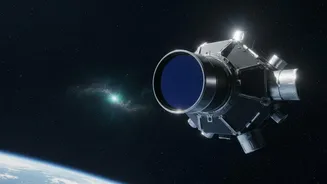
Many of the most advanced space sensors are designed to see in the infrared spectrum. This is a crucial capability because many asteroids are extremely dark, reflecting very little sunlight. However, as they are warmed by the Sun, they radiate that energy as heat, which glows brightly in infrared wavelengths against the cold backdrop of space. Missions like NASA's Near-Earth Object (NEO) Surveyor are specifically designed as infrared telescopes to exploit this. By detecting this heat signature, NEO Surveyor can spot asteroids regardless of how dark their surfaces are and make more accurate measurements of their size.
A New Generation of Sentinels
The next decade promises a revolution in asteroid detection, led by powerful new optical instruments. NASA's NEO Surveyor, expected to launch no earlier than 2027, aims to fulfill a congressional mandate to find over 90% of NEOs larger than 140 meters in diameter—big enough to cause major regional damage. In its five-year mission, it's expected to find hundreds of thousands of new objects. On the ground, the Vera C. Rubin Observatory in Chile has already demonstrated its immense power during pre-survey observations, discovering thousands of new asteroids. Once fully operational, it is expected to nearly double the number of known NEOs larger than 140 meters. The European Space Agency (ESA) is also contributing with missions like NEOMIR, an infrared telescope planned to provide early warnings for asteroids that ground telescopes cannot see.
From Detection to Defense
Finding an asteroid is only the first step. Optical observations are critical for calculating an asteroid's orbit with high precision. Each new data point helps refine its projected path, allowing scientists to determine if it poses any threat to Earth. This tracking data is vital for planetary defense missions. For example, ESA's Hera mission, which launched in 2024, is visiting the Didymos binary asteroid system to study the results of NASA's DART impact—a test of our ability to deflect a space rock. Future missions, like ESA's proposed Ramses, will study the asteroid Apophis during its remarkably close flyby of Earth in 2029, gathering data that will improve our ability to respond to future threats.