



Weather vs. Atmosphere: A Question of Scale
First, it’s essential to understand the fundamental difference between your daily weather report and a major atmospheric finding. Think of weather as what's happening in the atmosphere right now or in the very near future in your specific location. It's
the rain, sun, wind, and temperature for today and the next few days. Meteorologists who create these forecasts are focused on short-term conditions in the lower atmosphere, known as the troposphere. Atmospheric science, on the other hand, is a much broader field. It includes meteorology, but also climatology—the study of weather patterns over long periods—and the physics and chemistry of all atmospheric layers. When scientists talk about the impact of a volcano or a massive wildfire, they are often discussing its effect on this larger system, which may unfold over months or even years, not necessarily on tomorrow's chance of a thunderstorm in your city.
The Wildfire Effect: A Hazy Outlook
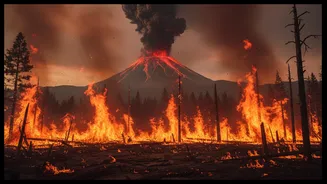
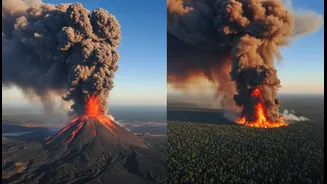
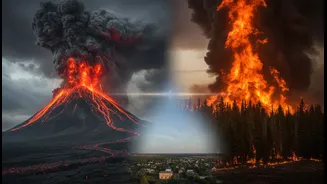
Massive wildfires, like those seen in Canada, Australia, or the western United States, are powerful enough to influence the atmosphere. They pump enormous plumes of smoke, ash, and other particles high into the air. These particles can be carried by winds for thousands of kilometres. The most immediate and noticeable impact is often on air quality and visibility far from the fire itself. These smoke particles can also affect weather, but in complex ways. They scatter and absorb sunlight, which can lead to cooler daytime temperatures on the ground beneath the smoke plume. The particles can also act as seeds for cloud formation, though this doesn't always lead to more rain; sometimes it results in smaller, less effective droplets that reduce rainfall. However, predicting these effects in a local forecast is incredibly difficult. While specialised models like the HRRR-Smoke model in the US try to forecast smoke movement and its impact on temperature and visibility, it’s a developing science. So, while an atmospheric finding might note a smoke plume over Asia, your local weather app is more concerned with immediate pressure and humidity levels that will determine tomorrow's conditions.
The Volcano Factor: A Global Cool Down
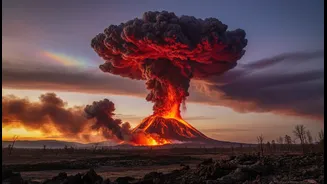
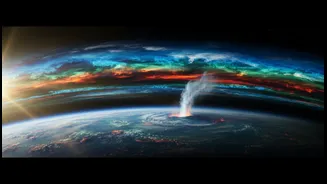
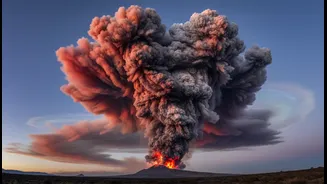
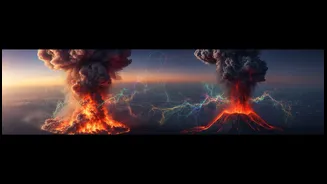
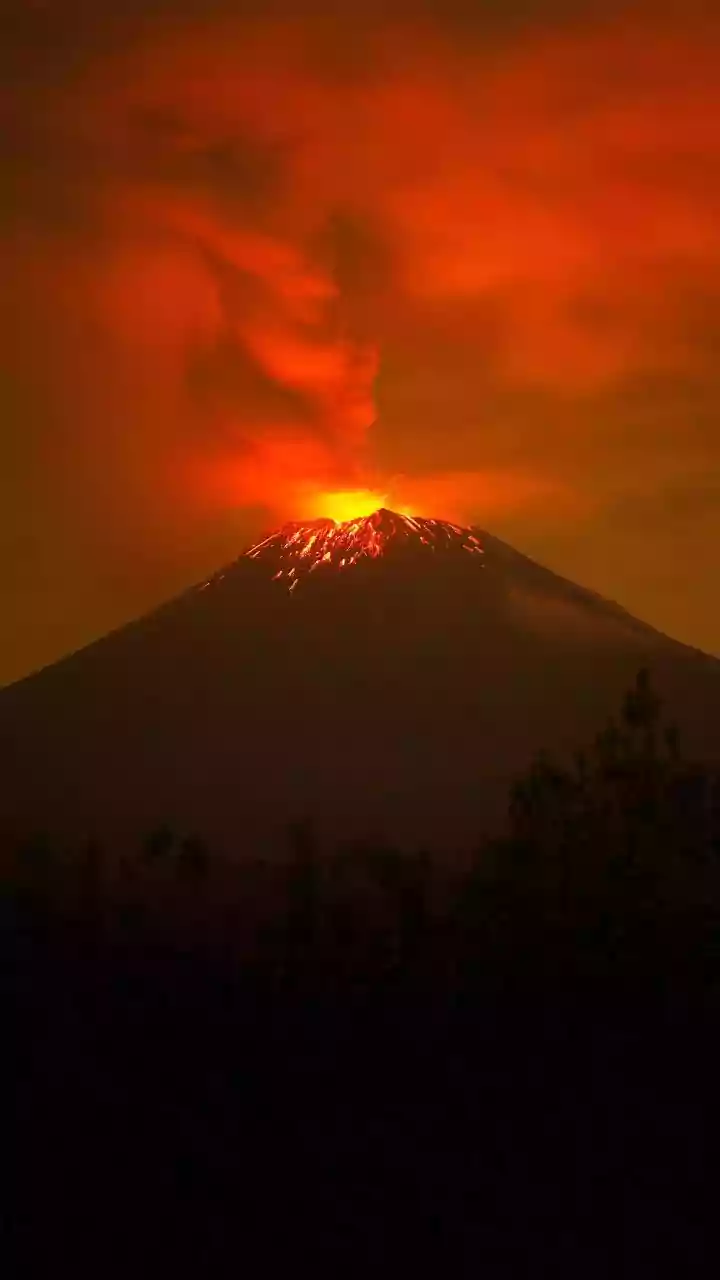
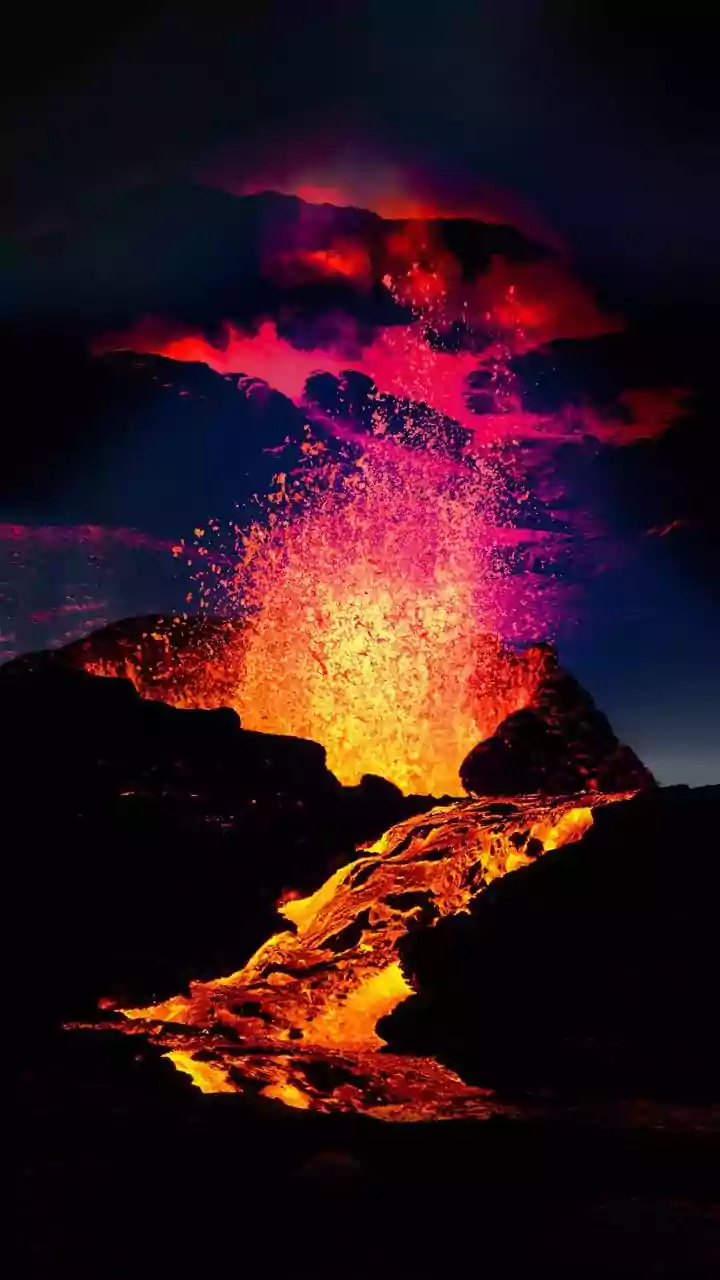
Major volcanic eruptions are in a league of their own. When a powerful volcano erupts, it can inject huge amounts of gases and ash into the stratosphere, the layer above where most of our weather occurs. While the heavy ash falls out relatively quickly, the key ingredient for a global impact is sulfur dioxide. This gas reacts with water in the stratosphere to form a haze of sulfate aerosol particles. These tiny droplets are highly reflective. They act like a planetary sunshade, scattering incoming sunlight back into space and causing a temporary cooling of the Earth's surface. The 1991 eruption of Mount Pinatubo in the Philippines, for example, injected about 20 million tons of sulfur dioxide into the stratosphere and cooled the planet by about half a degree Celsius for up to three years. This is a major atmospheric and climatic event. It can disrupt large-scale circulation patterns like monsoons and jet streams. However, unless you are directly in the path of the initial ash cloud, the global cooling effect is a slow, subtle shift in long-term averages, not something that will drastically alter your five-day forecast.
Why Your Forecast Stays Local
So, why the disconnect? It comes down to what weather and climate models are designed to do. Your daily weather forecast is generated by complex computer models that focus on immediate, high-resolution data: temperature, air pressure, humidity, and wind patterns right now and in the near future. They are built for short-term precision in a specific area. Climate models, which assess the impacts of volcanoes and long-term smoke trends, operate on a much grander scale in both time and space. They look at how the Earth's energy balance is changing over months and years across entire hemispheres. The effect of a volcanic aerosol cloud might slightly lower the average global temperature, a critical finding for climatologists, but that subtle shift is just one of countless variables that a local weather model has to process. The immediate conditions of a nearby pressure system will almost always have a greater and more predictable impact on whether you need an umbrella tomorrow than a haze of particles 20 kilometres up in the stratosphere.