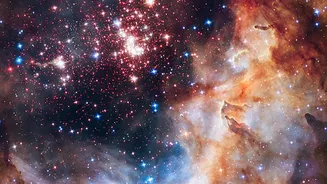

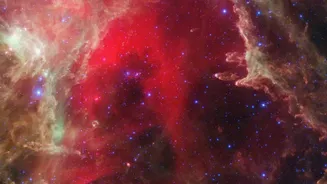
Cosmic Clouds of Creation
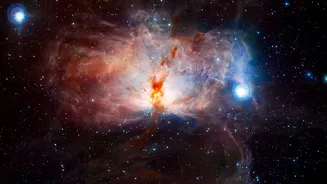
Before a star can shine, it begins as a cold, dense clump inside a vast interstellar cloud of gas and dust. These clouds, often called stellar or molecular nurseries, are the reservoirs of raw material for new stars and planets. For a long time, these
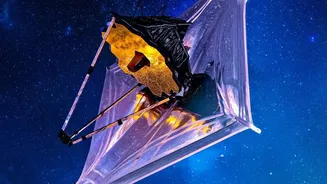
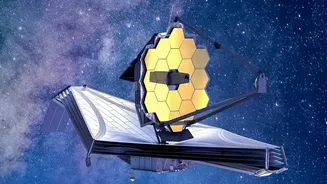
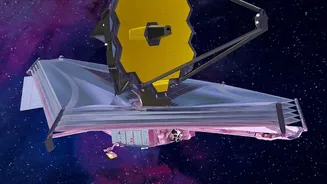
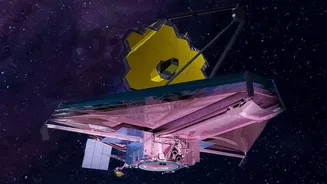
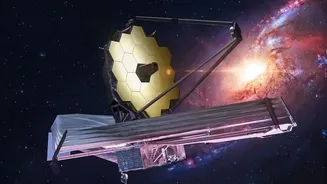
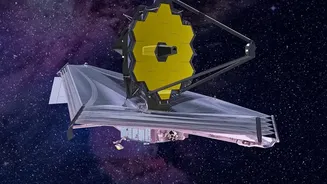
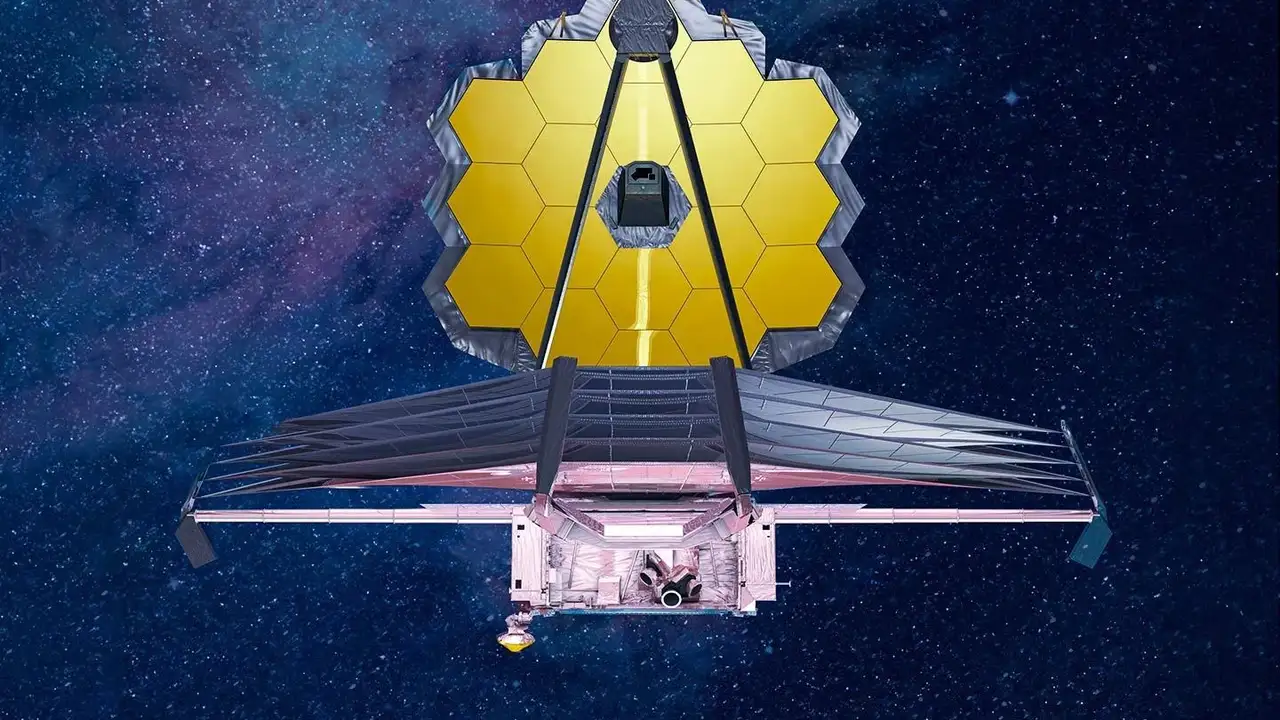
nurseries were difficult to study because the very dust that fuels star birth also acts like a thick fog, hiding the action from telescopes that see in visible light, like Hubble. But the JWST is different; it is an infrared telescope. This allows it to peer through the obscuring dust and capture the processes of star formation in stunning, unprecedented detail.
Webb’s Infrared Eyes
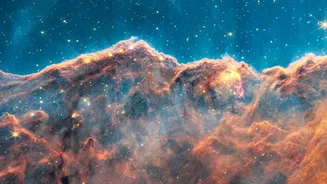
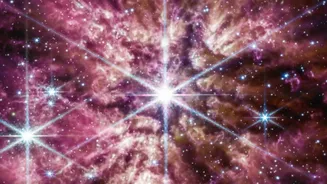
Webb’s power lies in its ability to detect infrared light, which is invisible to the human eye. Newborn stars and the heated dust around them glow brightly at these wavelengths. This capability allows astronomers to see protostars—infant stars still gathering mass from their parent cloud—and the turbulent environments they create. Recent JWST observations of regions like the star-forming cloud Sagittarius B2, located near the supermassive black hole at our galaxy's center, showcase this power. Webb has revealed the brilliant glow of newborn stars there in unmatched detail, helping scientists understand why this particular nursery is so much more productive than others in the galactic center.
The Recipe for a Star
The evolution of a star system begins when a dense pocket within a molecular cloud collapses under its own gravity. As the material falls inward, it begins to spin, forming a flattened, rotating structure called a protoplanetary disk around the central, growing protostar. This phase is chaotic, often featuring powerful jets of material blasting away from the star’s poles. The pressure and temperature at the core of the protostar build until they become immense enough to trigger nuclear fusion. At this moment, a star is truly born, releasing a tremendous amount of energy and light.
From Dusty Disk to New Worlds
The protoplanetary disk isn’t just leftover material; it’s the birthplace of planets. Over millions of years, the dust and gas particles within this spinning disk collide and stick together, a process called accretion. These clumps gradually grow into planetesimals, the building blocks of planets. JWST is giving us a closer look at this process than ever before. In a study of 72 young, Sun-like systems, Webb data is showing how gas escapes these disks over time, a crucial factor that sets the deadline for when gas giant planets can form. This process is a race against time: planets must form before the disk’s gas is blown away by the new star’s radiation.
A Glimpse of Our Own Past
By studying these distant stellar nurseries, we are effectively looking back in time, seeing processes that our own solar system underwent some 4.5 billion years ago. The elements forged in these nurseries, from simple ices to complex molecules, are the very same ingredients that formed Earth and, ultimately, us. Recent JWST findings have even shed light on a long-standing mystery: how rocky materials that require intense heat end up in ice-cold comets. Observations of a protostar called EC 53 revealed how these crystalline materials can be forged near the star and then transported to the colder, outer regions of the disk where comets form. Each new image from Webb isn't just a pretty picture; it's a new page in our own cosmic origin story.