







The Monastery on the Mountaintop
Nestled in a gorge about 45 kilometres from Leh, Hemis Monastery is the spiritual heart of Ladakh and the grand stage for its most famous festival. As the largest and wealthiest monastery in the region, belonging to the Drukpa Lineage of Tibetan Buddhism,
its history stretches back to the 17th century. For most of the year, it is a place of serene contemplation, its walls adorned with exquisite murals and thangkas. But for two days in the fifth month of the Tibetan lunar calendar, typically in June or July, its vast rectangular courtyard transforms into a divine theatre, drawing devotees and travellers from across the globe to witness a spectacle that feels suspended in time.
Honouring the Second Buddha
The Hemis festival, or Hemis Tsechu, commemorates the birth anniversary of Guru Padmasambhava, also known as Guru Rinpoche. Revered as the 'Second Buddha', he is credited with establishing Tantric Buddhism in Tibet and across the Himalayan region in the 8th century. According to legend, his mission was to vanquish the demons and dark forces that hindered the spread of Dharma. The festival is a vibrant retelling of his life and mission, a reaffirmation of his teachings, and a powerful ritual believed to bestow spiritual strength and good fortune upon all who witness it. It’s a living lesson in faith, passed down through generations of monks.
The Sacred Dance of Chaam
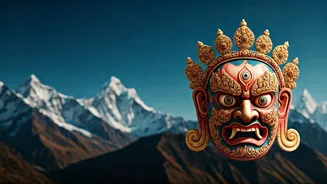
The centrepiece of the festival is the Chaam, a series of mystical masked dances performed by the lamas (monks) of Hemis. These are not mere performances but deep meditative rituals. Dressed in elaborate silk costumes of brilliant yellows, reds, and blues, the monks don colossal, expressive masks representing various deities, demons, and celestial beings. To the hypnotic rhythm of clashing cymbals, resounding drums, and the deep, guttural drone of long horns (dungchen), they move in slow, deliberate steps. Each movement is a symbolic gesture, a piece of a larger narrative depicting the cosmic struggle between good and evil. The atmosphere is electric, charged with devotion and awe, as the stories of Dharma's protectors unfold.
Masks of Gods and Protectors
The masks themselves are the festival's most striking feature. Far from being simple disguises, they are sacred objects, believed to be vessels for the deities they represent. Some masks are serene and peaceful, depicting compassionate Bodhisattvas. Others are terrifyingly wrathful, with bared fangs, bulging eyes, and skull crowns, representing the Dharmapalas or protectors of the faith. These fearsome figures are not evil; rather, they embody the fierce energy required to destroy ignorance and obstacles on the path to enlightenment. The climax often involves the ritual destruction of a dough effigy, symbolising the triumph of good over evil and clearing the path for another year of peace and prosperity.
A Ritual for the Land and People
While visually stunning for visitors, the Hemis festival is profoundly significant for the Ladakhi people. It is an annual spiritual cleansing, a time to gather, pray, and receive blessings. The monks who perform the Chaam undergo weeks of prayer and purification to prepare. For the laypeople who attend, many dressed in their finest traditional attire, watching the dances is an act of merit-making. They believe the sight of the sacred masks and the sound of the ritual music purifies the mind and plants the seeds of liberation. The event powerfully reinforces the inseparable bond between the Ladakhi landscape, its people, and their unwavering faith.