



A Philosophy of Efficiency
The Japan Aerospace Exploration Agency (JAXA) is cultivating a reputation for precision, persistence, and pragmatism. Instead of consistently retiring successful missions, the agency is developing a strategic habit of extending them, upgrading them, and learning
from them to build better, cheaper, and faster. This approach is part science and part sound business. By reusing proven designs and pushing existing hardware to new limits, JAXA reduces development costs, minimizes the risks associated with unproven technology, and accelerates the timeline for scientific discovery. It's a philosophy that prioritizes sustainability and clever engineering over brute force, ensuring that every yen invested in space yields the maximum possible return. This model is becoming increasingly important as space becomes a key driver of economic growth and international competition.
The Hayabusa2 Legacy: A Mission That Keeps Giving
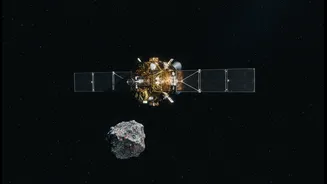
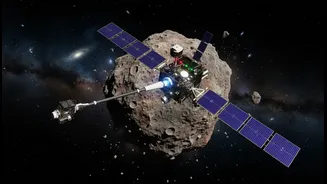
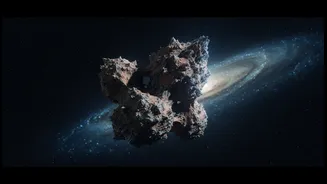
The prime example of JAXA’s strategy is the celebrated Hayabusa2 mission. After successfully returning samples from the asteroid Ryugu in 2020, the mission wasn't terminated. With a significant amount of its xenon propellant remaining, scientists charted a new course for the intrepid explorer. Dubbed Hayabusa2#, this extended mission is sending the spacecraft on a journey to two new asteroid targets, scheduled for flybys in 2026 and 2031. This not only maximizes the use of a perfectly functional spacecraft but also gathers invaluable data on different types of celestial bodies without the multi-billion dollar cost of a new launch. The technologies pioneered and proven by Hayabusa2, from its pinpoint landing capabilities to its sample collection techniques, are now the foundation for future missions. JAXA is actively planning a next-generation probe, which will leverage Hayabusa2's designs to lower risks and costs for a future sample-return mission in the 2030s.
Upgrading Hardware from Millions of Kilometres Away
JAXA's resourcefulness extends beyond mission extensions. The agency is also adept at enhancing the capabilities of its in-orbit assets through software and operational updates. This is akin to receiving a software update on your smartphone that unlocks new features, but for satellites operating in the harsh environment of space. For its Earth observation satellites, JAXA is actively developing technologies to dramatically increase data transmission speeds. This allows existing satellites to send back more high-resolution information, more quickly, effectively boosting their scientific output without touching the hardware. The agency is also focusing on AI-driven monitoring and diagnostics to improve satellite autonomy, allowing spacecraft to make smarter decisions and operate more efficiently with less ground control. This ethos of continuous improvement ensures that even years-old hardware can contribute to cutting-edge science.
Building on Proven Success
This strategy of iterative improvement is a core tenet of JAXA's operational DNA. The development of Hayabusa2 itself incorporated and improved upon the technologies from the first Hayabusa mission to shorten development time. This incremental evolution is visible across its programs. The ALOS series of Earth observation satellites, for example, has seen successive launches build upon the capabilities of the last. ALOS-2 succeeded the original ALOS, and the recently launched ALOS-4 further enhances the mission's ability to monitor disasters and environmental changes. This steady, step-by-step progression allows JAXA to manage complex technological challenges while ensuring reliability. The agency has stated that technology is not established in a single attempt, but through a second and third, perfecting systems through experience and persistence.