








The Global Scorekeepers of Rice
Several major international organizations are dedicated to tracking the world's food supply, with rice being a top priority. The Food and Agriculture Organization of the United Nations (FAO), the U.S. Department of Agriculture (USDA), and the International
Grains Council (IGC) are among the most influential. These bodies are the global scorekeepers. They collect vast amounts of data from countries around the world to create a comprehensive picture of the rice market. Their regular reports, such as the USDA's World Agricultural Supply and Demand Estimates (WASDE) and the FAO's Rice Price Index, are crucial benchmarks for governments, traders, and large-scale buyers. They analyze production, consumption, trade flows, and stock levels to provide a forecast, or 'outlook,' on where prices might be heading.
Inside the Assessment Crystal Ball
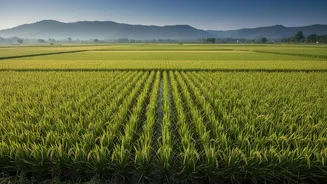
Forecasting rice prices is a complex task involving numerous variables. The primary factor is supply and demand. Analysts project harvest sizes from major producers like India, China, Thailand, and Vietnam. For 2026, projections point to a near-record global production, largely anchored by a massive crop in India. Another key element is government policy. India, which accounts for over 40% of the world's rice exports, holds significant influence. Its decisions on export restrictions or releases can reshape global prices almost overnight, as seen when the lifting of a ban flooded the market and stabilized costs. Other critical factors include weather patterns like El Niño, which can threaten yields, and macroeconomic trends such as shipping costs, currency fluctuations, and energy prices that affect the final cost for importers.
Why the Forecasts Can Differ
If all agencies look at the same world, why do their conclusions sometimes vary? The differences often come down to methodology, timing, and assumptions. One agency might release its report in mid-May, while another publishes in early August, capturing more recent weather or policy developments. For example, a forecast made before India's monsoon rains revived might be more pessimistic than one made after. Furthermore, agencies may place different weights on certain factors. One might be more focused on a projected drop in U.S. production, while another sees India's record output as the dominant, price-suppressing factor. The USDA might have different data sources or models for calculating ending stocks compared to the FAO, leading to slightly different balance sheets and, consequently, varied price outlooks.
The 2026 Outlook: A Broad Consensus
Despite minor differences, a general consensus has emerged for the 2026/27 market: global supplies are ample, and prices are expected to be stable or soften. The dominant narrative is that India's record production and massive exportable surplus are keeping a lid on global prices, countering risks from weather events or production issues elsewhere. Reports from early August 2026 show that FOB (Free On Board) export prices from key Asian hubs like India and Vietnam have been steady to slightly softer. While some reports noted a brief price rally in July due to weather concerns, the overall trend points towards a well-supplied market. This contrasts sharply with the volatility of previous years, suggesting a period of relative stability for major importers.
What This Means for India
As the world's largest producer and exporter, India is the central character in this story. The country's bumper crop not only ensures domestic food security but also positions it as the primary force shaping global market dynamics. For Indian farmers, this means that while production is strong, the massive supply could keep domestic and export prices from rising significantly. For consumers, the ample availability helps keep staple food costs in check. The government plays a delicate balancing act: managing its vast public stocks, ensuring fair prices for farmers through Minimum Support Prices (MSP), and using its export policy as a tool to manage both domestic inflation and international trade relationships. The surge in non-basmati rice exports in the first half of 2026 highlights the strong global demand for affordable Indian rice, particularly from African and Asian nations.