





What Is Seafloor Spreading?
Imagine the Earth's surface not as a solid shell, but as a jigsaw puzzle of massive, slow-moving tectonic plates. Where these plates pull apart deep under the ocean, we find mid-ocean ridges—vast underwater mountain ranges that wrap around the globe.
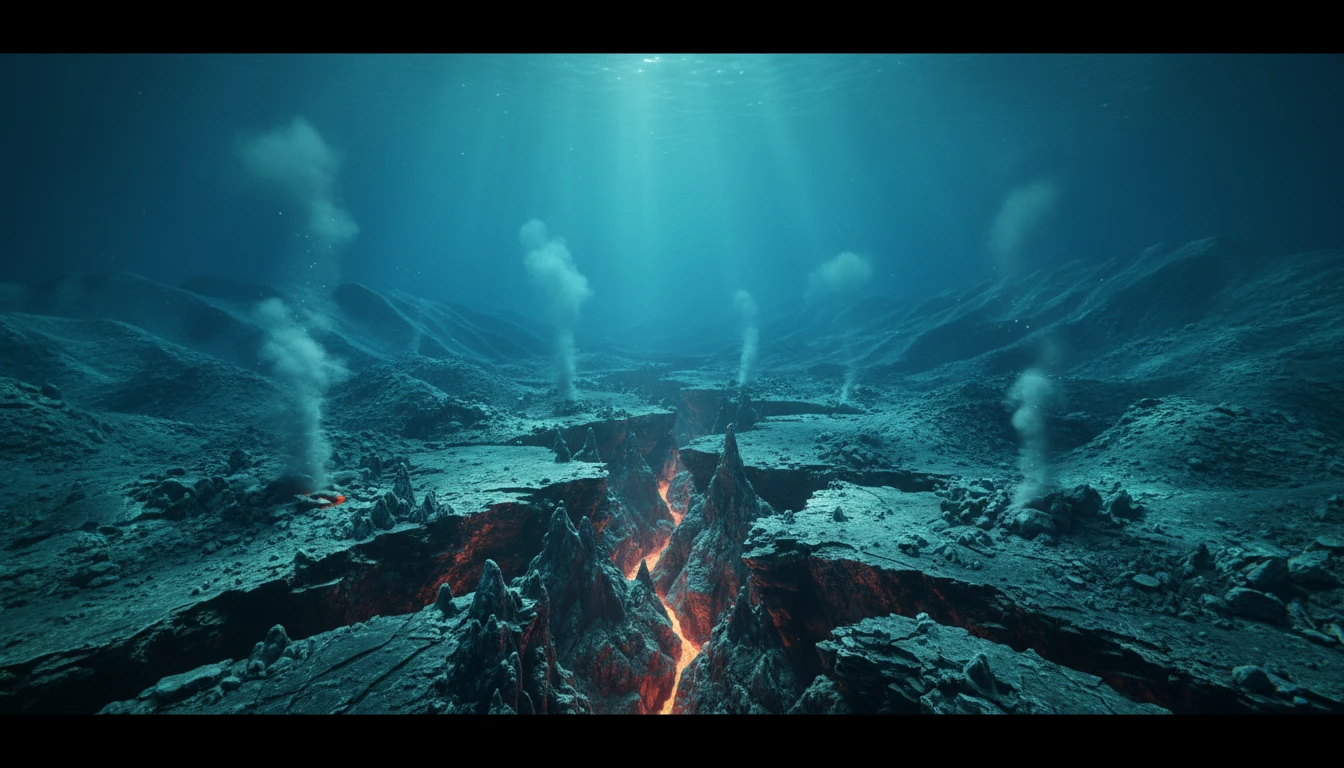
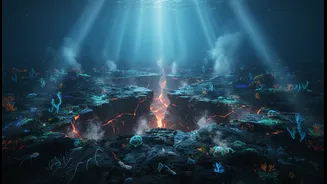
Seafloor spreading is the process that happens here. As the plates separate, magma from the mantle rises to fill the gap. When this molten rock meets the cold seawater, it cools and solidifies, creating a brand-new strip of oceanic crust. This process, happening continuously for billions of years, is responsible for creating about two-thirds of the Earth's surface. While the theory has been a cornerstone of geology for decades, observing it live has been impossible until now.
A Fortunate First in the Indian Ocean
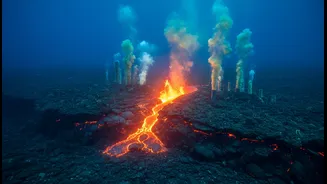
In April 2024, an international team of scientists got incredibly lucky. Just two months after deploying a sophisticated network of underwater monitoring instruments along the Southeast Indian Ridge, the seafloor roared to life. This ridge, which marks the boundary between the Australian and Antarctic plates, is a place of constant, albeit slow, separation. But what the instruments captured was anything but slow. A swarm of earthquakes began migrating along the ridge, and within days, the valley floor sank by up to four metres while the crust stretched apart by more than two metres. This single, rapid event accomplished what would normally take 30 to 60 years of steady plate movement, proving that the Earth's crust can grow in sudden, dramatic lurches rather than a slow, steady crawl.
How Scientists Watched It Happen
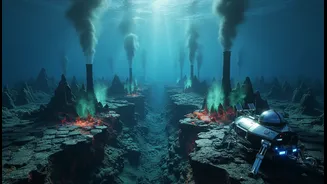
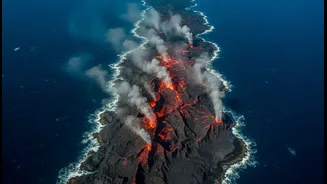
Observing an event kilometres beneath the ocean surface is a monumental challenge. The breakthrough came from a combination of technologies. An array of hydrophones (underwater microphones) detected the earthquake swarm, allowing scientists to track its movement. Acoustic beacons placed on the seafloor measured the horizontal stretching in real time, while bottom-pressure gauges recorded the vertical drop of the valley floor. By comparing high-resolution seafloor maps made before and after the event, researchers could see the result: an enormous outpouring of about 160 million cubic metres of lava, enough to create a new patch of Earth. This multi-pronged approach provided a complete picture, from the initial underground magma movement to the final eruption on the seafloor.
The Indian Ocean's Unique Ridges
The Indian Ocean is a unique laboratory for studying these processes. Its ridges, like the Carlsberg Ridge and the Southwest Indian Ridge, spread at slow to ultra-slow rates. This is different from the faster-spreading East Pacific Rise. Recent research on the Carlsberg Ridge, for instance, has shown how past changes in global sea levels may have influenced the timing of volcanic eruptions. By studying sediment cores, scientists can read the history of magmatic and hydrothermal activity going back thousands of years. The different spreading speeds and complex geology of the Indian Ocean, including the legacy of the Gondwana supercontinent's breakup, provide diverse conditions that help scientists build more robust models of how all mid-ocean ridges work.
Why This Discovery Matters
This real-time observation is more than just a scientific novelty; it helps solve a long-standing geological puzzle. Scientists have long noted a 'seismic deficit'—the movement measured from earthquakes alone didn't account for the full speed of plate separation. The 2024 event showed that a huge amount of movement happens without seismic shaking, driven directly by magma pushing its way through the crust. For India, this research has deep relevance. The Indian subcontinent's dramatic northward journey after breaking from Gondwana, which ultimately formed the Himalayas, was driven by these very processes in the nascent Indian Ocean. Understanding the engine of plate tectonics helps us better comprehend the forces that shaped our land and continue to pose seismic hazards today.