






Pelé, 1958
A 17-year-old Pelé arrived at the 1958 World Cup as a prodigious talent, but left as a global superstar. In the final against host nation Sweden, the teenager scored two goals that showcased his outrageous skill. His first was a moment of pure genius:
controlling the ball on his chest, flicking it over a defender's head, and volleying it home. He added a second with a late header, sealing Brazil's first-ever World Cup title and becoming the youngest scorer in a final. It was a performance that not only banished the ghosts of Brazil's 1950 final defeat but also announced the arrival of the man many consider the greatest of all time.
Geoff Hurst, 1966
To this day, Geoff Hurst remains the only man to have scored a hat-trick in a World Cup final. Playing at Wembley Stadium, Hurst was a pivotal figure in England's sole World Cup triumph. He scored England's first equalizer with a powerful header. His second goal, in extra time, is one of the most controversial in football history, bouncing down off the crossbar and adjudged to have crossed the line. He sealed his hat-trick and England's 4-2 victory in the final seconds, prompting the iconic commentary line: "They think it's all over! It is now."
Carlos Alberto, 1970
While he only scored one goal in the 1970 final, it is arguably the greatest team goal in history. As captain of a legendary Brazil side, Carlos Alberto provided the finishing touch to a sublime move against Italy. The build-up involved nearly the entire team, a symphony of passes that dissected the Italian defence. Pelé's perfectly weighted pass found Alberto storming in from his right-back position to rifle the ball into the corner of the net. The goal was the perfect embodiment of Brazil's 'joga bonito' (the beautiful game) and a fitting end to one of the most dominant World Cup performances ever.
Mario Kempes, 1978
On home soil, amidst a swirl of ticker tape and political tension, Mario Kempes put Argentina on his back. In the final against the Netherlands, 'El Matador' was the undisputed star. He opened the scoring with a powerful run and finish. After the Dutch equalized, the match went into extra time, where Kempes once again took charge. He scored a scrappy but determined second goal to restore Argentina's lead, before setting up the third to seal a 3-1 victory. His two goals in the final secured him the Golden Boot as top scorer and cemented his status as a national hero.
Diego Maradona, 1986
After a tournament in which he had been a force of nature, Diego Maradona defined the 1986 final against West Germany without even scoring. Heavily marked throughout the game, his genius still shone through. With the score tied 2-2 and just minutes remaining, Maradona produced a moment of pure inspiration. Spotting Jorge Burruchaga's run, he drew in his marker and threaded a perfect, defence-splitting pass. Burruchaga ran through to score the winner, giving Argentina its second World Cup. While he didn't score, Maradona’s assist was the defining act of a final controlled by his sheer will and unparalleled vision.
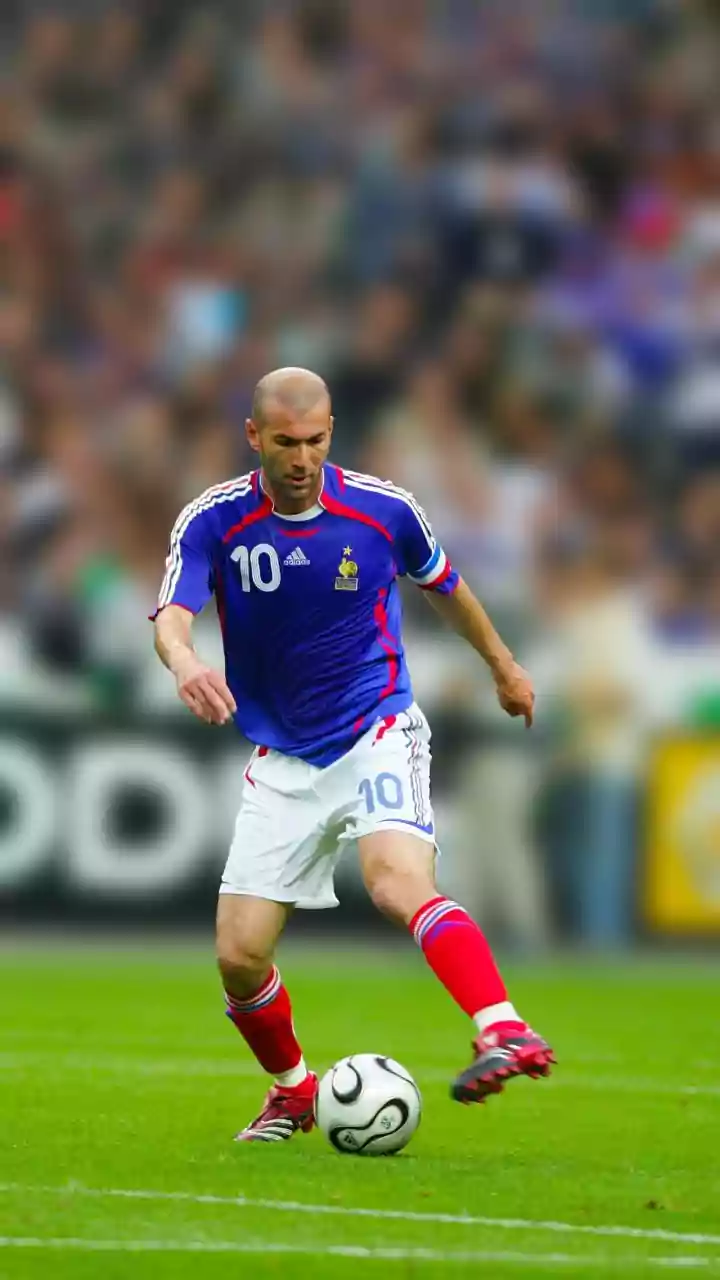
Zinedine Zidane, 1998
In the final against the heavily favoured Brazil, Zinedine Zidane, a player known for his elegant footwork rather than his aerial prowess, became an unlikely heading hero. The French midfielder scored two near-identical headers from corner kicks in the first half, giving the host nation a commanding 2-0 lead. The goals stunned Brazil, who were struggling with the mysterious pre-match ailment of their star, Ronaldo. Zidane’s performance, dominating the midfield and delivering the decisive goals, led France to its first-ever World Cup title in a 3-0 victory and cemented his place as a national icon.
Ronaldo, 2002
The 2002 final was the ultimate story of redemption for Ronaldo Nazario. Haunted by a mysterious convulsive fit that saw him shadow-box his way through the 1998 final, he returned four years later after career-threatening injuries. Facing Germany, Ronaldo, sporting a famously bizarre haircut, was a man on a mission. He scored both goals in a 2-0 victory for Brazil. His first came from pouncing on a rare mistake by German goalkeeper Oliver Kahn, and the second was a clinical first-time finish. It was a triumphant comeback, exorcising the demons of Paris and securing Brazil's fifth World Cup.
Andrés Iniesta, 2010
In a brutal and cagey final between Spain and the Netherlands, a moment of sublime skill from Andrés Iniesta proved decisive. The game was locked at 0-0 deep into extra time, a contest more remembered for its physicality and yellow cards than its flair. Then, in the 116th minute, the ball broke to Iniesta in the penalty area. With incredible composure, he let it bounce before volleying it past the Dutch goalkeeper. In celebration, he revealed a shirt dedicated to his late friend Dani Jarque. It was a goal that delivered Spain its first-ever World Cup and a moment of quiet brilliance that defined an era of dominance.
Mario Götze, 2014
Sent on as a substitute with the words of his coach Joachim Löw ringing in his ears—"Show the world you are better than Messi"—Mario Götze delivered a moment of pure magic. In a tense final against Argentina, locked at 0-0 in extra time, André Schürrle broke down the left wing and sent in a cross. Götze, just 22, controlled the ball flawlessly on his chest before volleying it into the net with his left foot in the 113th minute. It was a goal of incredible technical skill under immense pressure, securing Germany's fourth World Cup and making Götze the first substitute to score a winning goal in a final.
Lionel Messi, 2022
In what is widely considered the greatest World Cup final of all time, Lionel Messi finally captured the one trophy that had eluded him. Against a formidable French side, Messi was masterful. He opened the scoring from the penalty spot and was central to Argentina’s dominant first-half display. After France sensationally came back, Messi scored again in extra time to make it 3-2. Even after Kylian Mbappé completed his hat-trick to force penalties, Messi calmly scored his attempt in the shootout. His performance, full of skill and determination, culminated in him lifting the trophy, completing his legacy and fulfilling a nation's dream.