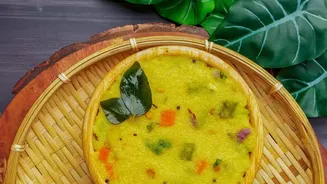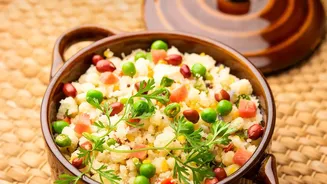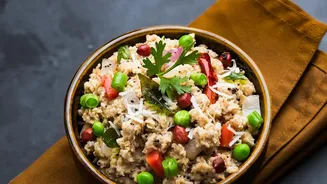


Think all upma is the same? Think again. This humble breakfast porridge is a master of disguise, changing its texture and taste from one region to the next. Let's take a culinary tour of India, one delicious spoonful at a time.
The Fluffy Classic: Rava Upma
This is the upma that most
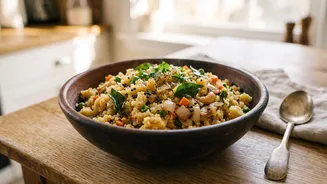
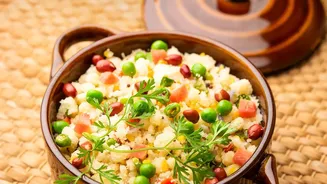
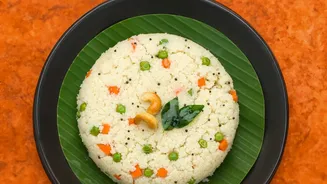
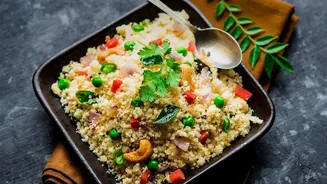
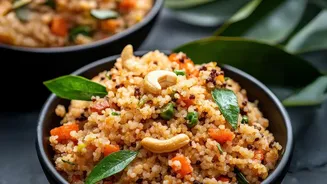
of India knows and loves. Made from dry-roasted semolina, or rava, its signature texture is light and fluffy, with each grain distinct yet soft. The key is in the roasting of the rava and the correct ratio of water, which, when absorbed, plumps up the grains perfectly. Often seasoned with mustard seeds, curry leaves, ginger, and sometimes cashews, this version is a comforting staple across the country, particularly in the South. Some variations include vegetables like peas and carrots, which add soft bites of texture and flavour.
The Spicy & Soft Sibling: Khara Bath
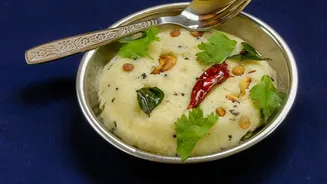
Head to Karnataka, and you'll find Khara Bath, a close cousin of rava upma but with a bolder personality. While it also uses semolina, Khara Bath is typically softer, richer, and spicier, often thanks to the generous use of ghee and a special masala powder like Vangi Bath or Sambar powder. This gives it a more complex flavour profile and a consistency that can range from soft and fluffy to a slightly runnier, porridge-like state, depending on the maker. It's a breakfast menu staple in Bangalore's eateries, often served with a scoop of sweet Kesari Bath in a combination called 'Chow Chow Bath'.
The Soft & Chewy One: Aval Upma
Made from flattened rice, known as 'aval' in Tamil or 'poha' in other parts of India, this upma offers a completely different mouthfeel. The rice flakes are first softened in water, which gives them a delicate, slightly chewy texture that’s much lighter than its semolina counterpart. The preparation is quick, as the flakes cook almost instantly. Often flavoured with onions, peanuts for crunch, and a squeeze of lemon juice for tang, Aval Upma is a popular breakfast in states like Maharashtra, Tamil Nadu, and Kerala.
The Pearly & Spongy Treat: Sabudana Upma
Popular in Maharashtra and parts of Karnataka, Sabudana Upma (or Khichdi) is made from tapioca pearls (sago). After soaking, these little white spheres turn translucent and develop a unique, slightly gummy and spongy texture. The trick is to soak them just right to avoid a sticky mash. When cooked with potatoes, roasted peanuts, green chillies, and cumin, the result is a delightful breakfast with a series of contrasting textures—soft potato, crunchy nuts, and the signature chewy pearls. It is also a popular dish during fasting periods.
The Coarse & Hearty Meal: Arisi Upma
A specialty from Tamil Nadu, Arisi Upma is made from coarse, broken raw rice (arisi) rather than semolina. This gives it a much heartier, grainier, and more substantial texture compared to the fluffiness of rava upma. The rice is often ground coarsely at home, sometimes with toor dal and peppercorns, which adds to its rustic character. Cooked with a simple tempering of mustard seeds, dals, and chillies, it’s a filling dish that feels more like a savoury rice porridge. A generous amount of grated coconut is often added, lending a subtle sweetness and moisture.
The Quick & Savoury Fix: Bread Upma
A modern, resourceful take on the classic, Bread Upma is the perfect way to use up leftover bread. Cubes of bread are tossed in a savoury masala of onions, tomatoes, and spices, absorbing all the flavours. The texture is entirely different from grain‐based upmas; it’s soft , slightly spongy , and savoury . Depending on how it's made , it can have crispy , toasted edges or be uniformly soft . It’s a quick‐fix breakfast or snack that comes together in minutes and can be customised with various vegetables and masalas.