

North: A Love for Dairy and Ghee
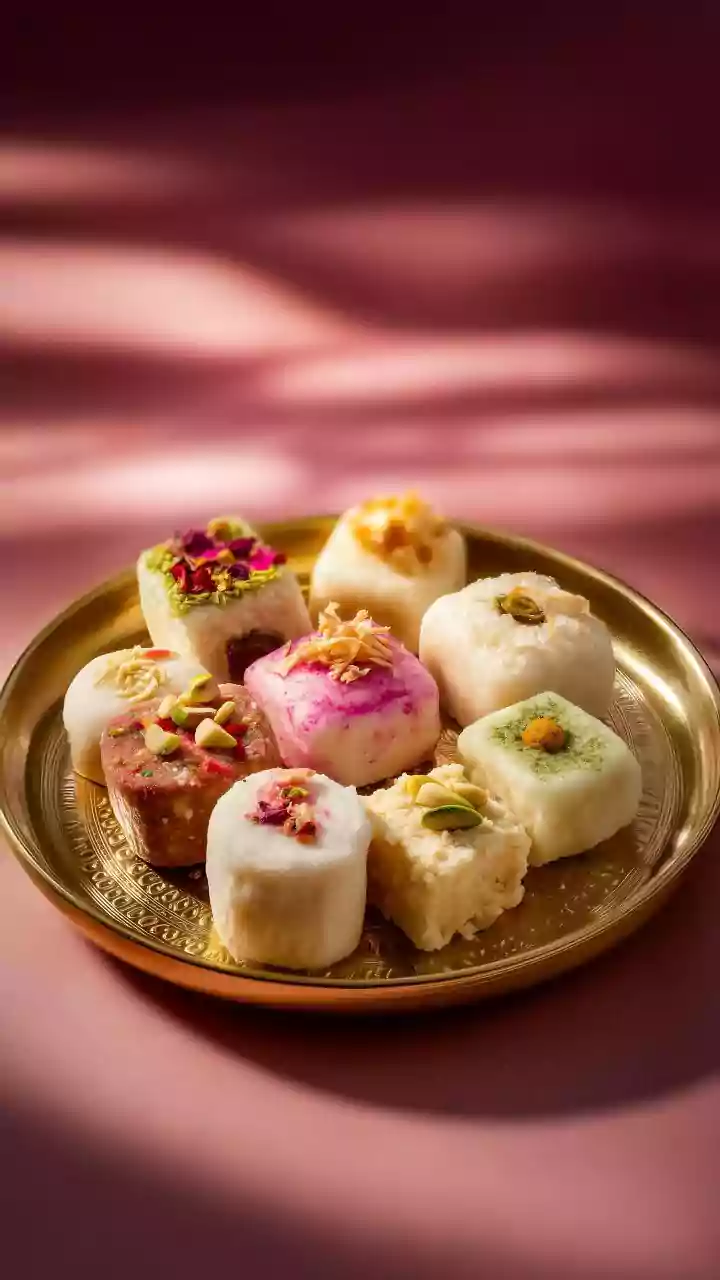
In North India, the Gangetic plains have long been the heartland of dairy production. This abundance of milk is directly reflected on the Diwali menu. Sweets are often rich, dense, and unapologetically decadent. Take the Gujiya, a crescent-shaped pastry
synonymous with Diwali in states like Uttar Pradesh and Rajasthan. It’s a fried parcel of flour stuffed with khoya (milk solids), nuts, and sugar. Similarly, ladoos made from besan (gram flour) and barfis crafted from milk and sugar are staples, all bound together with generous amounts of ghee. This reliance on milk and ghee isn't just about taste; it’s a direct reflection of the region's pastoral heritage and agricultural wealth, celebrating prosperity through the richness of dairy.
West: A Medley of Flour and Spice
Travel west to Maharashtra and Gujarat, and the Diwali platter, or 'Faral', transforms. While sweets are present, there is a celebrated balance between sweet and savoury. Maharashtrian tables feature Chakli, a spiral-shaped, crunchy snack made from rice or lentil flour. Another favourite is Karanji, which resembles the northern Gujiya but is often filled with a mixture of coconut, poppy seeds, and nuts. In Gujarat, the snack platter, or 'farsan', is legendary. Here, you’ll find treats like crispy, spicy Chorafali, made from gram flour. This focus on flour-based snacks, both fried and steamed, highlights the region's agricultural landscape, where lentils and various grains are key crops. It speaks to a culinary tradition that masterfully blends textures and spices.
East: The Artistry of Chhena
In the eastern states, particularly West Bengal, Diwali coincides with Kali Puja, and the sweets are a testament to the region's refined confectionary skills. The star ingredient here is chhena, or fresh cottage cheese, which yields sweets that are light and spongy rather than dense and heavy. Classics like Sandesh, a delicate sweet made from lightly sweetened chhena, and Rosogolla, spongy balls soaked in sugar syrup, are iconic. Even coconut gets a special place with Narkel Naru, sweet coconut ladoos that are essential to the celebrations. This preference for chhena-based sweets speaks to a culinary philosophy that values subtlety and technique, showcasing the artistry of turning milk into something ethereal and delicate.
South: Coconut, Rice, and Jaggery's Reign
Head south, and the influence of dairy gives way to the holy trinity of southern cuisine: coconut, rice flour, and jaggery (unrefined cane sugar). Unlike the milk-heavy sweets of the north, southern Diwali treats are often sweetened with jaggery, giving them an earthy, caramel-like flavour. A classic example is Adhirasam from Tamil Nadu, a fried pastry made from rice flour and jaggery that resembles a doughnut. Another beloved snack is Murukku, a crunchy, savoury spiral made from rice and lentil flour, a staple in Tamil Nadu and Karnataka. Mysore Pak, a dense, fudge-like sweet from Karnataka, is a glorious exception, made with gram flour, sugar, and an astonishing amount of ghee. These choices are a clear reflection of a coastal and agrarian economy where rice paddies and coconut groves dominate the landscape.