




The Kayaking Stroke: A Rotational Pull
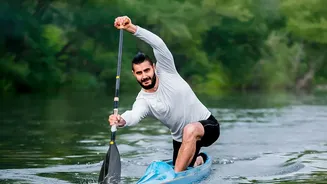
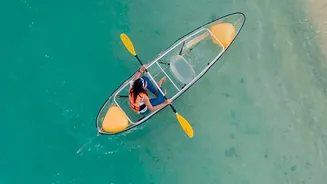
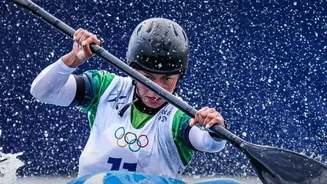
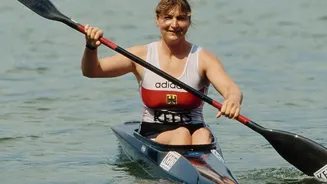
At first glance, kayaking seems like it's all about the arms. While your biceps and triceps are certainly involved, the real power comes from your core and back. A proper kayaking stroke is a rotational movement that engages your larger muscles to pull
the paddle through the water. As you plant your paddle, you rotate your torso, using your latissimus dorsi (lats) and back muscles as the primary movers. Your arms and shoulders act as the critical link, transferring this force to the paddle. This creates a powerful 'pulling' motion, where one arm pulls the blade back while the other pushes forward in a coordinated effort.
Arm and Shoulder Engagement in a Kayak
In kayaking, your shoulders—specifically the deltoids and rotator cuff muscles—are constantly at work stabilizing the joint and facilitating the complex rotation of the paddle stroke. The biceps engage to help pull the paddle, while the triceps on the opposite arm extend to push. This push-pull dynamic provides a balanced workout for your arms. However, beginners often make the mistake of 'arming it out,' relying too much on these smaller muscle groups, which leads to quick fatigue. Efficient kayakers know the secret is to let their larger back and core muscles do the heavy lifting, saving the arms and shoulders for control and power transfer.
The Paddleboarding Stroke: A Core-Driven Push
Stand-up paddleboarding presents a completely different mechanical challenge. Instead of a seated pull, the SUP stroke is a standing, downward push that relies heavily on core strength and balance. The power is generated by hinging at the hips and engaging your abdominal muscles to drive the paddle down into the water. Your arms should remain relatively straight, acting more like levers than primary movers. The top hand pushes down on the paddle's grip, while the bottom hand acts as a pivot point. The goal is not to pull the paddle through the water with your arms, but to pull your body past the planted paddle using your core.
Arm and Shoulder Engagement in a Paddleboard
While the core and back do a lot of work in SUP, the arms and shoulders play a crucial stabilizing role. The deltoids and back muscles are engaged to control the paddle's entry and exit from the water. However, unlike kayaking, there is less emphasis on bending the elbows, meaning less direct work for the biceps and triceps. The primary function of the arms is to maintain a strong frame for transferring power from the core. Proper technique is vital to avoid shoulder strain; keeping the top elbow below shoulder level reduces stress on the rotator cuff, a common area for injury in paddleboarders.
The Verdict: Which Is Better for Your Arms and Shoulders?
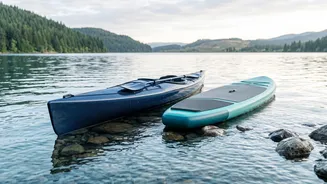
Deciding between kayaking and paddleboarding depends entirely on your fitness goals. If you are looking for a more intense and direct upper-body workout focused on building pulling strength and endurance in your back, shoulders, and arms (biceps and triceps), kayaking is the superior choice. The repetitive push-pull motion provides a robust workout for these specific muscle groups. Conversely, if your goal is a full-body workout that heavily emphasizes core strength, stability, and balance, stand-up paddleboarding is more effective. While it works the shoulders and back, the arm involvement is more for stabilization than for generating power. Ultimately, kayaking provides a more targeted upper-body strength session, while paddleboarding offers a more integrated, core-focused challenge.