





The Great Divide: How They Are Made
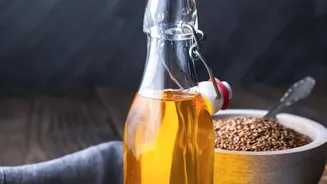
The fundamental difference between cold-pressed and refined oils lies in the extraction process. Cold-pressed oils are made by mechanically crushing seeds or nuts and forcing out the oil without using heat. This gentle method preserves the oil's natural
flavour, aroma, and, most importantly, its nutrients like vitamins and antioxidants. Think of it as the most natural form of the oil. Refined oils, on the other hand, go through a multi-step industrial process. This often involves high heat and chemical solvents to extract the maximum amount of oil from the source. The crude oil is then degummed, neutralised, bleached, and deodorised to remove impurities. This results in a neutral-tasting oil with a longer shelf life and a more consistent colour, but at the cost of losing many of its natural nutrients.
Smoke Point: Why It Matters for Your Health
You've likely seen it happen: you leave a pan on the stove for a moment too long, and the oil starts to smoke. This isn't just a sign of a burnt meal; it's a critical chemical event. The 'smoke point' is the temperature at which an oil begins to break down, burn, and produce visible smoke. When an oil is heated past its smoke point, its beneficial nutrients are destroyed, and it starts to release harmful compounds called free radicals. These substances can damage cells in your body and contribute to inflammation and other health issues. They also create acrolein, a chemical that gives burnt food its unpleasant, acrid taste. Therefore, matching your cooking method to your oil's smoke point is essential for both flavour and health.
Cold-Pressed Oils: Nutrient-Rich but Heat-Shy
Cold-pressed oils are celebrated for their superior nutritional profile. They are packed with antioxidants, Vitamin E, and beneficial monounsaturated and polyunsaturated fats, which are excellent for heart health. However, the very compounds that make them healthy also make them less stable under heat. Generally, cold-pressed oils have a lower smoke point. For example, unrefined, cold-pressed coconut and sesame oils have a smoke point of around 177°C, while unrefined groundnut oil's is about 180°C. This makes them unsuitable for high-temperature cooking like deep-frying, which typically happens between 180-200°C. These oils are best used for drizzling over salads, making dressings, or for low to medium-heat cooking like light sautéing.
Refined Oils: High-Heat Heroes
This is where refined oils shine. The refining process strips away the very impurities and free fatty acids that cause unrefined oils to smoke at lower temperatures. As a result, refined oils have a much higher smoke point, making them the safer choice for high-heat cooking methods. Refined groundnut oil can reach 230°C, refined coconut oil hits 230°C, and refined sunflower oil stands at 225°C. Ghee, or clarified butter, is another high-heat champion with a smoke point around 250°C, making it a traditional favourite for frying in many Indian households. While they lack the rich nutrient profile of their cold-pressed cousins, refined oils provide stability and safety when you need to turn up the heat.
Your Kitchen Guide: The Right Oil for the Right Job
The healthiest approach isn't to pick one type of oil and discard the other; it's to use them smartly. A well-stocked Indian kitchen should have both. Here’s a simple guide: For Deep Frying (Pakoras, Samosas, Vadas): Your best bet is a refined oil with a high smoke point, like refined sunflower, groundnut, or rice bran oil. Cold-pressed mustard oil (smoke point ~250°C) is a traditional exception that works well. For Tadka and Sautéing (Subzis, Dals): Most daily cooking happens at medium heat. A stable cold-pressed oil like groundnut or mustard works perfectly. Ghee is also an excellent and flavourful choice. For South Indian Cooking (Curries, Thorans): Cold-pressed coconut oil is ideal for the medium-heat cooking prevalent in Kerala cuisine, but avoid it for deep frying as its smoke point is relatively low. For Dressings and Drizzling: This is where cold-pressed oils excel. Use extra virgin olive oil, flaxseed oil, or cold-pressed sesame oil to add flavour and a nutrient boost to salads, dips, and finished dishes without any heat.