





Oranges: The Quintessential Winter Sunshine
Winter in India is synonymous with the sweet, tangy taste of oranges. While available in many parts of the country, the city of Nagpur in Maharashtra is famously known as the 'Orange City' for its prized mandarin oranges. The winter harvest here, particularly
the 'mrig bahar' crop, arrives in markets between December and March and is celebrated for its juicy pulp and perfect balance of sweet and tart flavours. In the northern plains, especially Punjab, the kinnow variety, a hybrid mandarin, also floods the markets from December to February, offering an affordable and juicy alternative. These citrus fruits are packed with Vitamin C, making them a perfect natural shield against winter colds.
Guava: A Crunchy and Nutritious Staple
Guava is a winter powerhouse, prized for both its unique flavour and immense health benefits. While it grows in many parts of the country, the region around Prayagraj (formerly Allahabad) in Uttar Pradesh is legendary for its superior varieties, including the 'Allahabad Safeda' and the pink-fleshed 'Surkha'. The winter crop, harvested between November and January, is considered the best in quality, yielding fruit that is crisp, fragrant, and intensely sweet. Rich in vitamin C and dietary fibre, guavas are excellent for boosting immunity and aiding digestion during the colder months when our metabolism tends to slow down.
Strawberries: A Sweet Western Ghats Delight
Once a rare luxury, strawberries have become a celebrated winter fruit, thanks largely to the hill station of Mahabaleshwar in Maharashtra. This region accounts for over 85% of India's total strawberry production. The season begins in November, but the peak period for the juiciest, most flavourful berries is from December to February. The cool climate of the Western Ghats provides the perfect conditions for growing sweet, vibrant red strawberries that are enjoyed fresh, in desserts, or as preserves. A visit to the strawberry farms for a 'pick-your-own' experience has become a popular winter activity for many.
Custard Apple (Sitaphal): A Creamy Seasonal Treat
Known as Sitaphal, this unique fruit with its bumpy green skin and creamy, sweet pulp is a beloved seasonal delicacy. Its peak season generally runs from September through February, making it a prominent winter fruit. Maharashtra is a leading producer, but it's also widely grown in states like Gujarat, Madhya Pradesh, and across the Deccan plateau. The fruit's flavour is often described as a blend of pineapple and banana, with a custard-like texture. Rich in vitamins and minerals, Sitaphal is best eaten fresh by scooping out the pulp, though it is also famously used in desserts like rabdi and ice cream.
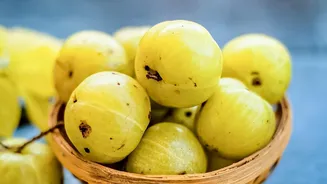
Indian Gooseberry (Amla): The Winter Immunity Booster
Amla is a true superfood of the Indian winter. This small, tart, green fruit is one of the most potent natural sources of Vitamin C, containing significantly more than an orange. Primarily available during the cooler months, amla is cultivated across various regions, with Uttar Pradesh being a major producer. While its sour taste can be intense when eaten raw, it is traditionally consumed in pickles, chutneys, juices, or as 'murabba' (a sweet preserve). Its powerful antioxidant and immune-boosting properties make it an essential part of the winter diet to ward off infections like coughs and colds.
Grapes and Pomegranates: Jewels of the Season
Winter also marks the peak season for grapes, particularly from Maharashtra, which is a major hub for their cultivation. From December to April, markets are filled with sweet and juicy table grapes. Similarly, pomegranates, with their ruby-red arils, are at their best during the autumn and winter months. Grown extensively in Maharashtra and Karnataka, this fruit is not only delicious but also packed with antioxidants that are beneficial for heart health. Both fruits add colour, flavour, and a wealth of nutrients to the seasonal fruit basket.