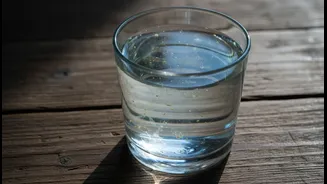







The Deception of a Clear Glass
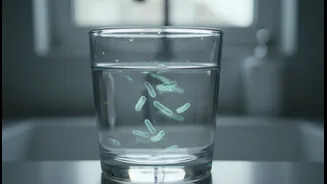
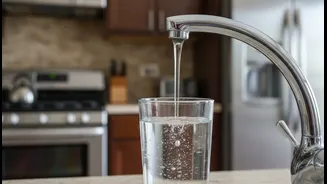
For millions of urban Indians, the clarity of water is the primary, and often only, test of its purity. If it looks clean, we assume it is. This is a fundamental and dangerous misconception. Typhoid fever, a life-threatening illness caused by the bacterium
Salmonella Typhi, is a severe public health issue across India, and its primary mode of transmission is contaminated water. Studies consistently show that the incidence of typhoid is significantly higher in urban centres like Delhi, Kolkata, and Vellore compared to most rural areas. This points to a systemic problem that isn't visible to the naked eye. The danger doesn’t come from cloudy, discoloured water, but from water that appears perfectly fine yet carries a microscopic threat.
Urban India’s Hidden Water Crisis
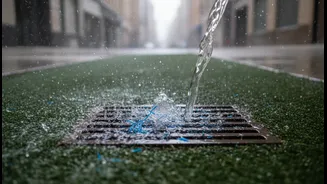
The problem lies buried beneath our cities. Much of India’s urban water infrastructure is decades old, with some pipelines dating back over 40 years. These aging pipes are often corroded, cracked, and prone to leakage. Compounding the issue is the fact that drinking water pipelines frequently run parallel to, or even within, open drains and sewage lines. When a water pipe has a crack and a nearby sewage line is also leaking, cross-contamination becomes almost inevitable. This allows fecal matter containing Salmonella Typhi to infiltrate the drinking water supply. Recent typhoid outbreaks in cities like Gandhinagar and Indore have been directly traced to such infrastructural failures, where sewage was found to be mixing with the municipal water supply through multiple pipeline breaches.
How Clean Water Turns Deadly
A critical factor that exacerbates this risk is intermittent water supply—a daily reality for a vast number of households. When water flows for only a few hours a day, the pipes run empty for long periods. This creates a state of negative pressure inside the water mains. Instead of water pushing out through cracks, the empty pipe acts like a vacuum, sucking in contaminated groundwater and sewage from the surrounding soil. This process, known as infiltration, introduces pathogens directly into the water distribution network. By the time the water supply is restored and flows from the tap, it may appear clear, but it has already been contaminated on its journey. The water might have been clean at the treatment plant, but it becomes a vehicle for disease by the time it reaches a home.
The Science of Invisibility
So why does contaminated water still look clear? Water clarity, or its opposite, turbidity, is a measure of how light is scattered by suspended particles like silt, clay, or algae. These are particles large enough to be seen or to make water appear cloudy. Bacteria, on the other hand, are microscopic. Salmonella Typhi is far too small to affect the visual clarity of water unless present in astronomically high, and unlikely, concentrations. Therefore, a simple visual inspection is useless for detecting microbial contamination. Even some home filtration systems that remove sediment might not eliminate bacteria, and the use of contaminated tap water to wash uncooked foods like salads can still lead to infection. This invisibility is what makes waterborne pathogens like Salmonella so treacherous.
Beyond What the Eye Can See
Detecting Salmonella Typhi in water is notoriously difficult even for scientists, as the bacteria are often present in very low concentrations and can be hard to grow in a lab. Standard tests for bacterial contamination can take up to 24 hours, meaning that by the time a threat is identified, thousands may have already been exposed. Researchers are exploring faster methods, such as detecting the bacteria's DNA or searching for specific viruses called bacteriophages that infect Salmonella, to build better environmental surveillance systems. These advanced studies confirm that the danger is real and widespread, even if it’s hidden from our senses. They reinforce the fact that our reliance on visual cues for safety is misplaced and that true water security depends on robust infrastructure and reliable, modern testing.