





The STRIDE Initiative
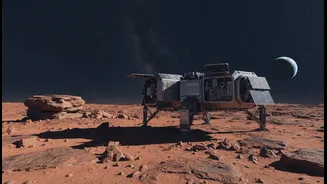
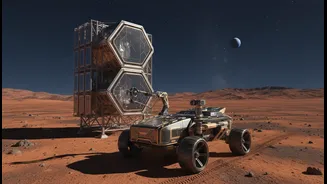
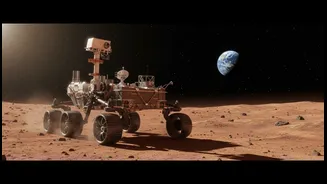
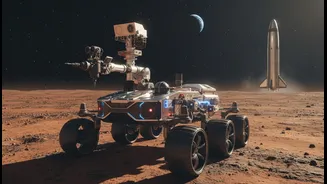
On July 8, 2026, NASA announced seven contract awards under a new initiative called STRIDE, which stands for Science Transport and Robotic Innovation for Deployment and Exploration. The core mission is to foster the development of the next generation
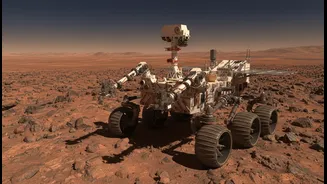
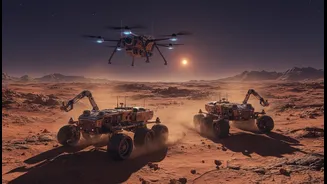
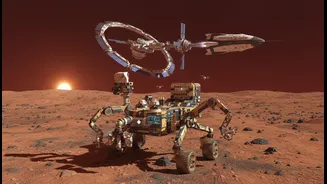
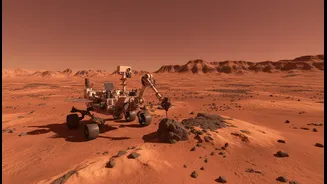
of robotic mobility systems for Mars. The space agency is looking for innovative ways to explore the Red Planet, seeking concepts for robots that can travel farther and navigate much tougher terrain than current rovers like Curiosity and Perseverance have been able to tackle. The total potential value of these awards is approximately $17 million, distributed among the selected companies, with work scheduled to begin in the fall of 2026. This investment signals NASA’s intent to lean on the private sector to brainstorm solutions for the future of planetary exploration.
Meet the Contenders
The seven companies selected represent a diverse mix of established aerospace players and ambitious newcomers. The list includes AeroVironment, Astrobotic, Venturi Astrolab, Ground Control Robotics, Honeybee Robotics, Intuitive Machines, and MEI Technologies. Some of these names are already well-known in the space industry. Honeybee Robotics, for example, has a long history of providing critical hardware for past Mars missions, while Intuitive Machines has been active in lunar exploration. By bringing together this range of expertise, NASA is casting a wide net for ideas. The agency isn't just looking for one type of solution; it's cultivating a competitive ecosystem of innovation to solve some of the most complex challenges of traversing another world.
Why This Isn't a Guarantee
The key to understanding these contracts is to recognize them for what they are: feasibility studies. A total value of $17 million spread across seven different companies means each is receiving a relatively modest sum. This is not money to build a flight-ready Mars rover. Instead, it’s seed funding for the companies to develop and present detailed concepts and designs. NASA is essentially paying for blueprints and brainpower at this stage. It’s a common and effective strategy in large-scale engineering projects. By funding multiple studies, the agency gets to evaluate a wide variety of approaches before committing billions of dollars to a single design. It allows them to identify promising technologies and potential pitfalls early in the process, maximizing the chances of success while minimizing financial risk.
The Broader Mars Context
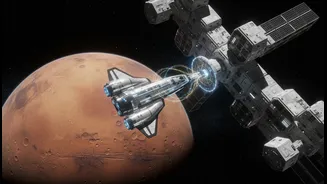
These STRIDE contracts don't exist in a vacuum. They arrive at a time when NASA is fundamentally reassessing its entire Mars Sample Return (MSR) program. The ambitious MSR campaign, which aims to bring Martian rock and soil samples back to Earth, has faced significant budget overruns and scheduling delays, prompting the agency to seek faster and more affordable alternatives. In early 2026, it was reported that NASA was delaying its final decision on the MSR mission's architecture to consider new options, including more commercial involvement. The STRIDE initiative fits perfectly into this revised strategy. It's a way for NASA to explore cutting-edge commercial capabilities that could potentially be integrated into a redesigned, more cost-effective Mars exploration program in the future.
A Boost for the Robotics Industry
Even for the companies that don't ultimately win a future construction contract, these studies are incredibly valuable. They provide a direct opportunity to work on some of the most advanced robotics challenges in the world, funded by a premier client. The research and development spurred by these contracts can lead to terrestrial applications and strengthen the companies' technological portfolios. This approach stimulates the entire commercial space and robotics sector. It pushes the industry to develop new capabilities for navigating extreme environments, which has benefits far beyond Mars exploration. For the industry, being one of the seven chosen is a major vote of confidence that can attract further investment and talent, regardless of the final outcome with NASA.