



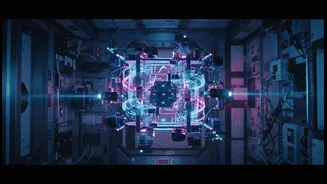


What Is the Cold Atom Lab?
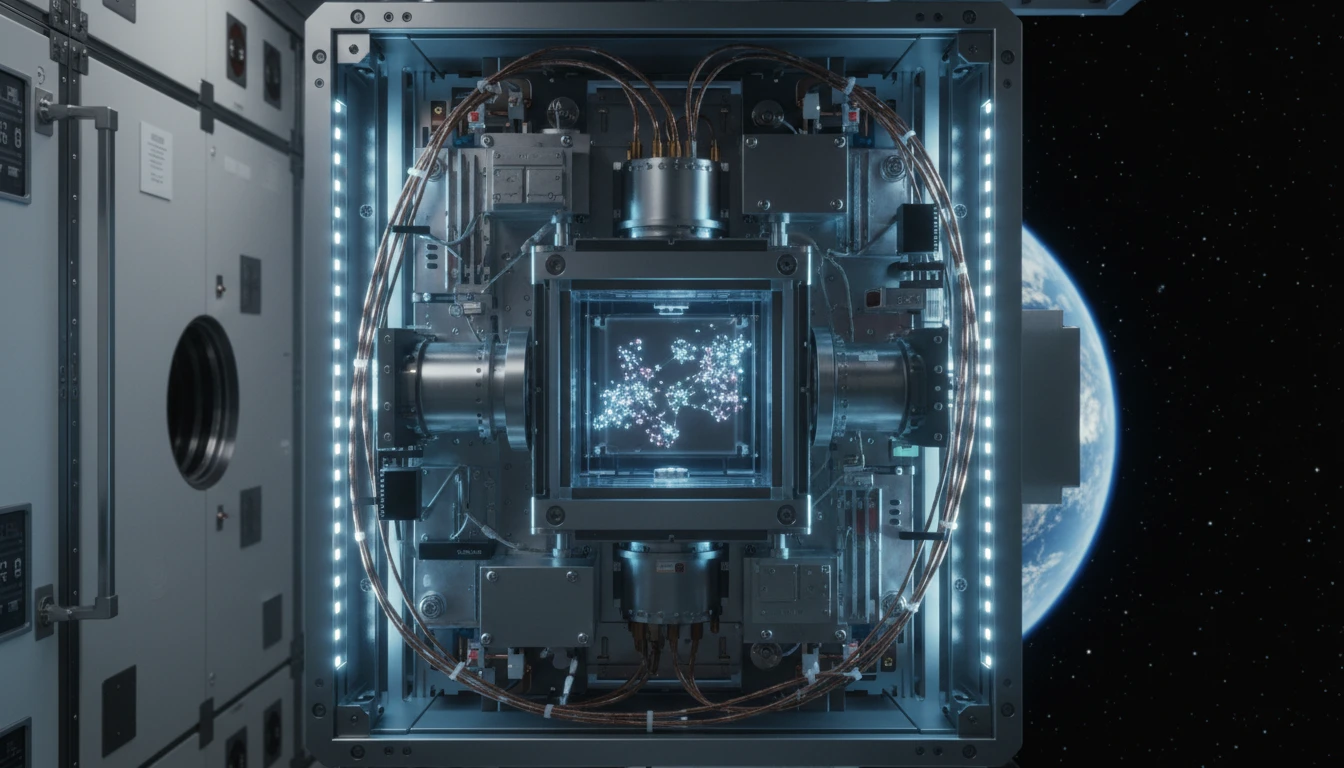
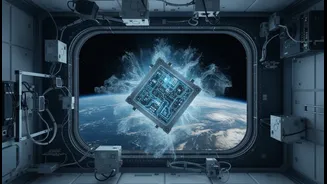
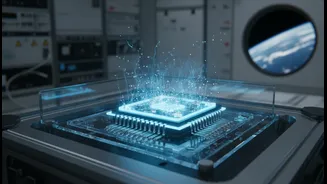
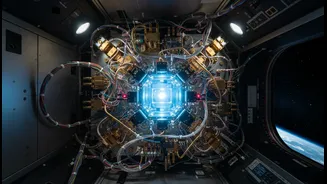
The Cold Atom Lab (CAL) is a one-of-a-kind physics research facility orbiting Earth on the International Space Station (ISS). Remotely operated by scientists on the ground, its mission is to study the strange behaviour of atoms cooled to temperatures
just a fraction of a degree above absolute zero, or minus 273.15 degrees Celsius. At these extreme temperatures, atoms slow to a near standstill, revealing bizarre quantum properties that are normally hidden. While scientists have similar labs on Earth, the microgravity environment of space is a game-changer. On the ground, gravity pulls on the fragile atom clouds, causing them to fall and limiting observation time to mere fractions of a second. In space, these observations can last for much longer—up to 10 seconds—giving researchers an unprecedented window into the quantum world.
Creating a Fifth State of Matter
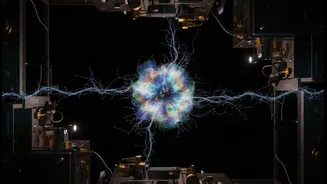
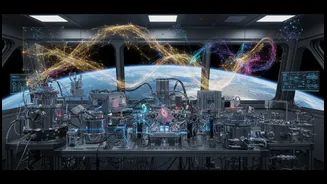
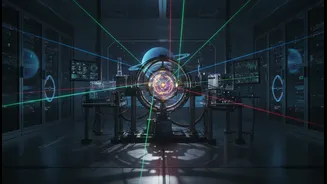
The primary goal of CAL is to create and study a state of matter predicted by Albert Einstein and Satyendra Nath Bose called a Bose-Einstein condensate (BEC). Often referred to as the fifth state of matter after solids, liquids, gases, and plasmas, a BEC forms when a cloud of atoms is cooled so intensely that the individual atoms lose their distinct identities and behave like a single, unified wave. This allows scientists to observe quantum phenomena, which typically occur at a subatomic scale, on a much larger, macroscopic level. To achieve this, the lab first heats metals like rubidium or potassium into a gas. It then uses a sophisticated system of lasers to slow the atoms down, draining their energy and cooling them dramatically. Finally, a magnetic trap holds the atom cloud in place for further cooling, pushing it ever closer to absolute zero.
What the New Upgrades Mean
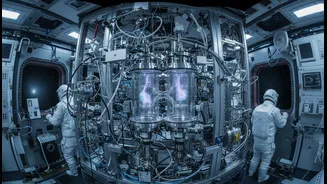
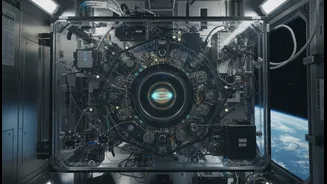
The headline-making "strengthening" of the lab comes from a series of significant upgrades installed by astronauts in 2026. This marks the fourth major enhancement since CAL was first installed in 2018. One of the key improvements is a redesigned magnetic trap that gives scientists more flexibility to alter the shape of the quantum gas clouds they create. This newfound control allows them to investigate new properties and interactions of ultracold atoms. Additionally, new and improved metal sources for creating the initial gas clouds have been introduced, along with upgraded electronics to power the more advanced experiments. These upgrades expand the range of possible experiments, allowing for the creation of BECs up to five times larger than before and supporting research from five international science teams.
Pushing the Frontiers of Science
This research isn't just about creating exotic states of matter for curiosity's sake. The work being done on CAL has profound implications. Scientists hope to use these ultracold atoms to test Einstein's principles of relativity and investigate some of the biggest mysteries in physics, such as the nature of dark matter and dark energy. The extreme precision offered by these quantum systems could lead to a new generation of ultra-sensitive sensors. Future applications could include navigation systems for deep space missions that don't rely on GPS, better atomic clocks, and sensors that can create high-precision maps of the gravity on Earth or the Moon. As one project scientist put it, this is the era of "quantum 2.0"—moving from the revolution that gave us lasers and MRIs to the direct manipulation of quantum states, with the potential for similar technological leaps.