





Check 1: Understand the 'Semicryogenic' Fuel
First, let's break down the name. A rocket engine needs two things: fuel to burn and an oxidizer to make it burn in space where there's no air. A fully cryogenic engine uses liquid hydrogen as fuel and liquid oxygen (LOX) as the oxidizer, both of which
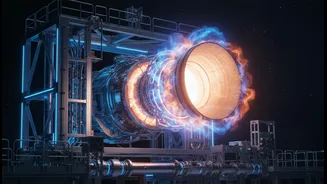
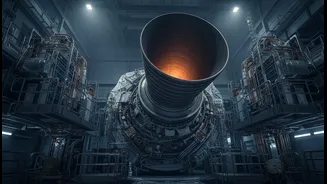
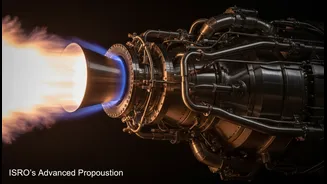
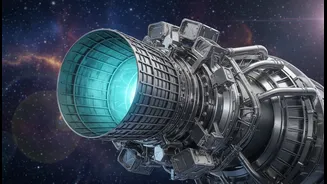
must be kept incredibly cold. A semicryogenic engine, like ISRO's new SE2000, is a clever hybrid. It uses liquid oxygen as the oxidizer but switches the fuel to a highly refined form of kerosene, which ISRO calls 'Isrosene'. Only the oxygen needs to be stored at cryogenic (super-cold) temperatures, hence the term 'semi'. This might seem like a small change, but it has huge benefits: kerosene is cheaper, denser, and far easier to store and handle than liquid hydrogen, making the entire launch process more cost-effective and efficient.
Check 2: Know Why This Engine Is a Game-Changer
The SE2000 engine is not just another piece of hardware; it's the powerhouse for India's future in space. Its primary job is to power the core stage of ISRO's launch vehicles. Initially, it will replace the current L110 stage of the Launch Vehicle Mark-3 (LVM3), India's heaviest rocket. This single upgrade will boost the LVM3's payload capacity to Geostationary Transfer Orbit (GTO) from four tonnes to around five or even six tonnes. That means India can launch heavier communication satellites, more complex science missions, and place more satellites into orbit in a single flight. This engine is also the technological backbone for the planned Next Generation Launch Vehicle (NGLV), a future-proof, reusable rocket designed to secure India's role as a major player in the global launch market.
Check 3: Follow the Key Testing Milestones
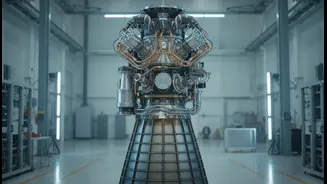
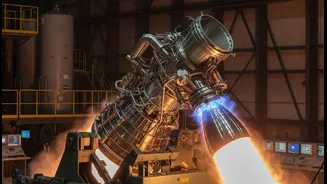
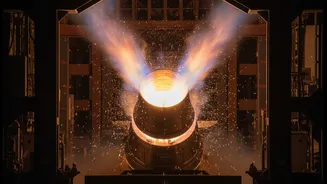
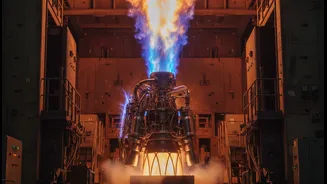
Rocket engine development is a careful, step-by-step process. The recent news has been about 'hot tests' of the Power Head Test Article (PHTA). Think of the PHTA as the engine's heart—it includes the crucial turbopumps and pre-burner, but not the main combustion chamber and nozzle. ISRO first validates this core assembly. On June 24, 2026, ISRO successfully completed the eighth PHTA test, reaching 175 tonnes of thrust, or 88% of the engine's full power. The next major milestone to watch for is the first integrated engine hot test, where the PHTA is combined with the thrust chamber and fired at its full 200-tonne thrust. This will be followed by tests of the full rocket stage, known as the SC120, before it's finally cleared for flight.
Check 4: Look for Performance Metrics in Test Reports
When ISRO releases updates, they often include key performance data. You don't need to be a rocket scientist to understand the basics. Look for a few key terms. 'Thrust' is the force the engine produces, measured in tonnes or kilonewtons (kN); the target here is 200 tonnes (about 2000 kN). 'Test duration' is how long the engine fired successfully; longer durations prove its endurance. 'Ignition' confirms the engine can start reliably. And 'stability' means the engine ran smoothly without dangerous vibrations or pressure fluctuations. The success of the June 2026 test, which demonstrated stable operation and high pressures in the turbopumps, gives ISRO confidence to proceed to the full-thrust demonstration.
Check 5: Connect the Dots to the Big Picture
Ultimately, every successful semicryogenic engine test is a step toward a larger national ambition. This technology directly supports India's ability to launch heavier satellites for communication and Earth observation, reducing our reliance on foreign launchers. It is essential for the future of the Gaganyaan human spaceflight program, which will require powerful and reliable rockets. Furthermore, by developing cost-effective and powerful engines like the SE2000, ISRO aims to increase India's share of the multi-billion dollar global commercial launch market from its current 2% to a targeted 10%. Each successful test is not just a technical victory but a strategic move that strengthens India's autonomy and competitiveness in the final frontier.