



The Fiery Gauntlet of Reentry
Returning from orbit isn't like a plane landing; it's more like a controlled, high-speed collision with the atmosphere. A space capsule moving at around 28,000 kilometres per hour possesses immense kinetic energy. To land safely, all of that energy must
be shed. The atmosphere provides the brakes, but this braking is violent. Air molecules can't get out of the way fast enough, causing them to compress into a superheated plasma that can reach temperatures of thousands of degrees Celsius, hotter than the surface of the sun. This process is what turns a spacecraft into a man-made meteor, creating a wall of fire just outside the astronauts' window.
The Unsung Hero: An Ablative Shield
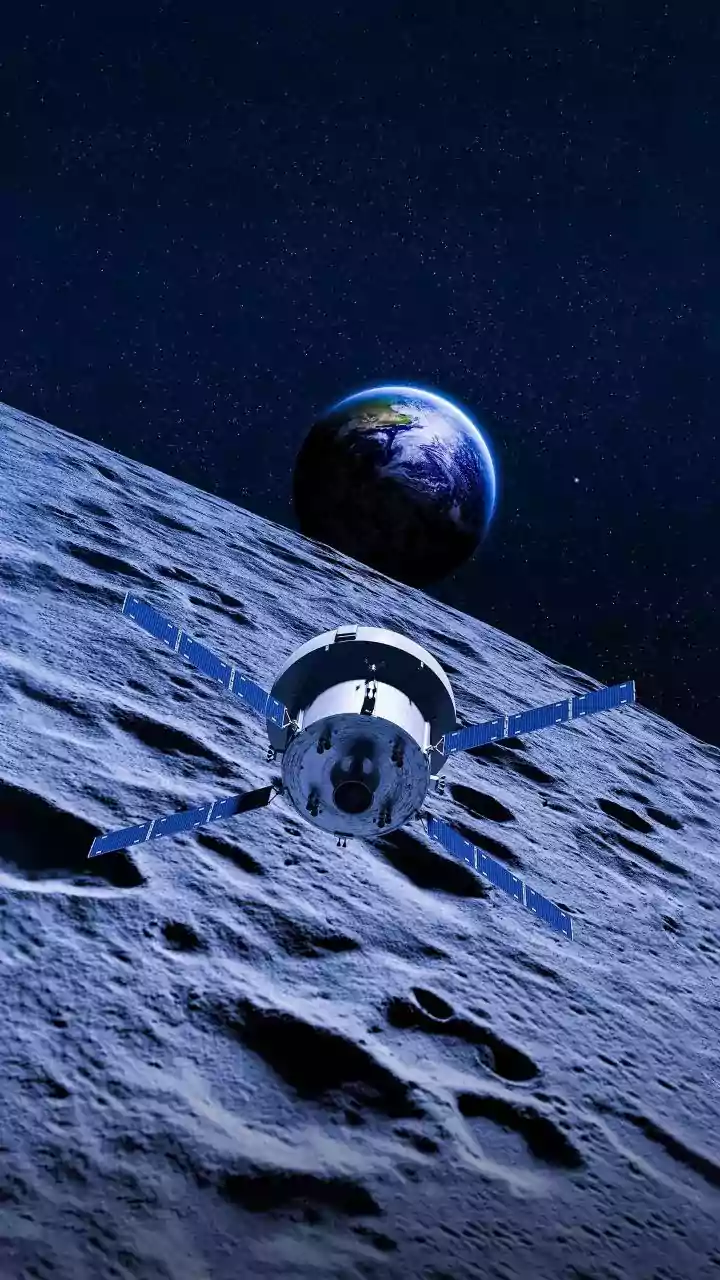
To survive this inferno, crewed capsules rely on a Thermal Protection System (TPS), commonly known as a heat shield. For capsules like the SpaceX Dragon and NASA's Orion, the preferred technology is an ablative shield. Unlike the reusable ceramic tiles of the Space Shuttle, an ablative shield is designed for a single, sacrificial use. It's made of special materials that are designed to char, melt, and vaporize in a controlled way during reentry. As layers of the shield burn away, they carry the intense heat with them, preventing it from soaking into the spacecraft's primary structure and protecting the crew inside.
Navigating the 'Goldilocks' Corridor
Mission planners don't just aim a capsule at Earth; they guide it through a very narrow and precise channel in the upper atmosphere called the reentry corridor. If the capsule's angle of entry is too steep, the atmospheric drag will be too intense, leading to catastrophic heating and G-forces that the shield and the crew cannot withstand. If the angle is too shallow, the capsule will act like a stone skipping across a pond—it could literally bounce off the upper atmosphere and back into space, with no way to get back. The flight path must be perfectly threaded between these two extremes to ensure a successful return.
How Trust Shapes the Trajectory
This is where reliability becomes the deciding factor. The performance of a heat shield isn't just a pass/fail metric; it's a spectrum of confidence. A shield that has been extensively tested, modeled, and proven to be highly reliable gives engineers the confidence to design a more direct and efficient reentry. They know precisely how much heat it can handle. This allows for a slightly steeper trajectory, which can shorten the reentry time and enable more precise targeting of the splashdown zone. In the business of spaceflight, where companies like SpaceX and Boeing compete on performance and cost, this level of precision is a valuable commodity.
The High Cost of Uncertainty
Conversely, any doubt about a heat shield's performance forces a more conservative approach. If there's uncertainty about how the material will behave under extreme stress—as seen with the unexpected charring on the Artemis I mission's shield—planners must build in larger safety margins. This often means choosing a shallower, longer reentry path to reduce the peak heating rate, even if it makes landing zone targeting less precise. This uncertainty translates directly into business and operational costs. Extensive ground testing, like that done in NASA's Arc Jet facilities which simulate reentry conditions, is how you "buy" reliability. It's an upfront investment that pays dividends by enabling more efficient mission profiles and, most importantly, ensuring astronaut safety.