


The Allure of the TRAPPIST-1 System
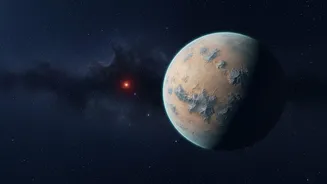
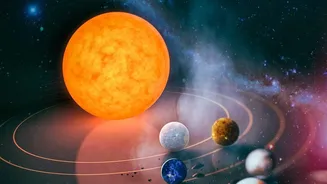
Just 40 light-years away lies a star system that has captured the imagination of scientists and space enthusiasts alike: TRAPPIST-1. It is a planetary treasure trove, home to seven rocky, Earth-sized worlds orbiting a cool red dwarf star. What makes this
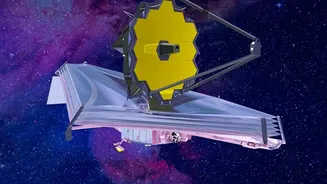
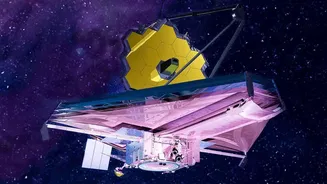
system so special is that several of these planets orbit within the star’s ‘habitable zone’ — the region where conditions might be just right for liquid water to exist on the surface. Before the launch of the JWST, understanding these worlds was largely theoretical. But with Webb’s powerful infrared eyes, we finally have the ability to peer into this nearby system and ask the big question: do any of these rocky planets have atmospheres, a key ingredient for life as we know it?
A Surprising Verdict on a 'Venus Twin'
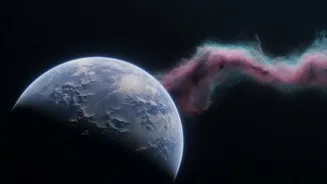
One of the first targets for Webb was TRAPPIST-1c. Because it is similar in size to Venus and receives a comparable amount of radiation from its star, many scientists wondered if it might be a 'Venus twin' with a thick, carbon dioxide-rich atmosphere. When the data came back from JWST, it delivered a major surprise. The telescope measured the heat radiating from the planet's dayside and found it was far too hot to support a dense, heat-trapping atmosphere. Instead of finding the thick, carbon-based blanket many had hoped for, the results strongly indicated that TRAPPIST-1c is either a bare rock or has, at best, an extremely thin and tenuous atmosphere with very little carbon dioxide.
Why 'Finding Nothing' Is a Breakthrough
A finding of 'no thick atmosphere' might sound like a disappointment, but in the world of exoplanet science, it is a monumental achievement. The real breakthrough is not what was found, but the fact that we could find anything at all. The ability to distinguish between a bare rock and a world with a substantial atmosphere from nearly 400 trillion kilometres away is a testament to the JWST's incredible sensitivity. Detecting the faint thermal glow from a small, non-luminous planet requires extraordinary precision. By successfully measuring this, scientists proved that Webb has the power to characterize the environments of small, rocky worlds — a feat that was impossible just a few years ago. This capability is the true cosmic breakthrough, opening a new era of comparative planetology.
A Sharper Picture of Alien Worlds
The findings at TRAPPIST-1 don't exist in a vacuum. The James Webb Space Telescope is building a comprehensive picture of planetary atmospheres across the galaxy. For example, it made the first-ever definitive detection of carbon dioxide in the atmosphere of WASP-39b, a massive gas giant often called a 'hot Saturn'. This confirmed Webb’s ability to sniff out specific gases. More recently, it found the strongest evidence yet for an atmosphere on a molten, rocky 'super-Earth' named TOI-561 b. Each of these discoveries, whether it's finding an atmosphere or confirming its absence, adds a crucial pixel to our understanding. It helps scientists refine their theories about how planets form and why some, like Earth, become habitable while others do not.