


The Sun's Turbulent Threat
Space weather refers to the volatile conditions in space driven by the Sun. The main culprits are solar flares and coronal mass ejections (CMEs). Think of a solar flare as a giant explosion on the Sun's surface, releasing a flash of intense radiation.
A CME is even more disruptive; it's a massive eruption of solar plasma and magnetic fields hurled into space. When Earth is in the path of one of these events, it’s like being hit by a cosmic hurricane of energetic particles. These particles can wreak havoc on technology, creating what's known as a geomagnetic storm when they interact with our planet's magnetic field.
How Solar Storms Disrupt Satellites
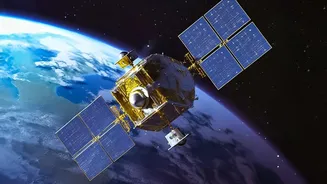
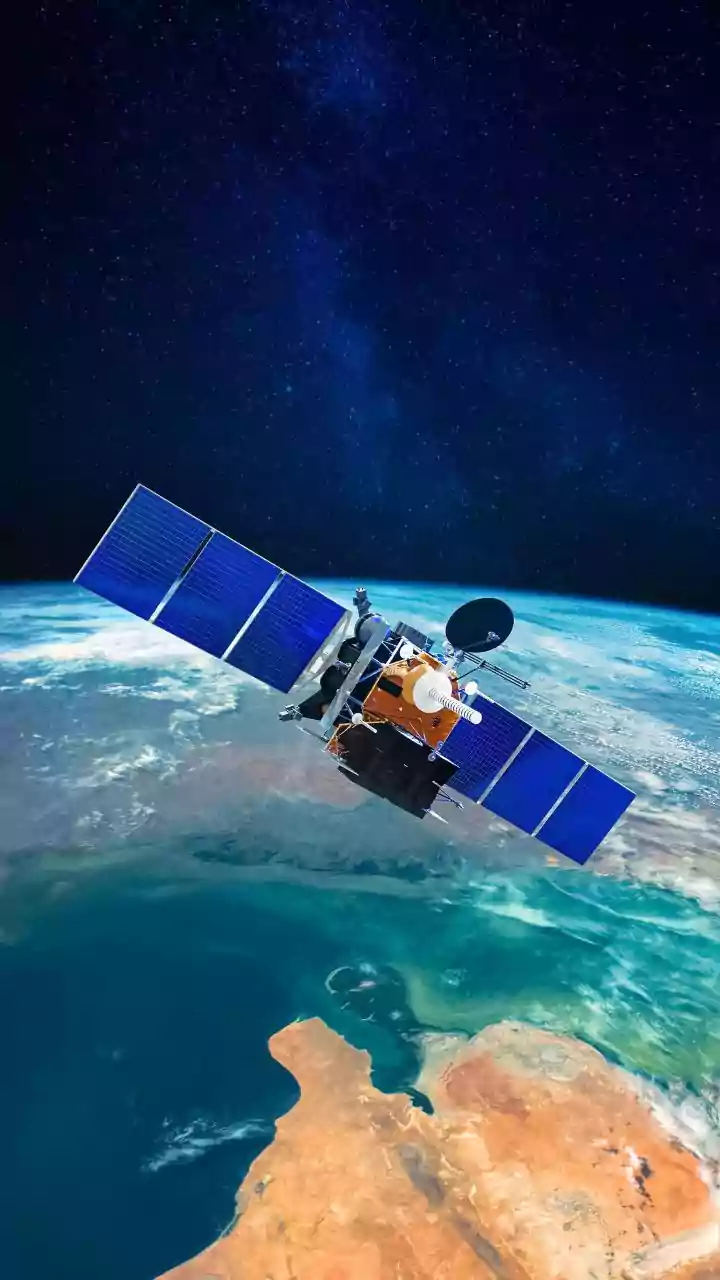
Satellites are directly in the line of fire. There are four main ways a solar storm can cause chaos in orbit. Firstly, an influx of high-energy particles can damage or destroy sensitive electronics, causing malfunctions or complete failure. Secondly, this energy heats and expands Earth’s upper atmosphere, increasing atmospheric drag on satellites in low-Earth orbit (LEO). This can pull them off course and even cause them to re-enter the atmosphere prematurely. Thirdly, the storm can cause spacecraft charging, where electrical charge builds up on a satellite's surface and then discharges, like a small lightning strike, shorting out components. Finally, the storm messes with the very signals satellites transmit. It disrupts the ionosphere, the atmospheric layer that radio and GPS signals must pass through, leading to signal degradation, loss of accuracy, or a complete communication blackout.
The Challenge of Forecasting
Predicting space weather is incredibly difficult. Unlike tracking a hurricane on Earth, we have limited observation points for solar activity. Currently, missions like the ESA/NASA SOHO satellite sit at a point between the Earth and Sun (called L1), giving us a precious but short warning time—often just 20 to 60 minutes—before a CME arrives. Researchers monitor sunspots and other indicators of solar activity, but the Sun's behaviour can be sudden and violent, making accurate, long-range forecasts a major scientific challenge. With our growing reliance on satellite constellations for everything from internet access to national security, this short lead time is a significant risk.
A New Generation of Solar Sentinels
The good news is that a new generation of forecasting tools is emerging. India's Aditya-L1 mission is providing crucial data from the L1 point, helping to identify the structure of solar storms as they approach. ESA's upcoming Vigil mission, planned for launch in 2031, will be positioned at a different Lagrange point (L5) to give us a 'side view' of the Sun. This will allow scientists to see CMEs as they leave the Sun and track their trajectory toward Earth, potentially increasing warning times from minutes to days. Alongside these new missions, scientists are harnessing Artificial Intelligence (AI) to analyse vast amounts of solar data, creating sophisticated models that can predict events with greater speed and accuracy.
From Prevention to Proactive Mitigation
So, can these better forecasts prevent outages? The answer is nuanced. We cannot stop a CME from happening any more than we can stop a hurricane. However, advanced warnings transform the threat from an unpredictable disaster into a manageable risk. With a lead time of hours or days, satellite operators can take defensive actions. They can put satellites into a protective 'safe mode' to shield sensitive electronics, perform manoeuvres to raise orbits and counteract atmospheric drag, or reroute data traffic through less affected parts of a network. This strategy is not about prevention, but proactive mitigation—taking smart steps to minimise damage and ensure service continuity. It's a shift from being a passive victim of space weather to an active manager of its effects.