


What Am I Looking For?
Forget what you think a satellite looks like. From Earth, the ISS appears as a very bright, fast-moving point of light. Think of it as an airplane, but without the blinking red and green lights. It moves steadily and purposefully across the sky, much
faster than a plane. In fact, after the Sun and Moon, it is often the third brightest object in the night sky, making it visible even from light-polluted urban areas. You don't need a telescope or binoculars; this celestial spectacle is perfectly visible to the naked eye.
Timing Is Everything: Dawn and Dusk
You can't just look up at midnight and expect to see the ISS. The best viewing opportunities occur in the windows just before sunrise or just after sunset. The reason for this is simple: during these times, your location on the ground is in darkness, but the space station, orbiting at an altitude of about 400 kilometres, is still high enough to be illuminated by the sun's rays. In the middle of the day, the sky is too bright to see it, and in the middle of the night, the station is in Earth's shadow and therefore not lit up.
Your Essential Toolkit: Apps and Websites
The key to a successful sighting is knowing exactly when and where to look. Thankfully, modern technology does all the hard work for you. The most recommended tool is NASA's own 'Spot The Station' service. You can visit their website or download the official app for iOS and Android. Simply enter your location—whether you're in Delhi, Mumbai, or a small town—and it will provide a list of upcoming sighting opportunities. These alerts tell you the exact time the pass will start, how long it will last (typically a few minutes), the maximum height it will reach in the sky, and the direction it will travel, for instance, from southwest to northeast. Other popular apps like Heavens-Above and ISS Tracker offer similar real-time information.
Preparing for the Perfect Sighting
Once you have your viewing time, get ready for the show. A few minutes before the pass is scheduled to begin, go outside and let your eyes adjust to the darkness. Face the direction listed in the app under 'Appears'. For the best experience, try to find a spot with a clear view of the horizon, away from tall buildings or trees. While the ISS is bright, reducing surrounding light pollution will only enhance the view. Remember, the station moves at nearly 28,000 kilometres per hour, completing an orbit of Earth every 90 minutes, so it will cross the sky smoothly and quickly.
More Than Just a Speck of Light
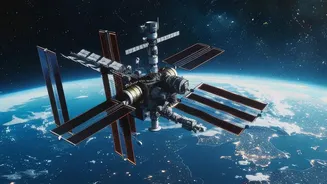
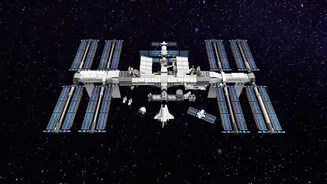
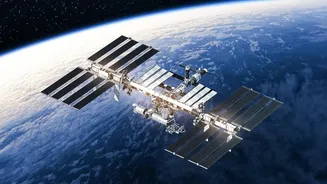
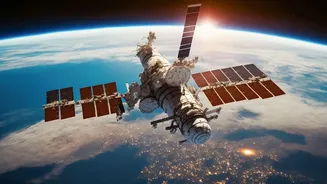
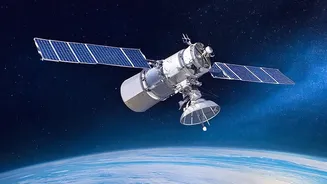
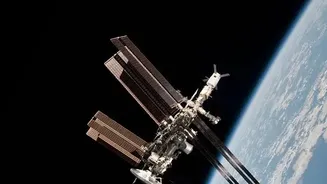
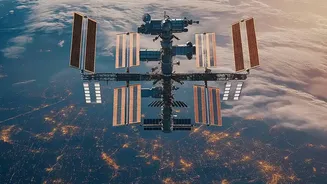
As you watch that silent dot glide overhead, remember what you're truly seeing: a football-field-sized laboratory and home for a crew of international astronauts. The ISS has been continuously inhabited since November 2000, serving as a symbol of global scientific cooperation between five space agencies and 15 countries. Onboard, astronauts conduct vital research in microgravity, work out for two hours a day to counter the effects of weightlessness, and witness 16 sunrises and sunsets every single day. Watching it pass by is a direct connection to humanity's incredible achievements in science and exploration.