


The Prime Suspects: Natural vs. Man-Made
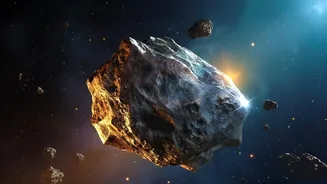
First, it’s important to understand the two culprits. A meteor, often called a shooting star, is the visible path of a meteoroid—a small rock or particle from space—as it burns up in Earth's atmosphere. These are natural objects, often fragments of asteroids
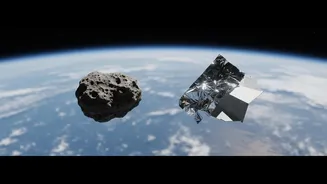
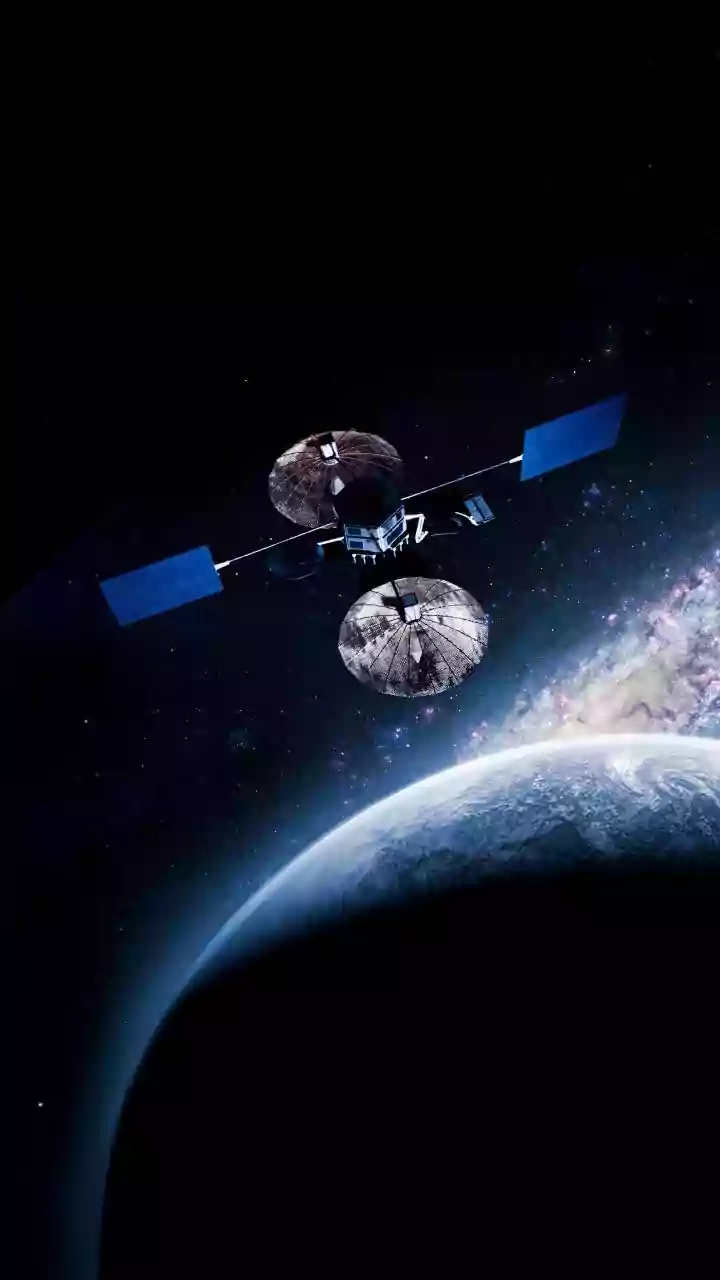
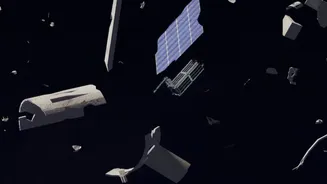
or comets. Space debris, on the other hand, is entirely man-made. It consists of defunct satellites, spent rocket stages, and other fragments from human space activity. While a geostationary satellite might stay in orbit forever, objects in lower orbits will eventually fall back to Earth due to atmospheric drag. With an estimated 25 million pieces of debris entering our atmosphere daily, telling them apart from the natural influx is a crucial task for scientists.
Clue #1: Speed and Trajectory
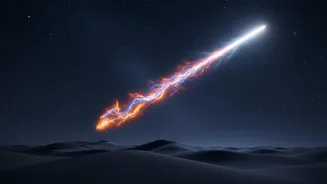
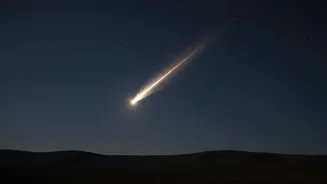
One of the most telling differences is speed. Natural meteoroids slam into our atmosphere at blistering speeds, anywhere from 11 to 72 kilometres per second (about 40,000 to 260,000 km/h). They can come from any direction. In contrast, space debris is already in orbit around Earth. It re-enters at a much slower pace, typically around 8 km/s (about 28,000 km/h). This speed difference has a dramatic effect on what we see. A meteor is often gone in a flash, lasting just a few seconds. A piece of re-entering debris, however, travels at a more leisurely pace across the sky, sometimes remaining visible for 20 to 90 seconds or even longer, looking more like a slow, fiery airplane. Its path is often much shallower and more horizontal, as it follows the curvature of its decaying orbit.
Clue #2: A Celestial Light Show
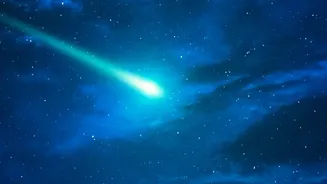
The colour of the fireball provides a chemical fingerprint of the object. Like a fireworks display, different elements burn with distinct colours. Meteors, being space rocks, are often rich in natural minerals. Magnesium can create a blue-green glow, sodium an orange-yellow, and iron a bright yellow. Calcium can even produce a violet tinge. The object’s speed also influences colour; faster meteors show more colours from their own composition, while slower ones might have a reddish hue from heating the nitrogen and oxygen in the air. Space debris, made of industrial materials, shows a different palette. The burning of aluminium and steel from rocket bodies or satellites produces its own spectacular, multi-hued display. Often, re-entering debris will break apart into a cluster of bright points, all moving in the same direction and leaving glowing trails.
Clue #3: Tracking the Origins
For larger pieces of debris, researchers often know they are coming. Global networks of radar and optical telescopes, like those used by NASA's Orbital Debris Program Office, track thousands of known objects. When the orbit of one of these objects begins to decay, its re-entry can be predicted, although the exact location can be chaotic and hard to pinpoint. Scientists can then alert authorities if there's any potential risk. Meteors are far more random, though annual meteor showers occur when Earth passes through the known debris trail of a comet. For unexpected events, scientists can work backwards. By triangulating observations from multiple locations, including all-sky camera networks, they can calculate the object's trajectory and speed to determine its pre-entry orbit. A path originating from deep space points to a meteor, while an Earth-centric orbit confirms space debris.
Clue #4: The Physical Evidence
Sometimes, parts of the object survive the fiery descent and reach the ground. If a piece of a meteoroid makes it to the surface, it's called a meteorite. These are typically composed of silicate minerals or iron-nickel alloys and are invaluable to scientists studying the solar system. Surviving space debris looks very different. It often consists of manufactured components made from materials like titanium, stainless steel, or carbon composites, which have high melting points. You might find propellant tanks, engine parts, or other recognizable hardware. By analyzing the material properties, shape, and construction of the fragment, scientists can definitively determine whether its origin was a cosmic rock or a piece of human technology returning home.