




The Primary Threat: Carbon Dioxide
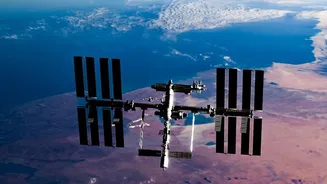
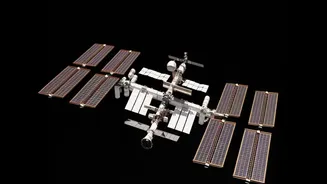
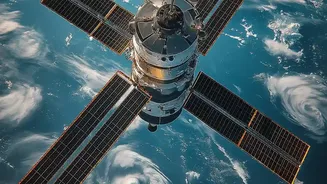
The most immediate and significant threat to air quality in a sealed environment like the International Space Station (ISS) is the buildup of carbon dioxide from the crew's own exhalations. On Earth, plants and the sheer volume of our atmosphere handle
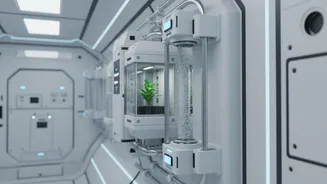
this, but in space, CO2 levels can quickly rise to toxic concentrations, causing headaches, dizziness, and far worse. The primary defense against this is the Carbon Dioxide Removal Assembly, or CDRA. This isn't a simple filter, but a complex, regenerative system that works tirelessly in the background. It is a cornerstone of the station's Environmental Control and Life Support System (ECLSS).
A High-Tech Pair of Sponges
The CDRA uses beds of tiny, porous crystals called zeolites to pull CO2 from the air. Think of them as high-tech sponges with microscopic pores perfectly sized to trap specific molecules. The system uses four beds working in pairs. First, cabin air is passed through a desiccant bed of one type of zeolite that sponges up water vapor. The now-dry air then flows into a second bed containing a different zeolite, which is optimized to trap CO2 molecules. While one pair of beds is scrubbing the air, the other pair is in a regeneration cycle. It gets heated up, and the trapped water and CO2 are vented into the vacuum of space, cleaning the zeolite sponges so they can be used again. This continuous cycle ensures CO2 is constantly being removed from the station's atmosphere.
Beyond Just CO2 Contamination
Carbon dioxide isn't the only concern. The station's atmosphere also accumulates hundreds of other trace contaminants. These can range from ammonia in sweat and methane from crew metabolism to volatile organic compounds (VOCs) that off-gas from the station’s own electronics and plastic materials. To handle this chemical cocktail, a separate piece of hardware called the Trace Contaminant Control System (TCCS) is used. This system uses a combination of methods, starting with a large bed of activated charcoal, which acts as a more general-purpose filter to adsorb a wide range of these unwanted chemicals.
Purifying the Air with Fire
The second stage of the TCCS is a catalytic oxidizer. This unit essentially burns away the remaining and more stubborn contaminants that get through the charcoal bed. It heats the air to a high temperature, causing the unwanted chemical compounds to break down and react with oxygen. This process transforms harmful gases into less dangerous substances, primarily carbon dioxide and water vapor. That newly created CO2 isn't just released back into the cabin; it is then sent along to the CDRA to be captured and processed like all other carbon dioxide on the station, demonstrating the incredible integration of these life-support systems.
Closing the Loop for Deep Space
Simply venting all this captured CO2 into space is wasteful, especially on future long-duration missions to the Moon or Mars where every resource is precious. This is where the Sabatier system comes in. This remarkable device takes the CO2 collected by the CDRA and combines it with waste hydrogen—a byproduct from the station's oxygen-generating system. Through a chemical reaction, it produces two vital outputs: water and methane. The methane is vented, but the water is captured and can be used by the crew for drinking or to produce more oxygen. This process of recycling waste products is known as "closing the loop," and it's a critical technology for making humanity's future in deep space possible.