








What is the New CNAM System?
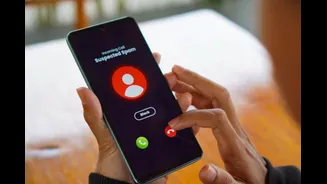
Starting November 1, 2026, telecom operators in India are mandated by the Department of Telecommunications (DoT) to implement Calling Name Presentation, or CNAM (often referred to as CNAP). This is a network-level feature that will automatically display
the caller's name on your screen, even if the number isn't saved in your contacts. The goal is to increase transparency, help users identify who is calling, and curb the rising tide of spam and fraudulent calls. The service will be enabled by default for all subscribers on 4G and 5G networks, with no need to install a separate application. However, users who wish to maintain their privacy can opt out.
The Source of Truth: Verified KYC Data
The single biggest difference lies in the data source. The CNAM system pulls the caller's name directly from the official Know Your Customer (KYC) records that you provide when purchasing a SIM card. This means the name displayed is the one linked to your government-verified identification, such as an Aadhaar card or other official documents. This makes the identification highly authentic and reliable. For businesses, there will be a process to use a verified trade name instead of the name on individual subscriber records. International calls from unsaved numbers will simply be labeled as 'International Call'.
How Third-Party Apps Work
Third-party caller ID apps, with Truecaller being the most prominent example in India, operate on a completely different model: crowdsourcing. When you install such an app, you typically grant it permission to access your phone's contact list. The app then uploads this list to its massive, global database. The name it displays for an unknown number is based on how other users have saved that number in their phones. This community-driven approach allows these apps to build a vast directory that CNAM cannot match, but it also introduces potential inaccuracies.
Accuracy and Trust: Official vs. Crowdsourced
CNAM's reliance on KYC records means the name you see is officially verified, which is a major step toward preventing impersonation and fraud. You can be reasonably sure the name belongs to the person or entity that registered the SIM. The weakness of the crowdsourced model is its potential for inaccuracy. A name displayed by a third-party app could be an old user's name (due to recycled numbers), a nickname, or even a prankish or abusive label. While often correct, it's not a guaranteed, verified identity in the same way as CNAM.
Functionality: Basic ID vs. Feature-Rich Ecosystem
This is where third-party apps have a distinct advantage. The government's CNAM service is designed to do one thing: display a verified name. It does not, by itself, block spam, label calls as 'telemarketing', or provide any other context. In contrast, apps like Truecaller offer a suite of features built around their data. They use community reporting and AI to identify and automatically block spam and scam calls, show if a user is busy on another call, provide 'Call Reason' for businesses, and maintain a global directory. CNAM is a foundational layer of identity; third-party apps are comprehensive communication management tools.
Privacy and Control
The privacy debate is complex for both systems. With CNAM, your official name is, by default, shared with anyone you call. While this is based on a government mandate, TRAI has ensured users can opt out by activating the Calling Line Identification Restriction (CLIR) feature with their operator. Third-party apps, on the other hand, require you to share your entire contact list, which is a significant privacy trade-off for many. While these apps provide controls to edit your own name or unlist your number, their entire model is built on the collective sharing of personal data. CNAM is mandated sharing with an opt-out, while third-party apps are voluntary sharing for access to features.