







Beyond the Final Frontier
For decades, the story of space has been one of outward ambition—reaching for the Moon, sending probes to Mars, and peering into the universe's distant past. It has been a narrative of exploration and discovery. But a powerful shift is underway. A growing
segment of the global space industry, including a vibrant ecosystem in India, is turning its gaze back towards home. The new mission isn't about escaping Earth, but about saving it. This pivot involves using satellites, sensors, and data analytics not to find new worlds, but to better understand and manage our own. This Earth-centric approach is rapidly becoming one of the most commercially viable and socially critical aspects of the space economy.
The Technology of an Earth-Sized Watchdog
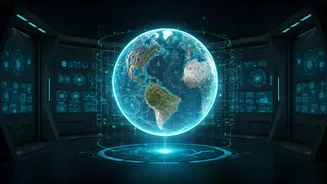
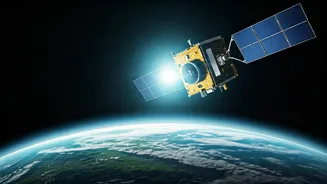
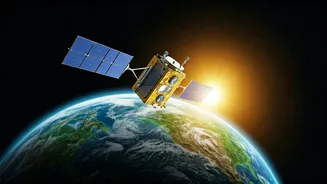
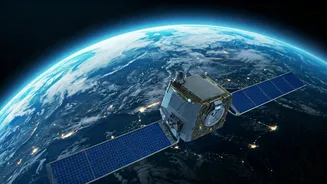
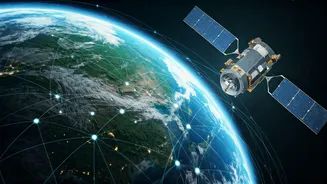
At the heart of this new mission is Earth Observation (EO). Imagine thousands of high-tech cameras and sensors orbiting our planet, constantly collecting data. This isn't science fiction; it's the reality of modern space tech. These satellites can 'see' across different spectrums of light, allowing them to monitor things invisible to the human eye. They can measure ground moisture from hundreds of kilometres up, track the size of a flood in real-time, detect illegal deforestation by the hectare, and even pinpoint methane leaks from industrial sites. Combined with GPS for precise location data and powerful AI to analyse the mountains of information, this creates a comprehensive, always-on monitoring system for the entire planet. The miniaturisation of satellites and the falling cost of launches, pioneered by companies like SpaceX, have made deploying these 'eyes in the sky' more accessible than ever before.
From Data to Actionable Insights
Raw data from a satellite is useless without interpretation. The real magic happens when this information is processed into actionable insights. For India, a country facing complex climate and environmental challenges, this is a game-changer. Satellite data can help farmers with 'precision agriculture'—knowing exactly which part of their field needs water or fertiliser, boosting yields and saving resources. It allows disaster management agencies to map out cyclone paths with greater accuracy, issue timely evacuation warnings, and direct relief efforts to the worst-hit areas. Urban planners can use it to monitor air and water pollution, track the urban heat island effect, and design greener cities. For corporations, it’s a tool for supply chain monitoring and ensuring environmental compliance. This is where data science meets planetary science, turning pixels into policy and profit.
The Indian Lens: ISRO and Startups
India is not just a consumer of this technology; it is a major player. The Indian Space Research Organisation (ISRO) has long been a global leader in Earth Observation, with its constellation of satellites providing crucial data for weather forecasting, resource management, and national security. The ISRO-NASA Synthetic Aperture Radar (NISAR) mission, for example, is set to be one ofthe world's most advanced Earth-imaging satellites, capable of monitoring changes in the Earth's surface with unprecedented detail. Alongside ISRO, a new generation of Indian space-tech startups is emerging. Companies like Pixxel, which is building a constellation of hyperspectral imaging satellites, and Skyroot Aerospace, which is lowering launch costs, are democratising access to space data. They are building businesses around providing specific, tailored environmental intelligence to governments and private industries, creating a uniquely Indian solution to global problems.
The Road Ahead
This new mission is not without its challenges. The sheer volume of data requires massive computational power. Concerns over data privacy and the potential for surveillance are valid and need to be addressed with robust regulation. Furthermore, as more satellites are launched, the problem of space debris—or 'space junk'—becomes more acute. However, the potential benefits are immense. By providing an objective, data-driven view of our planet's health, space technology offers a powerful tool in the fight against climate change, resource scarcity, and environmental degradation. It provides a common language for scientists, policymakers, and citizens to understand the challenges we face.