







From Apollo to Artemis
For decades, the model for space exploration was straightforward: government agencies like NASA designed, built, and operated everything. The Apollo program, a monumental achievement, was a purely governmental effort. This approach guaranteed control
and served national interests, but it was incredibly expensive and slow. Every mission required monumental public investment, and the entire risk—financial, technical, and human—rested on the government's shoulders. The retirement of the Space Shuttle program left the U.S. temporarily reliant on other nations for access to the International Space Station, highlighting the vulnerabilities of a single-threaded approach. This experience catalyzed a strategic shift toward a more collaborative and resilient model for getting to space.
A New Blueprint for the Red Planet
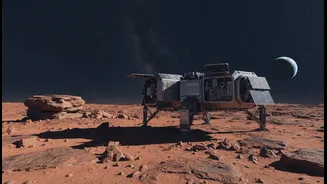
NASA's modern strategy, particularly for its Moon and Mars ambitions under the Artemis program, looks very different. The agency is increasingly acting as a customer and partner rather than the sole builder and operator. Through public-private partnerships (PPPs), NASA defines the high-level goals—what needs to be done and why—but gives private companies the flexibility to innovate on the 'how'. For instance, in a recently announced mission, NASA is providing the scientific instruments, while a commercial partner, Relativity Space, is responsible for the rocket, the spacecraft, and the mission operations to get it to Mars. This is a significant evolution from just buying components; it’s about purchasing a full delivery service for deep space.
Sharing More Than Just the Bill
The most obvious benefit of this model is sharing the immense financial cost. A single flagship Mars mission can cost billions. By leveraging private investment, NASA can dedicate more of its budget to pure science and developing next-generation technologies that the private sector isn't yet incentivized to build. But the risk-sharing goes deeper. Technical risk is also distributed. When private companies build and fly their own hardware, they assume direct responsibility for its success. This encourages robust, efficient designs. Schedule risk is also mitigated. Rather than relying on a single, government-led development pipeline, NASA can foster a competitive ecosystem where multiple providers are working on solutions, creating redundancy and spurring faster progress.
Fostering an Innovation Ecosystem
This partnership model is designed to be a 'force multiplier' for science and innovation. By committing to buy services, NASA creates a predictable market, giving commercial firms the confidence to invest in new technologies, from reusable rockets to deep-space communication networks. This competition drives down costs and accelerates development in a way that cost-plus government contracts often don't. The success of the Commercial Crew Program, which restored U.S. human launch capability through partnerships with SpaceX and Boeing, proved the model's effectiveness in Earth orbit. Now, NASA is applying that same logic to the Moon and Mars, creating a foundation for a self-sustaining space economy where government is one of many customers, not the only one.
What This Means for the Future
The public-private model is more than a budgetary tool; it's a fundamental restructuring of how humanity approaches exploration. It allows NASA to focus on its core mission of pushing the scientific frontier while unleashing the agility and innovation of the commercial sector. This strategy aims to increase the frequency of missions, allowing scientists to get more data, more often. For Mars, this means more opportunities to study its atmosphere, search for signs of life, and test the technologies needed to one day land humans on the surface. It transforms the grand challenge of visiting Mars from a single, monolithic government project into a collaborative effort across an entire industrial ecosystem, ultimately making the journey more affordable, sustainable, and achievable.