




The Bottom Line: Your Daily UPI Payments Are Still Free
Let's clear the air immediately: the core Unified Payments Interface (UPI) experience that millions of Indians rely on daily has not changed. Sending money from your bank account to a friend's bank account (person-to-person or P2P) is still completely
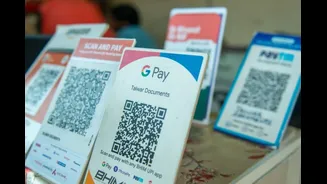
free, regardless of the amount. Similarly, scanning a QR code at your local shop, supermarket, or cafe and paying directly from your linked bank account (person-to-merchant or P2M) also remains free for you, the customer. The government and the National Payments Corporation of India (NPCI) have repeatedly confirmed that consumers will not be charged for these standard UPI transactions. In fact, over 95% of all merchant transactions fall under the free category.
Understanding the 'New' Merchant Fee
The confusion stems from the introduction of a fee called the Merchant Discount Rate (MDR). As of October 15, 2026, a 0.4% MDR applies to some merchant payments over ₹2,000. However, this is not a fee for the customer. It is a charge that merchants pay to the banks and payment service providers that facilitate the transaction. This fee is capped at ₹300, even for very large transactions. Crucially, authorities have strictly prohibited merchants from passing this MDR cost on to customers. The price you see is the price you should pay. This fee was introduced to help create a sustainable revenue model for the companies that run the UPI ecosystem, ensuring they can continue to invest in technology, security, and innovation.
What About Wallet Payments (PPIs)?
The other significant change, which has been in place for some time, involves Prepaid Payment Instruments (PPIs). PPIs are essentially digital wallets like Paytm Wallet, PhonePe Wallet, or Amazon Pay Balance, where you store money beforehand instead of paying directly from your bank account. When you use a PPI wallet to pay a merchant for a transaction over ₹2,000, an interchange fee of up to 1.1% can apply. Again, this is a fee that the merchant's bank pays to your wallet provider; it is not directly charged to you as a customer. So, if you pay ₹3,000 at a store using your wallet balance, you will only pay ₹3,000. The interchange fee is handled on the backend between the financial institutions.
The Golden Rule: Bank-to-Bank is Free
The simplest way to ensure your UPI transactions remain free is to always pay directly from your linked bank account. Whether you are sending money to another person or paying a business, selecting your bank account as the payment source bypasses the new fee structures entirely. The charges only come into play in specific merchant scenarios, primarily involving high-value payments or those made via PPI wallets. For the average user splitting a bill, buying groceries, paying rent, or making most other daily payments, the UPI experience is unchanged: it is instant, secure, and free.
What Else Remains Unchanged?
Beyond P2P and most P2M payments, several other UPI services are also exempt from these new charges. Small merchants, like street vendors and neighbourhood shops that receive up to ₹1 lakh per month via UPI, are not subject to the MDR, which protects small businesses. Furthermore, automated payments set up via UPI AutoPay for things like subscriptions or bills continue to be free of these specific MDR charges. The fundamental goal of the framework is to keep everyday, low-value digital payments accessible and free for everyone, while ensuring the long-term health of the digital payments infrastructure that has become a pillar of the Indian economy.